Newsletter
 Events

5 Lessons of Fandom From the U.S. Open, Southwest Airlines, Disney and More
Building community: that's the ticket


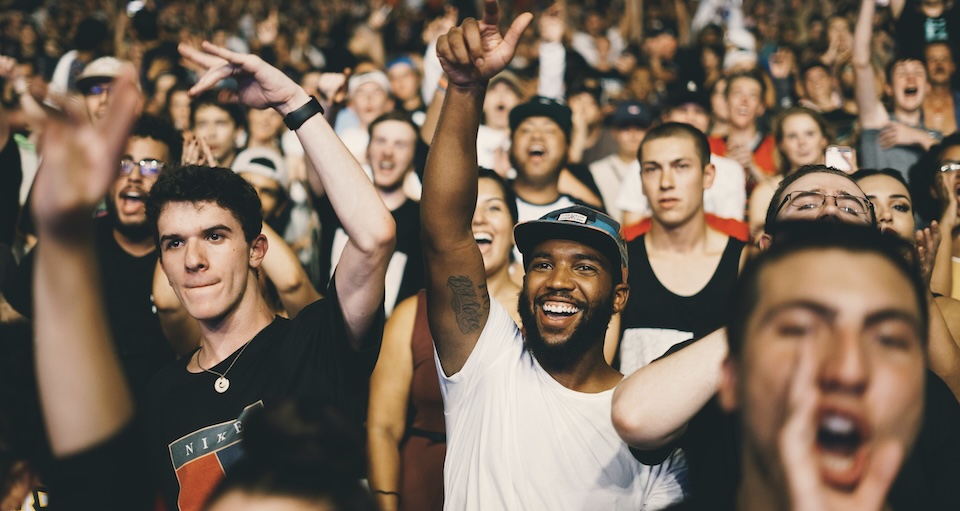
When Situation launched our podcast Fandom Unpacked last year, I didn’t know exactly where the conversations would lead. What I did know was that if we sat down with smart people across industries—from sports to airlines to Broadway—we’d walk away with truths worth holding onto.
Earlier this year, I wrote an article about five things for marketers to know about fandom that captured some of what I’d learned at the time. But like any great community, fandom keeps evolving the more you listen.
That’s just what we did. And in the process, we built a community around these conversations. Which is why I’m proud to share that Fandom Unpacked is partnering with the International Ticketing Association (INTIX). If fandom is the beating heart of live events, ticketing is the circulatory system—it’s how people get in the door, literally and figuratively.
With that in mind, here are five more keys for marketers I’ve learned from fandom, shaped by conversations on Fandom Unpacked.
Lower Barriers to Entry Can Expand Your Audience
Nicole Kankam, managing director of Pro Tennis Marketing & Entertainment at the USTA, told us something that’s stayed with me: free doesn’t devalue. Sometimes, it’s the opposite. Fan Week at the U.S. Open wasn’t a giveaway, it was an invitation. And the people who accepted it didn’t just show up for a one-off, many became repeat customers.
We’ve seen the same spirit in the way Universal leaned into horror fans by celebrating their quirks and rituals. Free or low-friction entry points don’t dilute demand, they ignite it.
I think about this a lot. How often do we hide behind price as a filter, when in fact the thing that really filters people in is the experience itself?
Underserved Audiences Are Growth Audiences
Jacie deHoop, co-founder of The Gist, reminded us that exclusion is not just a moral failure—it’s a business failure. Sports media ignored women and casual fans, and The Gist built a brand by simply acknowledging they exist.
It echoes what the NBA Finals tapped into by bringing Kevin Costner and Mindy Kaling into the fold—pairing unexpected voices with the sport to widen the tent. Exclusion isn’t just unfair—it’s leaving business on the table.
It’s easy to say your product is for “everyone.” Harder, and more valuable, is to ask: Who have we overlooked?
The Experience Starts Before the Curtain Rises
Broadway press insiders like Ruthie Fierberg (executive editor, Broadway News), Alex Birsh (COO, Playbill), and Robert Diamond (founder and CEO, BroadwayWorld) talked about how the show starts long before the house lights dim. It’s the lobby playlist. It’s the photo booth. It’s an invitation to join in the fun.
That same thinking is behind how studios build anticipation with trailers that feel like cultural events in themselves. The first impression is often the most powerful—and fans never forget how you set the stage.
We forget this in marketing all the time. We put all our energy into the “performance”—the campaign, the product, the main event—when in fact our audience has been experiencing us for weeks already. Fandom is cumulative. Every touchpoint counts.
Center the Brand Around a Clear, Unifying Purpose
Andrew Harvell, manager of digital strategy and optimization at Southwest Airlines, shared that the carrier has a lot of moving parts. But when you talk to them about what they stand for, you realize it’s actually very simple: democratizing the skies.
And then there’s Shania Twain clocking in at McDonald’s. On paper, it sounds absurd. But watch it and it just … works. Why? Because it’s not trying to be something it’s not.
Purpose gives you something to come back to when the world shifts (and it always shifts). If you’re marketing without a purpose, you’re really just chasing.
Focus on Depth of Impact, Not Just Reach
Finally, there was Disney. And here’s the line from Michael Vargo, SVP of Disney’s Fan Club D23, that I can’t stop repeating: “I’d rather 100 people feel something real than 10,000 people scroll past us.”
As I write this, I’m struck by how interconnected these lessons feel. Lowering barriers makes you more inclusive. Inclusion broadens your purpose. Purpose demands experiences that resonate. Experiences deepen impact. And deep impact? That’s what keeps people coming back, year after year, season after season.
That’s fandom. And with INTIX, I’m excited to keep unpacking it.

Damian Bazadona is president and founder of Situation Group, a global collective of marketing, advertising and technology companies committed to helping brands build passionate communities across a range of industries worldwide.