Newsletter
 Events


Indifferent to Sports? Truly Hard Seltzer's Got the Merch for You
Keeping score is so passé


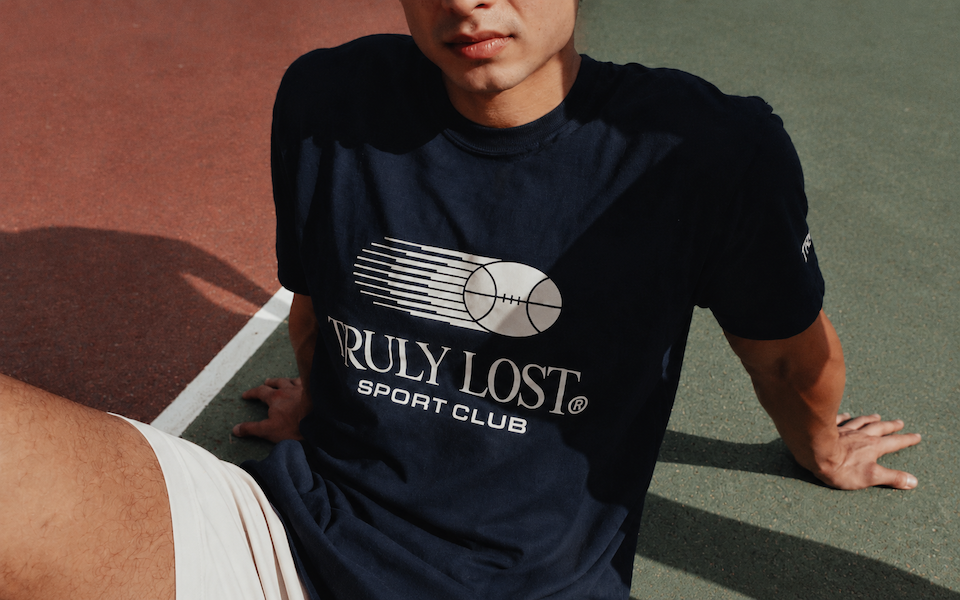
Who won the game? Who cares! We got a $45 T-shirt!
Fandom’s such a thing these days, it was just a matter of time until some savvy marketer turned the trope on its head. Enter Truly Hard Seltzer, clad in sweatshirts, caps, T’s and other sportswear designed for folks who don’t care much about sports.
Priced from $32 to $80 and developed with agency Party Land, the Truly Lost Collection rocks lines like “Someone tell me when I’m supposed to cheer I want to feel included” and “No idea what’s going on here but liking the vibes.”
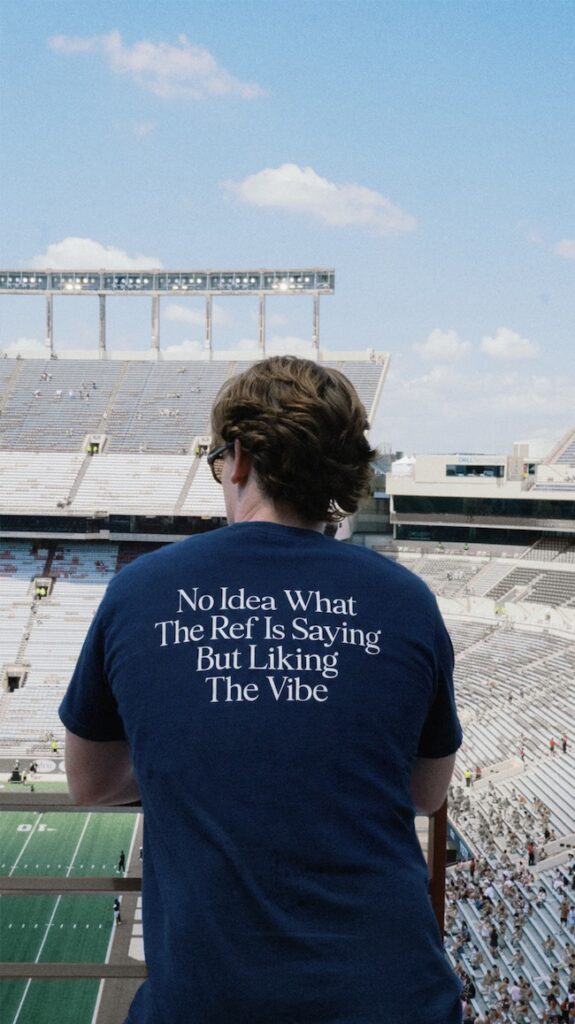
“The brief was simple: come up with a merch idea for Truly for the fall, when sports are back,” says agency ACDMia Hearne. “And right off the bat, we knew one thing: No one wants merch with a brand’s giant logo slapped on it. And in the rare event they do want branded merch, it has to be something they can actually get behind, something they’re proud to wear because it says something about who they are.”
“Every fall, brands only go after the mega-fans. Meanwhile, there’s this gigantic group of people who love sports in a completely different way, who are largely ignored and neglected. And that group felt especially obvious to me and ACD Eli White—because we’re in it.”
“So we decided, let’s just call it what it is. Let’s celebrate the people who love sports for everything happening around it,” she says. “The people who show up, tailgate, have a drink, bring the energy and maybe have absolutely no idea who’s winning or even playing. Who, honestly, probably already have a Truly in their hand.”
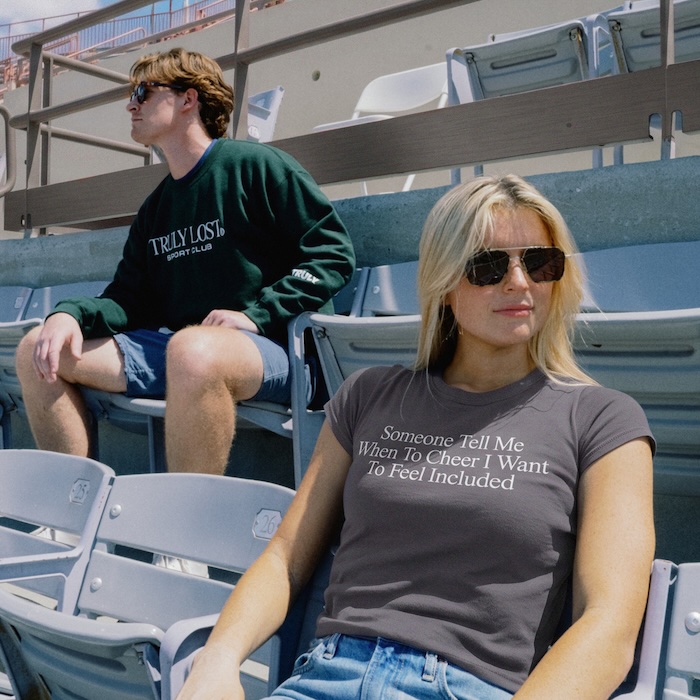
Along with leveraging the trend of non-fandom, “Truly Lost” taps into the mania for vintage ’80s and ’90s-style athletic wear.
Nostalgia and cheeky humor almost always score, and brands of all sorts love fashion drops as they seek to weave their wears into the fabric of public awareness. To that end, sports can provide easy access for products and services with seemingly no connection to athletic competition.
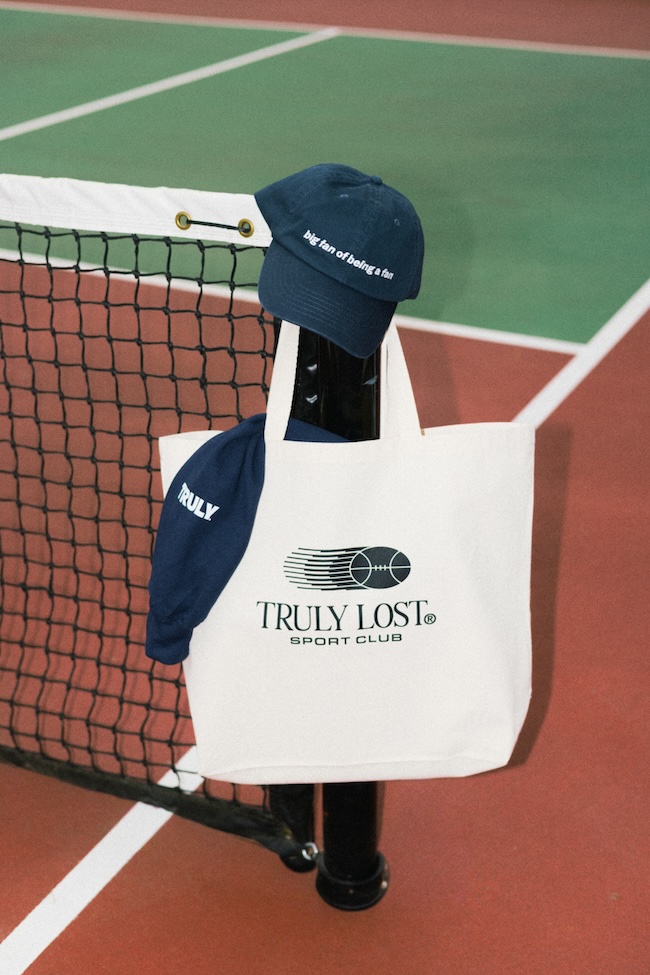
“Truly’s offered merch before, but this was a huge opportunity for us and a place they hadn’t really gone before,” Hearne says. “The best branded merch should add something to your life, solve a real problem for you, or explain you better than you could explain yourself.”
“Which can actually be hard for brands to get behind. Most brands understandably want their merch to be a walking billboard. But the best merch almost does the opposite. It taps into something genuinely true about the audience and gives them something they want to wear because it says something about them.”
“The brand gets credit for understanding them, rather than just asking them to advertise for you,” she says. “And that’s when it stops feeling like merch and starts feeling like an actual apparel and accessories collection, something Truly could actually own in culture.”
Related: Chili’s Will Take Over a Golf Club in L.A.