Newsletter
 Events

Toys to Rituals: the Big Opportunity for Kellogg’s
A taste of the past could help the brand make new fans


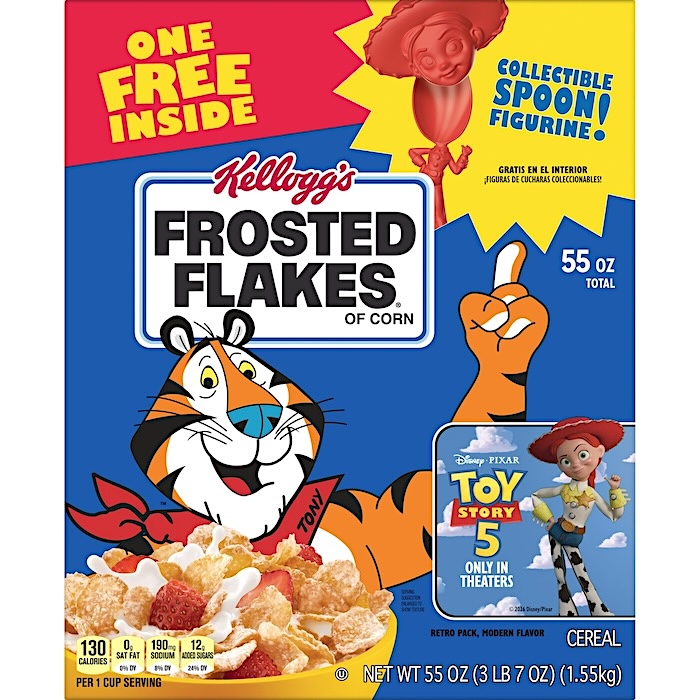
Let me be the first to say: I’m absolutely giddy over Kellogg’s putting toys back in cereal boxes. And if Slinky Dog is nestled at the bottom of 55oz of Frosted Flakes, sign me up. On paper, it’s a simple play. Bring back something people loved, throw in some IP and hope it draws them back to the cereal aisle. In reality, it’s a much bigger opportunity than a one-off partnership with Disney and Pixar’s Toy Story 5.
Nostalgia’s been the marketing word du jour for the last few years. The mistake most brands make is thinking nostalgia is about the past. It isn’t. Counterintuitive, right? In fact, it’s about a feeling people are actively looking for right now and one that feels increasingly hard to find.
Today, life is faster, more optimized, more watched, less tactile. Everything is a system or an ecosystem. Everything is a performance. Nostalgia cuts through all of that. It reminds people of a time when things felt easier, slower, and a little more real.
Nostalgia is a reaction more than it’s a trend. And more importantly, it’s a powerful driver of behavior. Not because of its ability to recapture a specific era. But because of its ability to create objects and experiences that let us visit the lives many of us wish we still had, while giving younger generations a taste of what that felt like.
In fact, according to GWI, Gen Z is more likely than older generations to feel nostalgic for the past despite not having lived through it. That feels like proof it’s less about the moment itself and more about the search for comfort and a more carefree existence.
Right now, a lot of brands are chasing the artifacts of nostalgia. The fonts, the colors, the old logos. We’ve seen Tootsie Pop bring back its early ‘70s “How Many Licks” spot. McDonald’s celebrated Grimace’s birthday. And Neutrogena relived iconic TV moments of the ‘90s to sell anti-aging cream.
All of that is great. But it’s even better when engaging with the brand gives people relief. When that offers a break from who they are supposed to be and lets them step into a version of themselves that feels lighter. That requires a shift from being solely referential to focus on references, objects or experiences.
For Kellogg’s, this could be the beginning of a strategy with nostalgia at the core. For them, a toy in the box wasn’t even solely about the object, it was the ritual. Sitting on the kitchen floor, watching cartoons before school, pouring a bowl a little too large so you could reach the toy before your brother. Designing for the behaviors people miss can pull consumers deeper into the Kellogg’s world.
Nostalgia is so much more than a stunt, and if this moment signals the beginning of building around that again it could be something we get to live inside every morning.


Jesse Unger is co-founder and chief strategy officer of SIGNIFICANT, a strategy company based in L.A. and NYC.