Newsletter
 Events
This Funny Film Shows What Happens When an AI Voiceover Goes Ridiculously Wrong
'Vince' tells a (more or less) true story, not for the faint of heart


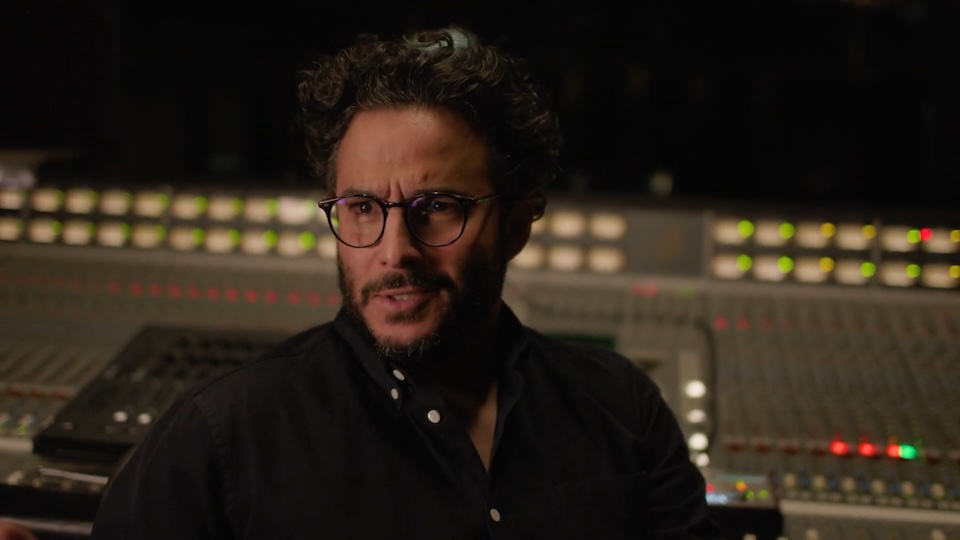
At Toronto’s Eggplant Music + Sound, a client had grown attached to a temporary guide track used during a recording session—one voiced, as it happened, by AI. When the real actor came in, Adam Damelin, the director, found himself in a surreal situation: the client kept asking him to sound “more like the guide track.” That moment, equal parts funny and unsettling, sparked a bigger question. What if we turned this scenario around—what if the AI was the one being directed? Could it understand nuanced human direction, or even more complicated, client feedback?
That was the seed for “Vince,” a 10-minute film that takes a comedic (and slightly unnerving) look at what happens when technology takes creative control.
Adam Damelin, Partner at Eggplant Music + Sound, initially thought it might make for a quick self-promotional piece. But as he brought in writer Cole Rosenberg-Pach and me, the concept quickly grew. Together, we decided to write a satirical sketch about creativity, chaos and collaboration in the age of AI. Then, when Adam Greydon Reid (Holiday Films and The Jennifer Hollyer Agency) came on board to direct (and edit), things escalated—in the best possible way.
Assembling the Team
Reid (A director, editor, and actor in his own right) recruited an ensemble of some of Canada’s most beloved comedic talent, including Colin Mochrie (Whose Line Is It Anyway?), Jennifer Robertson (Schitt’s Creek), Ennis Esmer (Children Ruin Everything), Tricia Black (Baroness Von Sketch), and Rodrigo Fernandez-Stoll (Ghosts). It’s a cast that understands both absurdity and truth—and “Vince” leans hard into both.
The story takes place inside an audio house room—a space that’s equal parts creative temple and padded cell. Reid approached it like a short one-act play, rehearsing the full script with the cast in advance so they could perform it straight through. That rehearsal day paid off. The shoot itself was completed in just one day, with a single camera and a skeleton crew. The tight schedule and small space amplified both the tension and the comedy, with actors feeding off each other’s timing and energy.
The Role of AI—on and off Screen
True to its theme, “Vince” used AI tools in its production. The film’s “AI-generated” visuals were made via Midjourney, then refined by designer Scott Johnson in Photoshop—a deliberate blend of machine precision and human craft. Meanwhile, Gabe Stern created the minimalist tech-inspired interface for the AI program (voiced by Mochrie) in Adobe After Effects, syncing its pulsing sound waves to the actor’s voice.
Sound, naturally, plays a starring role. The team at Eggplant spent months designing an audio landscape that drives both the humor and the tension. It’s proof that, in a story about AI, the human ear is still the best special effect.
A Film About Now
When “Vince” was conceived last year, the advertising world was still unsure of AI. By the time it wrapped its one-year festival circuit in late 2025—with screenings from Whistler to New York—the conversation had become more open and nuanced.
“Vince” was always meant to entertain first, while prompting a bigger conversation about how humans and technology can coexist creatively.
Artificial intelligence can accelerate creativity. But without the emotional intelligence of people to guide it, it won’t resonate on a human level because humans have their own, unique code. Interesting storytelling lies in the things unsaid, reading between the lines, a subtle look shot across the room. These are nuances that AI can’t conceive because they draw from clichés and a literal form of language.
At its core, “Vince” isn’t an anti-ai story, or a pro-human one. Even after the characters almost perish in the grips of AI, they still can’t help but poke fun at the “precious actor” and his diva-like request for a simple glass of water. The characters are flawed, but they’re human. “Vince” is about the joy, the mistakes and the moments in between that no algorithm could ever replicate.
Because when things go off script, that’s usually where the magic happens.