Newsletter
 Events
A Blog Post From the 'Near Future' Offers Lessons for Today's Storytellers
As narrative authority breaks down, a new type of fiction breaks through


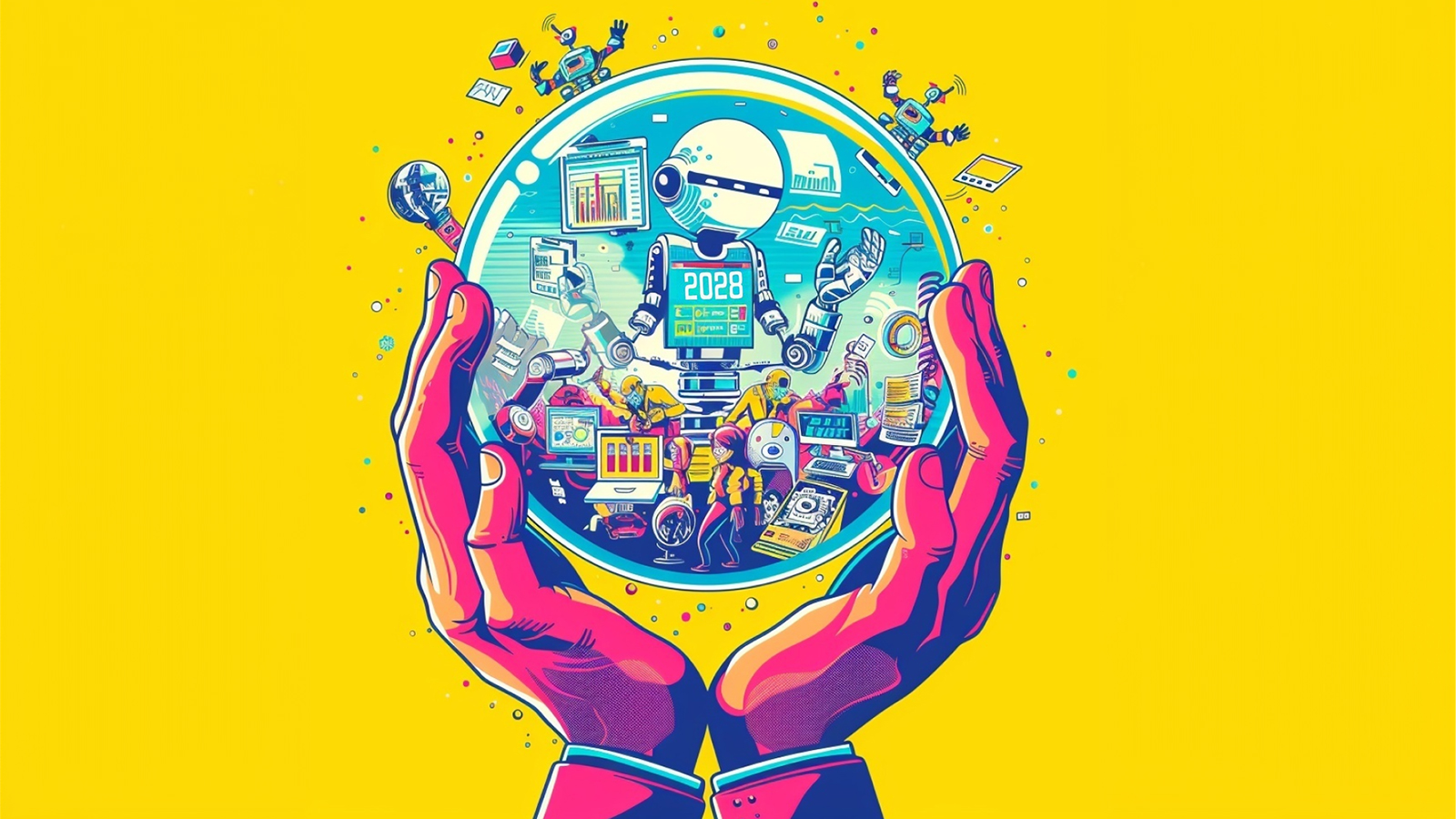
Some blue-chip stocks took a hit recently, not because of global events but because of a fictional blog post. This before-and-after moment proves that the marketplace of ideas is no longer tethered to expertise. Institutional authority—once the domain of Wall Street research desks, major banks and legacy financial media—is eroding. And the vacuum is filled by content from whoever can paint the most vivid picture.
The blog post in question was born from an Independent publisher, Citrini Research, which released a lengthy Substack item titled “The 2028 Global Intelligence Crisis.” It wasn’t a forecast. Instead, the piece imagined a near future where AI agents eliminate friction across white-collar work, compress wages, weaken consumer demand and trigger cascading financial stress. This culminates in a fictional 38 percent drawdown in the S&P 500.
It named names. DoorDash. American Express. ServiceNow. Uber. And the market reacted. Such stocks saw sharp one-day declines. Software and AI-heavy indices weakened as palpable anxiety rippled outward.
Making the Future Less Abstract
This macro fan fiction hit a vein because it turned a sort of nebulous complexity into stark, high-resolution images of a dystopian near future. Saying that “AI poses a risk” is so abstract as to be almost meaningless. Positing that “automation will drive 10 percent unemployment by 2028” is far more concrete. It’s alarming because it sounds so plausible.
DoorDash struggling because an AI-disrupted economy cratered the gig demand is a scenario our imaginations can easily grasp. It’s more chilling for people to imagine not being getting sushi delivered on Monday at 11 p.m. than it is to worry about an AI-driven robot apocalypse.
Specificity creates cognitive grip. Pictures formed in people’s minds remain powerful drivers of behavior. And increasingly, institutions are no longer the platforms that create and scale visions of what the future could be.
This went viral by borrowing an effective storytelling device to package a position. By writing from an imagined future with the benefit of imagined hindsight, the report made a hypothetical crisis feel inevitable. Style and substance merged to create a psychologically powerful narrative. The dearth of norms and bureaucracy in Citrini’s approach allowed them to fuse a compelling entertainment angle with real insight.
The Impact of a Portable Narrative
The portable narrative is easily summarized: “What if AI wipes out white-collar demand and crushes consumer spending?” That’s a conversational meme stock.
Portability drives virality. Virality drives influence. And for bonus points, counter-narratives were sure to emerge, amplifying the original position again and again. Criticism of the Citrini report only made it more visible.
Hot debate expands reach. Institutions rarely walk out on limbs high enough to generate this type of cultural gravity. Yet, this is how movement and attention are generated.
It’s not just the stories we tell—but how we tell them. Creativity in narrative construction is one of the most powerful levers in shaping market perception and mindsets. The story of disruption is often a harbinger of the disruption itself.
The Citrini post didn’t win because one writer got lucky with a vivid metaphor. The institutions that used to own narrative authority have lost cultural permission to make people feel something. To make them feel anything, perhaps.
They have the distribution, but the power to move now belongs to whoever is willing to build the world. Stakeholders are going to find a home within someone’s story. The only question worth asking is whose.