Newsletter
 Events
How Ronald McDonald House Became Canada’s Most Unexpected Real Estate Listing
Only the House isn’t for sale, and it never could be


People love browsing real estate online. It’s an act of escapism, curiosity and something to do with your thumbs to fill the time. So, instead of asking people to stop what they were already doing and pay attention to a charity, we decided to do the opposite: use their love of real estate browsing and let it pull their attention towards Ronald McDonald House Canada.
That instinct is what pushed our team at Cossette to find a different way to help people understand Ronald McDonald House Canada, not as a nice-to-know charity, but as an essential service for families with critically sick and injured children.
We started with a simple truth: If you want someone to understand the value of a home, you let them walk through it. Today, “walking through a home” often happens before an in-person visit. Online real estate browsing is a global habit. People can’t get enough. They don’t need to be convinced to engage with property listings, they’re already doing it.
So, instead of interrupting people with a traditional message, we embedded Ronald McDonald House in the real estate ecosystem itself.
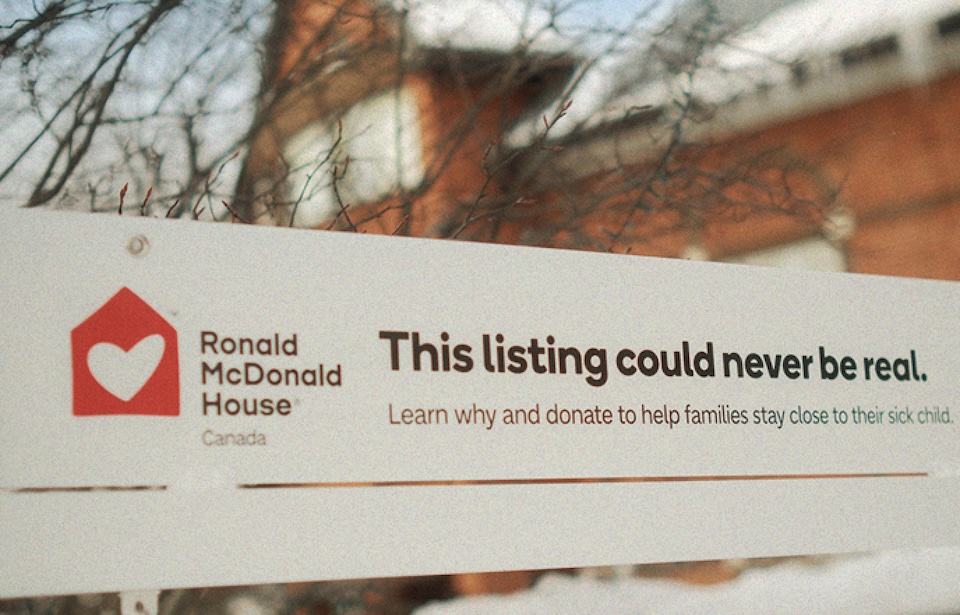
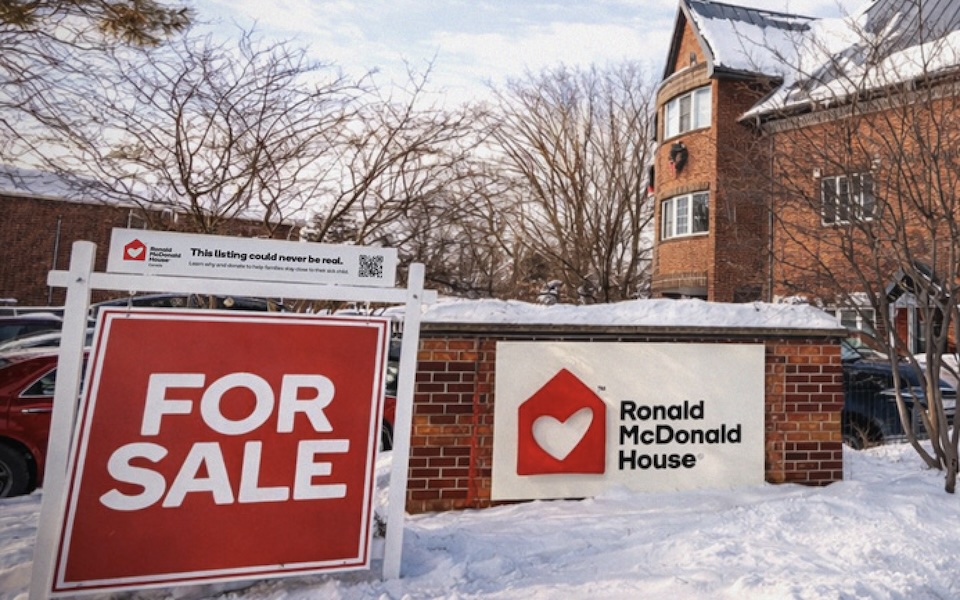
The campaign started by putting “For Sale” signs outside select RMH locations in Ontario and Quebec. Even though the listings were fake, the signs triggered real reactions. I’ll never forget that while we were installing one sign, a woman driving by pulled over, rolled down her window, and asked in a panic, “Is it going up for sale?” When we told her it was an awareness campaign, she expressed her immense relief before driving away.
In that moment, we saw the potential impact of the campaign. By showing Canadians what they could lose, we’d remind them how essential RMH programs are for families across the country facing the unimaginable.
From there, the campaign expanded into a full real estate experience. Listings went live on platforms like Wahi and Kijiji. Popular creators shared house tours. In-person open houses brought the idea to life. RMH became a must-view property on the Canadian real estate scene.
All the campaign pieces drove people to a listing-inspired site that gave visitors a deeper and more emotional view of Houses’ “features.” Kitchens became stories of shared meals between families away from home. Bedrooms became sanctuaries after long treatment days. Living rooms became places where the community of families came together to bond and support one another in their struggles.
Even the typical mortgage calculator was reimagined as a cost-to-stay tool that revealed the financial burden of travelling to access care for a critically sick or injured child. This highlighted the invisible costs tens of thousands of families would have to endure each year without the support of RMH across Canada.
As people become more discerning about where they give, creative work has to do more than tug at heartstrings. It must make impact visible.
Sometimes the best way to do that is not to ask for attention, but to earn it by showing up in a place where people are already looking and inviting them to look again through a different lens.