Newsletter
 Events

Is Ad Biz Rediscovering Its Voice in AI's Uncanny Valley?
Glimpses of a new creative territory that exists because of what AI characters are and what they are not


Something remarkable is starting to happen in advertising, though most of the industry hasn’t noticed yet.
We’re in the earliest days of AI-generated commercial content, much of it still experimental, much of it happening behind closed doors in proof-of-concept client work and spec projects. But a pattern is emerging among the pieces that actually work.
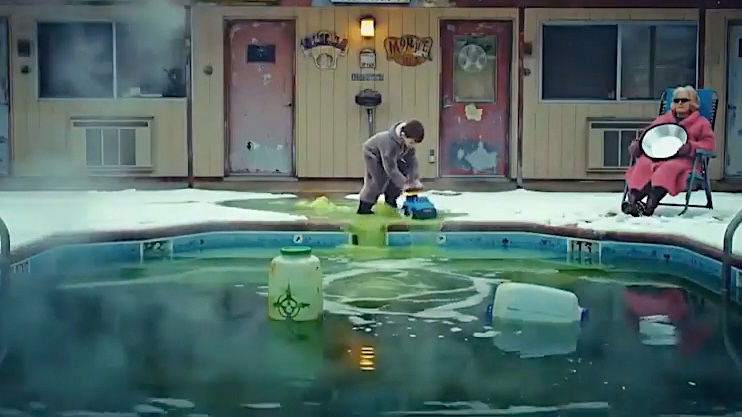
One standout example is Fiverr’s “Prompt and Punishment,” in which an AI-generated character becomes a prompt punching bag. Another is Amir Ariely’s spec spot for Liquid Death, where AI characters gleefully embrace chaos in ways that would be disturbing with human actors but feels delightfully unhinged with artificial ones.
The same dynamic plays out: The moments that test best and generate the strongest responses occur when we stop trying to make AI characters relatable and start making them wonderfully, obviously artificial.
These aren’t accidents. They’re early glimpses of a new creative territory that exists specifically because of what AI characters are and, crucially, what they’re not. They can be stretched, compressed, exploded, transformed or subjected to impossible scenarios without moral consequence. We laugh because it’s safe to laugh. There’s no ethical weight to their predicaments because we don’t perceive them as capable of genuine suffering.
In these early experiments, we’re witnessing the discovery of advertising’s next evolutionary leap.
The Uncanny Valley’s Hidden Depths
For decades, we’ve understood the uncanny valley as a simple dip in human comfort: Make something too human-like but not quite human enough and people recoil. But as generative AI reveals, the topography is far more complex than we realized.
Beyond mere visual fidelity, the uncanny valley encompasses emotional and moral categorization. When we see something that looks human, our brains immediately begin calculating: Is this something I should empathize with? Protect? Fear? This constant categorization and its inherent cognitive load create the discomfort we associate with oddball effects.
But here’s what’s profound—by deliberately making AI characters obviously non-human while still visually impressive, creators short-circuit this entire process. They’re creating a new category—beings that are clearly artificial, visually sophisticated and emotionally consequence-free. It’s a category that never existed until we had the tools to create it.
The most successful AI advertising doesn’t try to convince us that AI characters are “just like us.” It revels in their otherness, using it as a creative superpower.
The Lineage of Surreal Persuasion
The greatest commercials in advertising history share a secret; they all bent reality to amplify their truth. Consider the legendary spots that defined excellence:
Cadbury’s “Gorilla” — An ape playing drums to Phil Collins had nothing to do with chocolate—and everything to do with the pure joy of indulgence.
Guinness’ “Surfer” — Horses emerging from waves created a mythic narrative about patience and perfection.
Sony Bravia — Thousands of bouncing balls transformed city streets into a canvas for “color like no other.”
Volvo Trucks’ “Epic Split” — Jean-Claude Van Damme’s impossible split between moving trucks made precision and strength viscerally unforgettable.
FKA twigs for Apple — Ethereal choreography in impossible spaces showcases seamless technology integration.
Each succeeded by finding the surreal gesture that could externalize an internal product truth. The gorilla’s uninhibited joy was the feeling of eating Cadbury. The mythic waves were the craftsmanship of Guinness. The bouncing balls were the vibrancy of Sony’s display technology.
These weren’t weird for weird’s sake. They were precisely calibrated impossibilities that made product benefits felt, rather than just understood. They realized something fundamental: the human brain doesn’t just process information, it craves transformation through story.
What’s changed isn’t our appetite for the surreal, but our ability to create it without limits. AI has democratized the impossible.
The Deeper Truth: We’ve Been Waiting for This
Here’s the profound realization: Advertising has always trafficked in controlled unreality. Every commercial is already a tiny act of surrealism: products that solve problems too perfectly, scenarios where everyone is slightly too attractive and too happy, solutions that work a little too well.
Consider that transformation is the common thread through every great advertising story. The tired person becomes energized. The messy kitchen becomes spotless. The uncertain consumer becomes confident. These transformations have always been slightly impossible. Now we just have characters who can embody that impossibility literally.
What we’re witnessing isn’t science fiction. It’s the emergence of tools that align with some of our most fundamental human tendencies:
- Pattern Recognition: We’re drawn to the familiar made strange because our brains are constantly seeking patterns and delighting in pattern breaks.
- Safe Exploration: Surreal scenarios let us explore ideas, fears and desires in a consequence-free environment.
- Narrative Hunger: We crave stories that feel larger than life because they help us process and understand our own lives.
- Transformation Fantasy: We want to believe that change is possible, that problems can be solved, that products can deliver on their promises.
AI characters in impossible situations aren’t weird. They’re the perfect vessels for these deeply human needs.
We’ve been yearning for tools that could match our imagination without the constraints of physics, budgets or human limitations.
AI didn’t create our desire for the surreal. It finally gave us the means to fully express it.