Newsletter
 Events

How a Jeep Cherokee Hybrid Made Stunning Wildlife Photos
The inside story from Publicis Canada


Automotive advertising has long been built on a familiar idea of capability: power, speed and dominance over terrain. For this campaign, we wanted to explore a different expression of that idea. What if capability could be defined not by how loudly you arrive, but by how little you disrupt what’s already there?
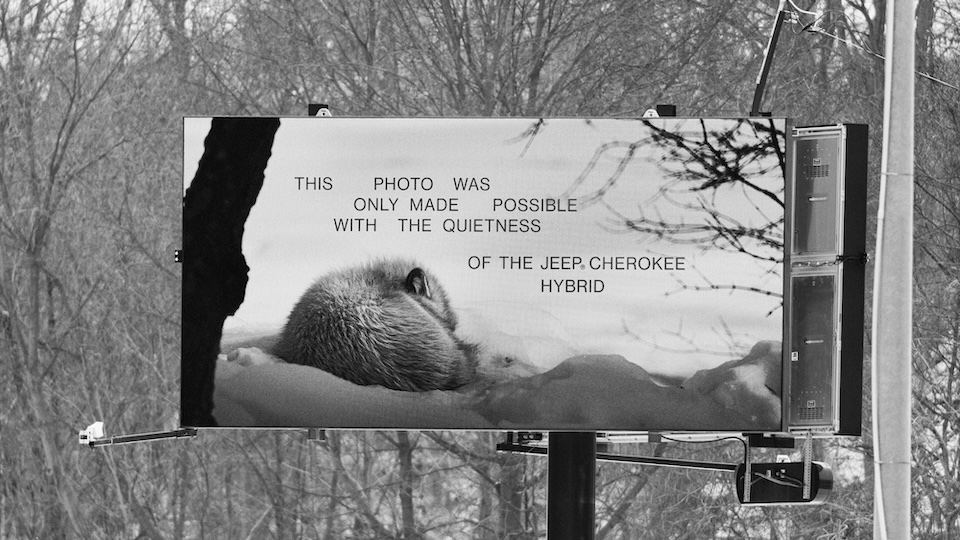
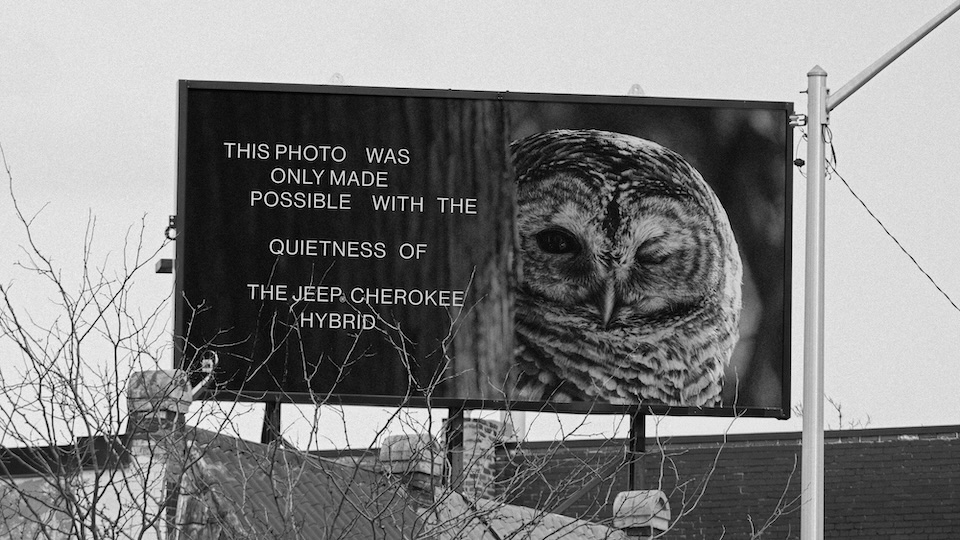
That thinking led to “The Silent Edition,” a wildlife print campaign for the 2026 Jeep Cherokee Hybrid, created in partnership with award-winning conservation photojournalist Patricia Homonylo. The work resulted in a series of wildlife images now running as print ads in National Geographic and Canadian Geographic.
The intention wasn’t to place a vehicle into nature as a backdrop, but to understand whether the vehicle itself could enable something new to happen within it. The Cherokee Hybrid’s combination of 4×4 capability and quiet electric performance allowed for a more considered way of moving through nature, where the vehicle becomes part of the environment rather than overtaking it.
Homonylo had experienced the limitation firsthand. She had missed shots in the past because the sound of her vehicle alerted animals before she could get close. The idea that quiet could change what was possible wasn’t theoretical. It meant moments that might otherwise be lost could unfold naturally.
That idea shaped how the work was made.
The shoot took place over two days in Muskoka, Northern Ontario, under deliberately minimal conditions: a small crew, limited equipment and no staging. Working with wildlife meant nothing was guaranteed. The job wasn’t to create moments, but to be ready for them without influencing them. And those moments came.
A Canada lynx, rarely seen, appeared briefly in the open. Owls, typically sensitive to human proximity, remained nearby longer than expected. A red fox was photographed asleep in the snow, undisturbed. These weren’t constructed scenes. They were the result of patience, timing and an approach designed to leave no trace.
The vehicle played a critical role in that process. It wasn’t just about being quiet. It was about being capable enough to reach remote environments, and controlled enough to move through them without altering behaviour. That combination allowed the team to work within nature rather than impose on it.
The behind-the-scenes film above , created using only natural sound, reflects that same philosophy. It documents the process as it happened, emphasizing stillness, restraint and the importance of not interfering. In a category that often celebrates presence, this work explores the opposite.
For Jeep, this isn’t a departure from its identity, but an expansion of it. The brand has always stood for freedom, exploration and the ability to go anywhere. This campaign shows that those same qualities can now be expressed in new ways, through technology that allows for a more considered relationship with the natural world.
In this case, that shift made a different kind of image possible.