Newsletter
 Events

How Director David Frankel Used Brands to Enhance Storytelling in 'The Devil Wears Prada 2'
Mercedes, Google and Dior share screen time with the likes of Meryl Streep and Anne Hathaway


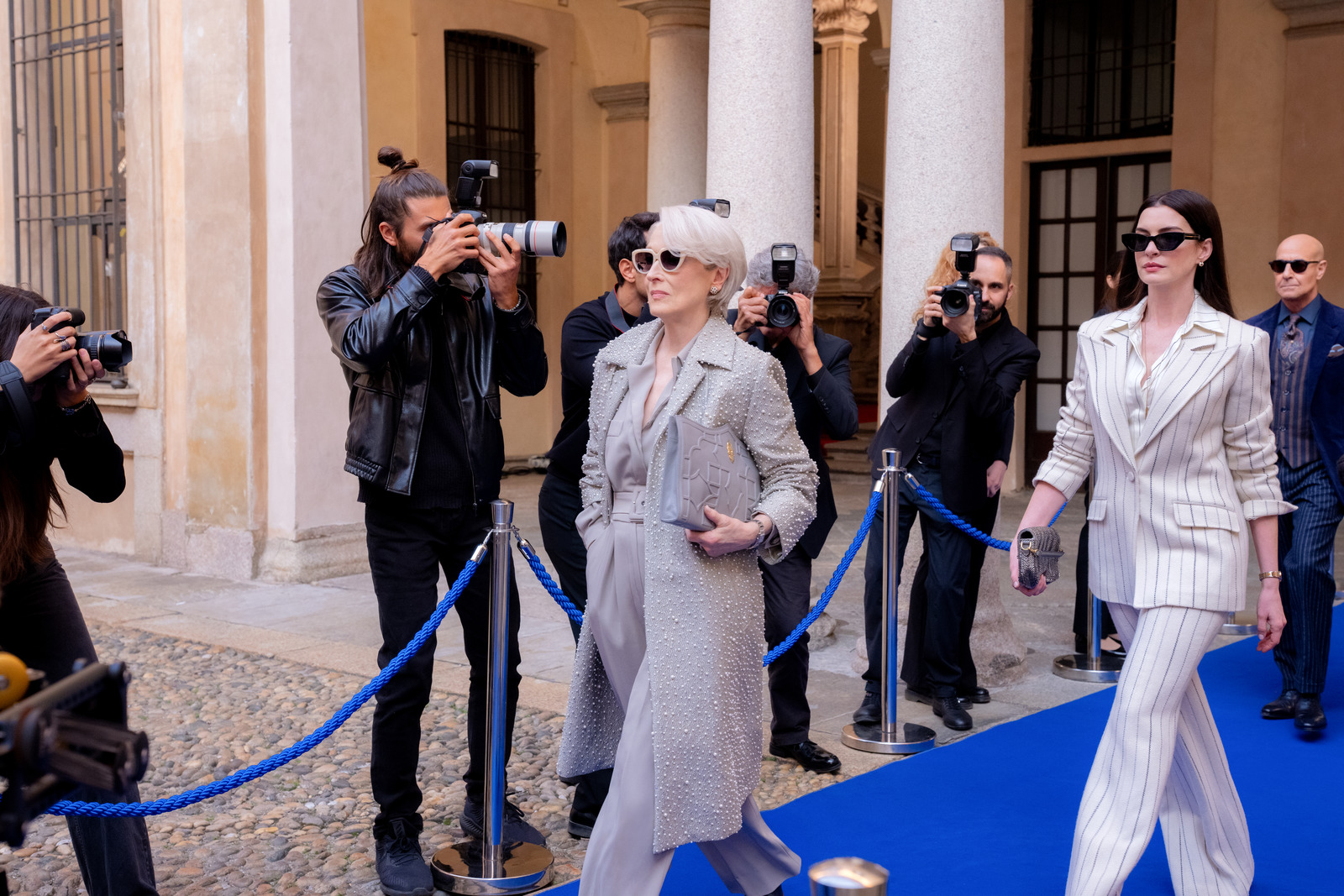
Twenty years ago, director David Frankel scored a box office hit with The Devil Wears Prada, which became a cultural juggernaut and inspired a generation of young people to pursue careers in fashion. Now, the filmmaker has once again immersed himself in the world of Runway magazine to bring us The Devil Wears Prada 2.
The sequel, which has raked in nearly $500 million since its theatrical run began this month, reunites an all-star cast, including Meryl Streep and Anne Hathaway, and features cameos from Lady Gaga and Donatella Versace, among others.
As in the original, myriad brands—the likes of Mercedes, Google, Dior, Starbucks and Samsung—are in the mix, too.
Here, Frankel talks to Muse about why he couldn’t resist the opportunity to helm Prada 2, and he explains why products and services aren’t just window dressing but integral to the film’s narrative:
MUSE: Why were you interested in directing a follow-up all these years later?
David Frankel: Well, Meryl Streep was going to be in it and Anne Hathaway and Emily Blunt and Stanley Tucci.
All good reasons.
And we thought that there was something more to say with these characters. Because the world they had inhabited in 2006 had changed so dramatically in 20 years. We started thinking about what a sequel could be—we really started with that idea.
In 2006, fashion magazines were at the pinnacle of power and prestige and wealth. Today, Vogue has been reduced to 8 issues [per year]. The world has changed so dramatically. Everything has moved to digital, and digital is under attack from AI.
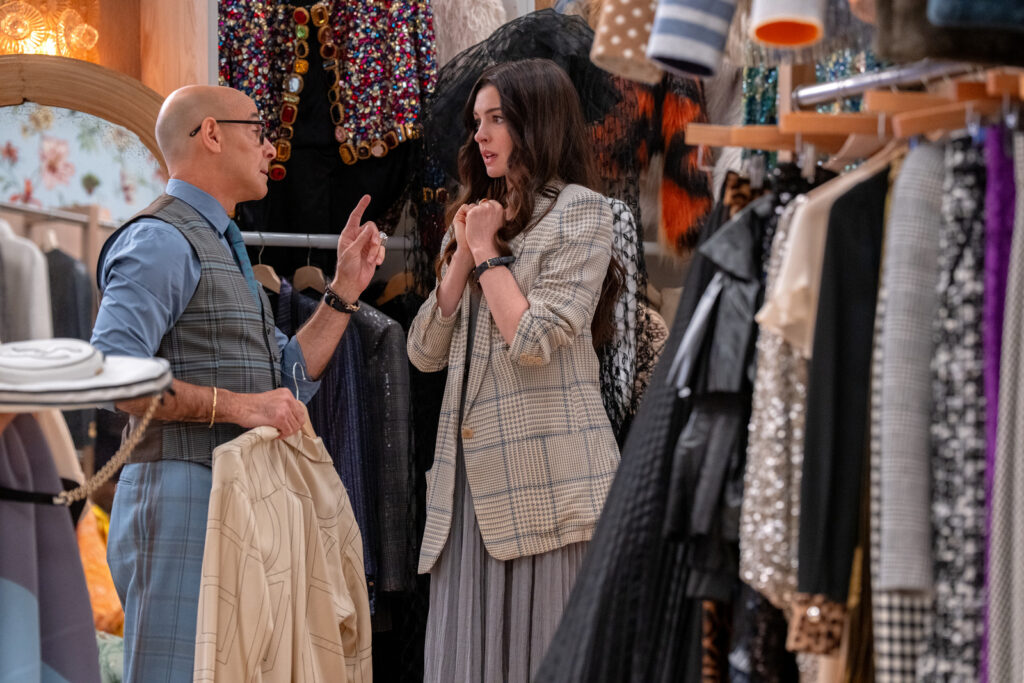
There’s a kind of slow death that’s happening in so many industries. Obviously in Hollywood, there’s been a huge contraction as these digital behemoths take over the studios. Their priorities shift, the bottom line becomes more important and the actual work is less significant to these corporations. There’s very few people looking out for the “show” in the business.
Even advertising—the business has transformed completely and has also been shrinking. My wife runs an ad agency in Miami [that’s Jennifer Beber, the president of Beber Silverstein]. I’ve watched firsthand how that business has shifted so painfully, squeezed so many agencies and so much work. So all of that seemed ripe for exploration. This is a movie about survival in many ways.
It’s also a lot of fun. Seeing journalists with full-time jobs writing about creativity brought back some good memories for me.
We wanted most to make entertainment. Something that you experience as mostly joyful because the characters are fun, the dialogue is funny, the wardrobe is spectacular, the locations are gorgeous. But through it all, it’s interesting to comment on not just the end of fashion journalism but the end of journalism as we knew it for most of our lifetimes.
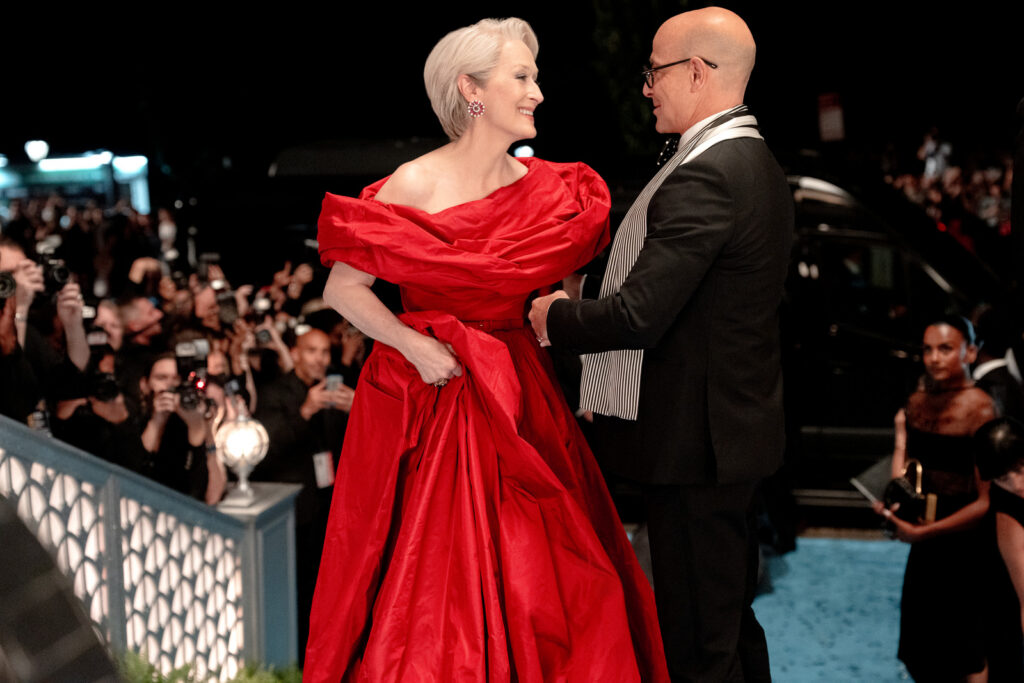
There are a number of brands ranging from fashion to tech featured in the film. How did you decide which ones made sense?
The first thing we started with—and it was part of our approach to every aspect of the film—is authenticity. What is the real thing? They live in a world where there are fancy products floating around. That’s the world Miranda Priestly inhabits. Even 20 years ago, Miranda was driven around in a beautiful Mercedes. So it made sense for that to continue.
Tiffany was important. There is a plot point that involves a jewelry store. And as it happened, Tiffany had just renovated their Milan flagship store. So we had the opportunity to shoot there.
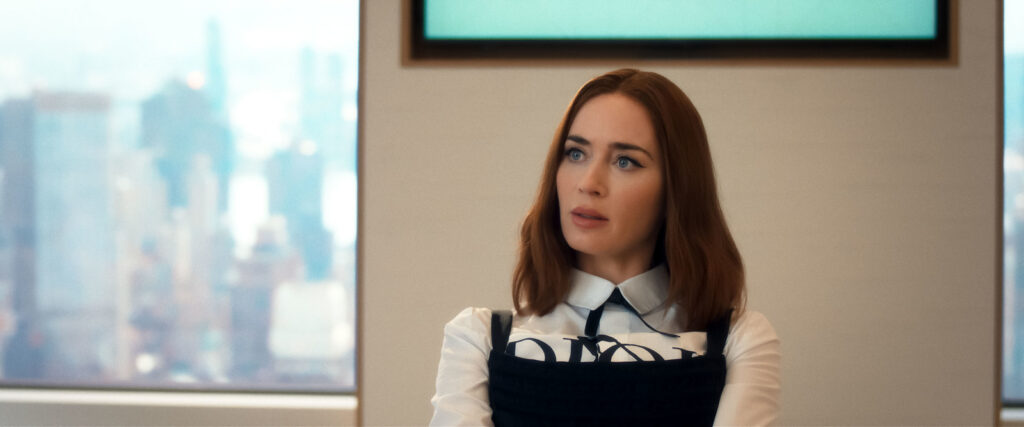
Emily Blunt’s character, Emily Charlton, is now a top executive at the U.S. operations of Dior. So they were an important partner to us on both the fashion side and the location side. We got to shoot in their flagship store the day before it opened on Madison Ave. last summer.
We had a scene on a plane and getting hold of an airplane in the middle of travel season in New York City was a challenge. We actually had conversations with multiple airlines. Fortunately, United stepped up.
Grey Goose was a valuable partner and Samsung—our people use Samsung phones. L’Oreal and Lancome participated with beauty products. Obviously, we’re in the world of beauty. So all of those things felt very organic to the storytelling.
We went out of our way not to spotlight anything in particular. Everybody uses what they use in the most natural way. We hope that these characters are just moving through a world in which these products exist rather than hitting the audience over the head with the advertising.
How do you balance making the brand look good with serving the needs of a particular scene? For example, how much were you thinking about making the Dior store look as posh as possible when you were shooting there?
I’m well aware that we have a partner, and they want their products and their store to look as glamorous as possible. But as it happens, we, in fact, deglamorized the Dior space because we were showing it still under construction. It was funny. They had just finished everything, and it was in perfect shape. Every bag and every piece of clothing was hung perfectly. They were taking photos for their brochures and catalogs. And then we came in and wrapped everything with cardboard and brown paper and plastic bubble wrap and put out paint cans and scaffolding and shoeboxes. But the beauty of the store, the architecture, the design of it—you get a real sense of what an impressive place it is, especially that staircase. So I think we’re accomplishing both: We’re telling the story that is essential to the movie, and we’re also painting a lovely portrait of our partner’s store.
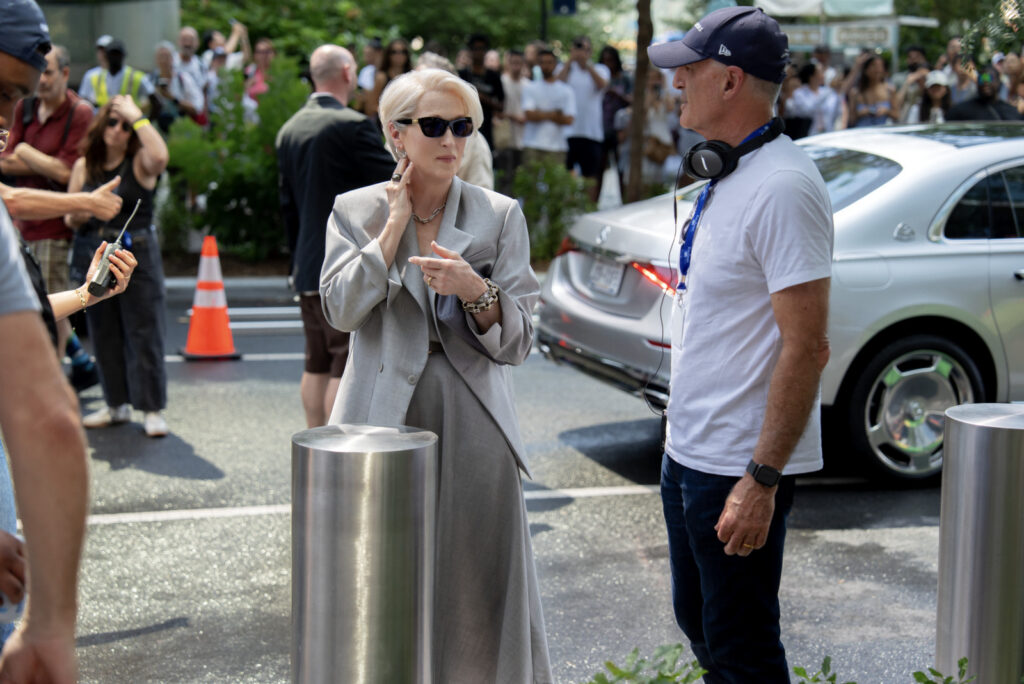
Why and when should filmmakers be open to working with brands?
We’re making a contemporary film. We all live in a world where there are brands and products and advertising, and so it feels natural if you’re making anything that’s not historical or fantastical. It’s going to be odd if a Mercedes drives through one of those films. But it totally makes sense in our world. Filmmakers are trying so often to be authentic, be true to their characters, be true to their story—and it’s hard enough to get a movie made. Anything you can do to protect it from any accusation of inauthenticity is important. But, in our case, [glamorous placements] only added to the authenticity. We were really lucky in that way.
By the way, with all this talk about integrating brands into films, have you ever directed a commercial?
I have yet to actually direct a commercial!
What are you waiting for?
I am waiting for the right commercial, the right collaboration. I would love to do them. [Frankel is repped by IndependentMedia for commercials.]