Newsletter
 Events

Animating the True Story of a Couple Who Adopted a Baby Abandoned in a Subway Station
Second Nurture and Klick Health won 2 Grand Clios for '18 Months'


Sometimes, all you need is a focus group of one.
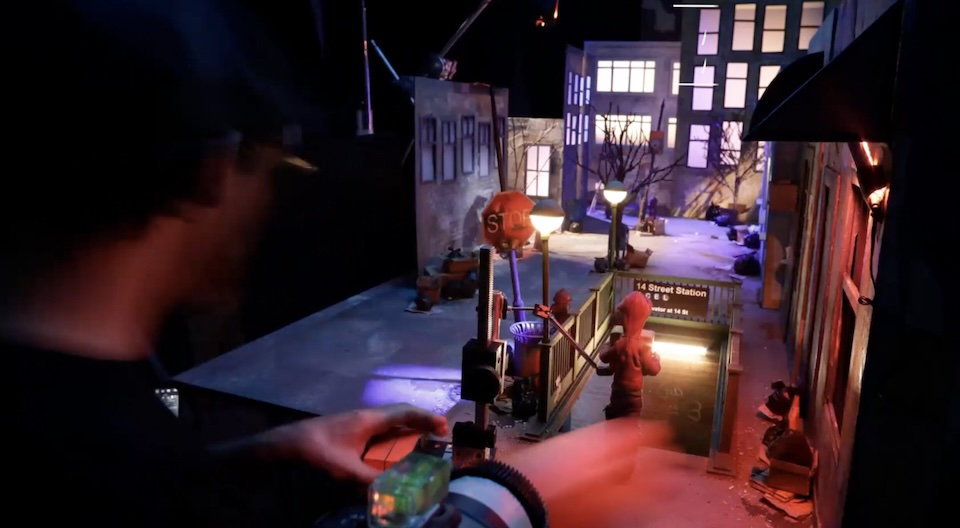
And Klick Health ECD Andrea Lillis found the perfect sounding board while prepping “18 Months,” an acclaimed stop-motion film about a couple (Danny Stewart and Pete Mercurio) who adopted a baby abandoned in a cardboard box at a New York subway station.
“One of my favorite people to share work with is my 7-year-old daughter Anna,” Lillis tells Muse. “I’ll never forget showing her the finished pencil animatic. Kids are the purest audience. She immediately understood the story and felt the tension. By the end, she was tearing up over a simple sketch.”
“What followed was an incredible conversation about adoption and the many ways a family can be formed,” Lillis recalls. “Moments like that remind me that creativity is at its most powerful when it sparks curiosity and helps the next generation see the world with a little more empathy.”
Anna’s appraisal was right on target. Backed by nonprofit Second Nurture, which provides foster family support, and released a year ago, “18 Months” earned major kudos for telling a compelling true story with artful panache.
Lillis developed the project with Amy Fortunato, also a Klick ECD, and Zombie Studios. Last night, at the Clio Health Awards, the initiative scored a pair of Grands, feted for excellence in design and film craft. What’s more, Klick and Second Nurture were honored as independent agency and advertiser of the year, respectively.
Below, Fortunato and Lillis take us behind the scenes:
MUSE: What caused the biggest headaches, and how did you overcome such obstacles?
Amy Fortunato: Like any hand-crafted stop-motion animation, the greatest challenge is time. Every movement, expression and transition must be carefully planned, positioned and captured frame by frame, often requiring hours of work to produce just a few seconds of finished footage. The production of “18 Months” involved hundreds of hours of animation, nine handcrafted sets and custom-sculpted puppets by our partners at Zombie. It was a massive undertaking. But well worth it, as hand-crafted work stands apart.
Maybe there was a time when it almost didn’t come together?
Andrea Lillis: There was never fear—only opportunity. [For example], we dedicated time to continually refining the trial scene together, where sound and camera movement needed to carry the emotional weight of the moment. Those conversations with Zombie and [music studio] Jamute were some of the most rewarding parts of the process. We’re fortunate to work with partners we trust so deeply, because even under intense time pressure, the work continues to evolve and get better through creative collaboration.
What were the best surprises? What made your heart sing?
Amy Fortunato: Sharing the script with Pete and Danny for the first time definitely made my heart sing. There’s always a huge responsibility when you’re telling someone else’s story. You hope you’ve captured their journey authentically and honored their experiences. Seeing their response was so inspiring.
By the end of the read-through, we were all in tears, which felt like a sign that we were making something special. It was one of those moments where you could feel that they saw themselves in what we’d created.
Pete shared that getting to watch Danny find Kevin on the subway platform was incredibly meaningful because he wasn’t actually there when it happened. Through the film, he was able to experience that moment for the first time. Hearing that was powerful. It was a reminder that the impact of this project went far beyond views, press coverage or campaign metrics. The fact that the film could give Pete a chance to connect with such an important moment in his family’s story was a very real, very human impact. And one we’re so grateful we were able to have a part in.
Why do you think your approach resonates?
Amy Fortunato: People can connect to this story in so many different ways. In a time when families are being torn apart and others have their legitimacy questioned, this film and this story stand as a powerful truth that every family is valid, every family belongs and every family deserves to stay together.
Andrea Lillis: It’s both an emotional journey and a call to action, encouraging viewers to support foster and adoptive families, or even consider becoming one themselves.
You’ve mentioned possibly entering this in film festivals. Has that happened?
Andrea Lillis: The film has already been recognized by respected festivals such as Animation 2025 and Animayo, with additional selections we’re not yet able to share–but are very excited about.
More importantly, we see this as part of a larger movement. The future of health storytelling lies not in creating content for healthcare audiences, but in creating exceptional entertainment that happens to be about health. These are stories that can stand alongside the very best films in culture and bring vital human experiences into the mainstream.