Newsletter
 Events

What Entertainment Brands Can Learn From the WNBA
Give fans the full picture


With 160,000 songs uploaded to Spotify daily and every label chasing the same No.1, entertainment brands are struggling to stand out. Ask someone what makes a Netflix original different from an Amazon or Apple original, and most wouldn’t know.
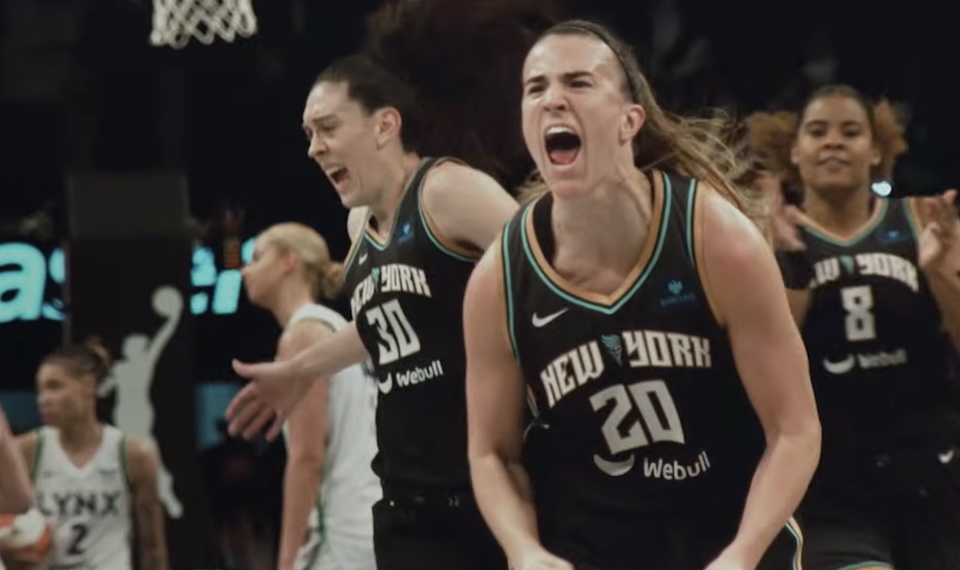
Meanwhile, the WNBA was named the fastest-growing brand in the U.S., the first time a sports league had ever topped that list. It will expand from 13 to 18 teams by 2030. In partnering with one of those teams, we’ve seen that growth come from a long-term focus that many entertainment brands are missing. While they’re chasing the next hit show or No.1, the WNBA is asking how the league looks in five or 10 years and making decisions based on that calculation.
League first, hero second
The traditional playbook in both sports and entertainment has always been the same: find your hero, build around them, hope people follow. Ronaldo, Messi, LeBron—it typically orbits one person. The WNBA flipped that with “Welcome to the W,” a brand platform that holds everything together above any single player or franchise. So, when one team wins the league wins, and when one player breaks through the whole thing grows. Its 2025 campaign, “Viewer Discretion,” builds on the same idea, selling the league as a whole, with the individual players as proof points.
Through this strategy, the WNBA has also mastered the art of engaging fans beyond the game itself.
Give fans the full picture
The challenge for most entertainment brands is they either lean all the way into the content or all the way into its stars, and neither builds a lasting relationship. Who’s Netflix’s talent? Who are the people behind an Apple original? People want to know who’s behind the scenes making the thing. Formula 1 does this so well with Drive to Survive. Yet, most entertainment brands show the output without explaining the process. It’s the same problem agencies have, this idea that you can let the work do the talking.
The WNBA has taken the opposite approach, building an always-on rhythm of storytelling that keeps fans invested between games through behind-the-scenes, locker room and off-court content. When CMO Phil Cook joined from Nike five years ago, the league would go dormant after the finals. Now, that’s completely changed, with fans treated to year-round engagement.
Let brand run the room
When we worked with Atlantic Records on “Music to Movements” ahead of their 70th anniversary, the label had been stuck in that short-term cycle: did we get the No.1? But the artists building real, lasting businesses—people like Fred again.. and Charli XCX—weren’t topping charts, they were building fandom. What kept coming through in our research was that Atlantic was at its best when it was building movements, not chasing moments.
“Music to Movements” became something they used in internal meetings, in new artist conversations, and in how they re-signed Ed Sheeran. The question became “what movement are we creating?” brand as something that runs the decisions. The WNBA operates with that same logic, and that’s the piece most entertainment brands are missing. Brand stays at the layer of the campaign or the design system, when it should be shaping how you show up on social, how you run press, or how you brief a partnership.
Ultimately, the question is whether people will still care about what you’ve built in 20 years. The WNBA understood that from the start, and it’s the reason they’re growing while so many entertainment brands are still measuring success one release at a time.