Newsletter
 Events

Thiago Fernandes of Digitas Health: Innovation Is the Creative Baseline
Outstanding work in pharma caught his attention before the category did


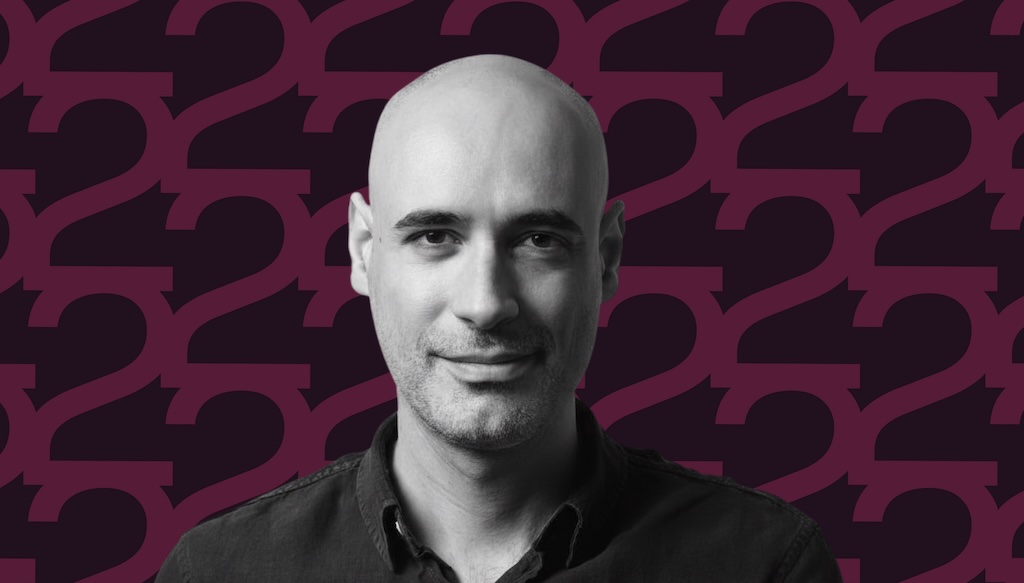
Thiago is currently deputy CCO at Digitas Health. Over the past decade, he has guided work for brands and organizations including UNICEF, Boehringer Ingelheim and Eurofarma. Campaigns like “Baby Minder,” “The Unwearable Collection,” “Lil Sugar: Master of Disguise,” “In Transit” and “bAIgrapher” have earned international recognition. He works alongside his longtime creative partner Widerson Souza.
Earlier, Thiago held leadership roles at Ogilvy Health and Area 23.
We spent two minutes with Thiago to learn more about his background, his creative inspirations and recent work he’s admired.
Thiago, tell us …
Where you grew up, and where you live now.
I was born in Rio de Janeiro and grew up in Nova Friburgo, a mountain town in the state of Rio founded by Swiss and German settlers. It has a character completely unlike the Brazil most people picture. I now live in Florham Park, N.J.
How you first got interested in health.
I spent 20 years in consumer advertising before health was ever on my radar. Moving to the U.S. and finding myself surrounded by healthcare agencies changed that. About a decade ago, I started noticing colleagues doing incredible work in the pharma space. That work caught my attention before the category did, and I began to dig deeper and got more interested.
One of your favorite projects you’ve ever worked on.
“In Transit.” What a great experience to partner with one of the most familiar voices in New York City—the woman who had been guiding subway riders for decades—and let her reintroduce herself on her own terms, through the same system that had carried her voice as a man for years. Working on it was one of the most meaningful learning experiences of my career, personally and professionally.
A recent project you’re proud of.
“Silent InHERitance,” a campaign for the National Ovarian Cancer Coalition. The work explores how silence around ovarian cancer is inherited alongside the genetic mutations that cause it. The campaign is as beautiful as it is painful and necessary. I’m proud of the people who made it: a team of women and men, on both the agency and client sides, many of whom came to this work with something personal at stake.
One thing about how health is evolving that you’re excited about.
Since the pandemic, healthcare has moved to the center of culture. The channels, the language, audiences’ willingness to engage—it feels like decades compressed into a few years. What excites me most isn’t the pace. It’s the fact that healthcare and evolution are inseparable. Innovation in this space can’t be seen as a differentiator—because it’s the baseline. Yes, it’s a high standard, but one that communication must meet, nevertheless.
Someone else’s work, in health or beyond, that you admired lately.
“The Missing Word.” We know that healing starts with a diagnosis, with being able to name what you have. There’s something deeply therapeutic about that act. Applying it to a grief this bottomless feels like exactly the kind of thing advertising should do more.
A book, movie, TV show, or podcast you recently found inspiring.
I just started reading Skybound by Lou Iovino and I’m hooked. (Thanks, Allison!) Fun fact: Lou works at Digitas Health, which is one of the reasons I love the place. I get to spend my days around fascinating people. And one of them will definitely give me their autograph the next time I meet him in Philly.
A visual artist or band/musician you admire.
The Cure. I’ve been listening to them since my teenage years, and there’s something about a band that soundtracks your adolescence that feels like being with an old friend. Once, traveling through Europe, I stumbled onto one of their shows in a piazza in Rome. That was a crazy night.
Your main strength as a marketer/creative.
Seeing creativity as a leadership tool, not a department. When I was a creative, my sole goal was to make my team’s work better. Now, success means making everyone else’s work more creative, regardless of where they sit in the agency.
Your biggest weakness.
I am really, really bad at networking, especially online. Not performative bad. Actually bad.
2 Minutes With is our regular interview series where we chat with creatives about their backgrounds, creative inspirations, work they admire and more. For more about 2 Minutes With, or to be considered for the series, please get in touch.