Newsletter
 Events

Here's the Story Behind Those Weird Mozilla Videos
At the intersection of AI and human inspiration


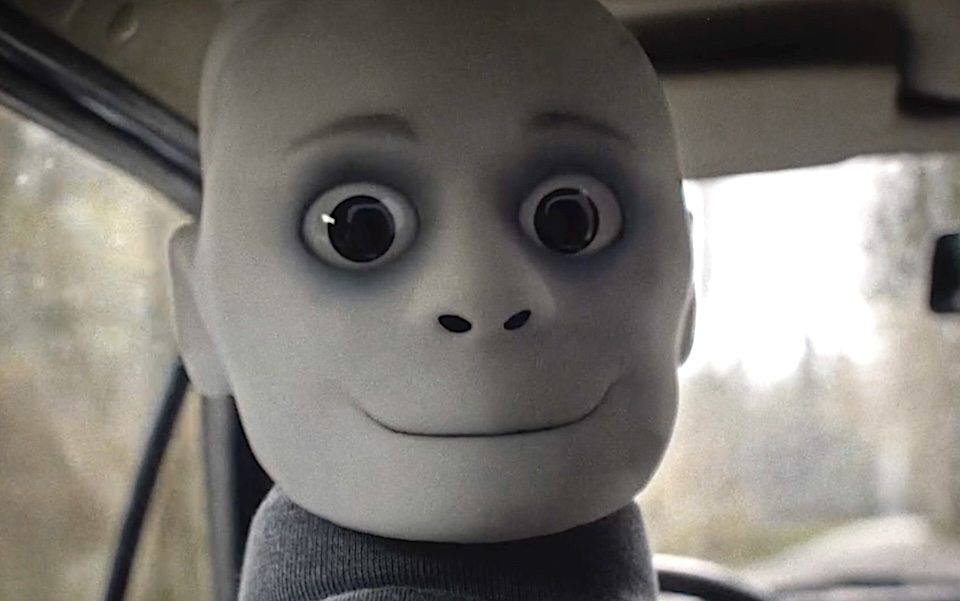
Late last year, I was targeted by an anonymous group calling themselves Basement Freaks. They had become aware that I had been using generative AI in a series of music videos I’d made, and wanted a word.
They led me into a dark cupboard and laid out their plan: to drag the world kicking and screaming toward the funhouse mirror of the present tech moment. They would force it to look itself right in the eyes—as an accompaniment to Mozilla’s annual corporate report, which they had been commissioned to design.
For me, this presented an opportunity to explore my own relationship with generative AI—both thematically and in terms of craft. Maybe it was Stockholm Syndrome, but it didn’t take long to feel like I was in the right room. We shared a love of Chris Cunningham, Slavoj Žižek and the urge to make something that felt like you’d stumbled across it on Ebaumsworld.
I was raised in a neo-Luddite community in the Deep South of Ireland so I didn’t see a screen until I was 18. Like the elders warned, I quickly became hooked. I think we are going to look back at this time in the same way we look at photos of people smoking on airplanes. I was excited to work on something that directly addressed that massive throbbing tentacled elephant in the room.
Our development process was fluid: Rapid exchanges of visual references that used generative AI to get the freaks as close as possible to the images I had in my head. These early experiments became the north star for the design of elements like the AI Driver, the Blackbox and the Red Panda—all of which were then further developed and elevated through the combined efforts of our SFX and VFX teams. In an ideal world, this is how I’d like to use AI—what I’d describe as a hybrid workflow—rather than hybrid production.
I’ve had some fun results using AI in low-budget music videos to develop elements shot in-camera, where the DIY nature of the form allows the “warts” of AI to be accepted. But if you’re aiming for something cinematic and engaging, generative AI hasn’t convinced me personally.
The only AI-generated element that appears on screen in these films is the voice of the Blackbox—which, conceptually, feels pretty airtight. (If you want a glimpse of what the future sounds like, visit any AI voice generator site and hear how many of them are programmed to be “sultry.”)
I wanted to take a drama approach to each of the “Choose You Future” films. And I was thrilled when cinematographer Suzie Lavelle, costume designer Susie Coulthard and production designer Elena Isolini came on board.
As we accelerated towards production, films replaced AI mock-ups as our primary references. We spoke a lot about Gus Van Sant’s depiction of American suburbia in Elephant, and how filmmakers like Lynne Ramsay and Jean-Marc Vallée root you in a character’s experience via camera perspective.
A week before production, we realized we needed to rebalance the overall narrative and introduce a script that expressed the significance of collective power. That led us to the brain-fruit idea. The experimental music element of this script was something that developed in response to Elena Isolini’s involvement (as she herself is an experimental musician who likes to plug wires into rocks.)
Another victim on the Basement Freaks hit list was America’s greatest living composer, Nico Muhly, who joined us to make sure that the ads we were trying to make feel like cinema also got the chance to sound like cinema.
If I want audiences to take away anything from this campaign, it’s exactly what Mozilla says at the end: Choose Your Future. We don’t have to hand our lives over to soul-sucking black boxes or perverted automatons designed to drag us into our lower selves.
Our inner worlds, and the internet itself, can be liberated from the algorithmic tendrils of big tech if we can just find a moment to tear ourselves away from our phones, and all plug our synthesizers into the engorged mushroom of progress.