Newsletter
 Events

Lauren Greenfield Chronicles Teens' Complex Lives in 'Social Studies' Exhibition, an Extension of the FX Docuseries
The multimedia event from the director of Dove’s 'Like a Girl' recently opened in Berlin


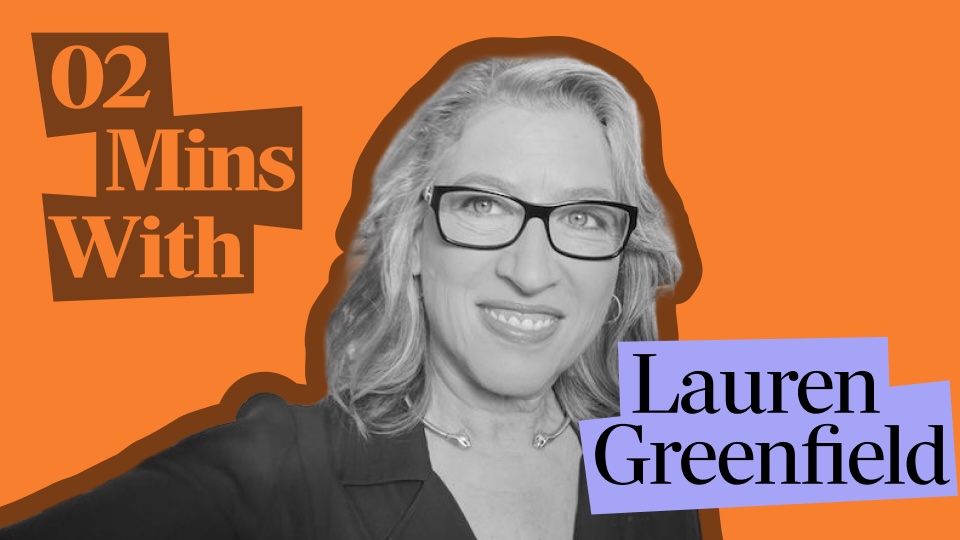
“The exhibition lets me deconstruct the media itself. We take what normally lives on a 6-inch screen and blow it up to the scale of the human body, slowing down the scroll so you can actually see it.”
That’s how filmmaker and photographer Lauren Greenfield describes “Social Studies,” her multimedia presentation at Fotografiska in Berlin. The event serves as an extension of the 2024 FX docuseries Social Studies, which Greenfield conceived and directed.
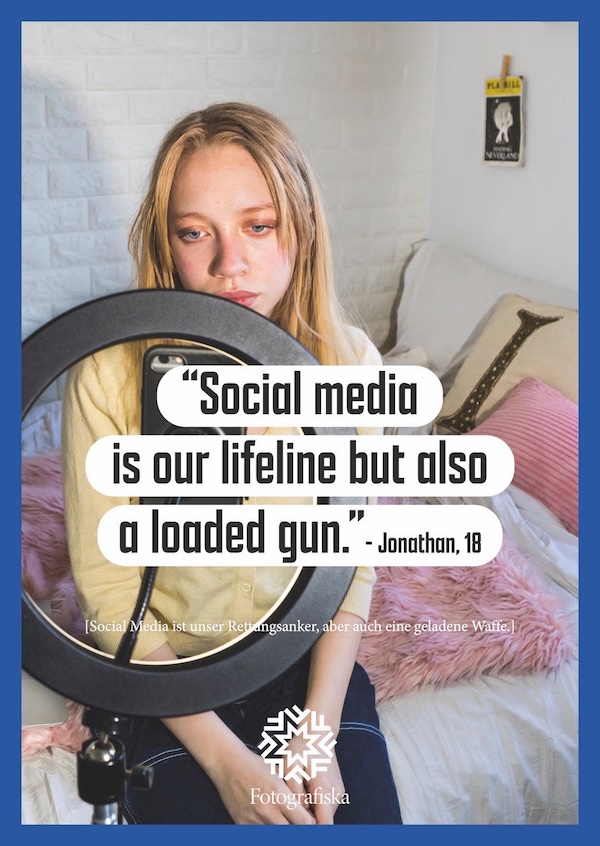
“I asked 30 Los Angeles teenagers, kids who have never known a world without the iPhone, to share their phones with me: their feeds, their texts, their posts and photos,” she says.” Over one school year, we filmed for 150 days and captured more than 2,000 hours of screen data. What I found was a coming of age rewired at the root: Bullying, beauty standards, comparison, racism, sexuality.”
The installation expands on those insights, giving added dimension to young peoples’ hopes, desires, fears and obsessions to foster deeper understanding.
“The typologies and trend studies turn private scrolling into public reckoning: What teens eat in a day, hundreds of misogynistic posts, the crying selfies they take and share. In the ‘Algorithm Room,’ you step into another person’s feed and fall down their rabbit hole, which builds empathy in what is usually an isolating silo.”
Greenfield will appear as the opening speaker at Berlin’s Ciclope festival for creative advertising, which opens on Oct. 6.
Below, we chat with Lauren—who directed Dove’s groundbreaking “Like a Girl” campaign” and, more recently, co-founded commercial production company Institute Pictures—about her background, creative aspirations and where she goes from here.
Tell us more about ‘Social Studies.’
It covers 5,000 square feet and brings together photography, large-scale typologies, wallpapers built from composites of social media imagery. There are 17 screens showing seven new video works alongside scenes from the series and two immersive projection installations. With [teenager] Ella’s collaboration, we recreated her bedroom and her ritual of documenting what she wore before school, 300 times, layered with the imagery that fills childhood today.
What’s your goal for the project?
I want parents, teachers, lawmakers and most of all other young people to walk through this show and start talking. This is a reckoning, not just for the kids but for the society that handed them these tools and let them become what [Social Studies participant] Sydney called “the guinea pig generation.” The experiment has been run on them. The question now is what we do with the results. Ivy answered it best, in lipstick on her bedroom mirror: “Do you make mistakes, or do you make a change?”
Where did you grow up, where do you live now, and how do the two compare?
I grew up in Venice, Calif., and I still live there. Today’s Venice is much more gentrified than the one I grew up in, when it was full of artists and their studios, plus hippies, dropouts, druggies and people looking for an alternative way of life. I grew up on a street by the beach, spending half my time in a communal living situation at my dad’s and the other half at the commune where my mom lived.
Was there an “a-ha” moment that made you realize what you wanted to do?
There were four. The first was at Harvard. My teacher, Christopher James, looked at my first contact sheets, pictures I had taken at a Republican convention, and told me I was a genius. That changed me. I was very insecure and didn’t feel like an artist. Having him see something special in the way I saw things meant everything.
The second came during a year I spent abroad studying film and anthropology. In Budapest, our professor, Ákos Östör, described his life as a cultural observer as a “calling.” I realized I had that calling too, and that I wanted to devote my life to studying culture.
The third came when I got back to Harvard and took Barbara Norfleet’s class, “The Photograph as Social Document.” Learning that a photo could be a sociological tool was a life-changing revelation.
The fourth was landing a National Geographic internship, which was like waking up inside a dream, surrounded by mentors. When I watched Jodi Cobb present her pictures and make the case for how each one told a story, I saw that the photographer could be the one responsible for telling the story. I had found my métier.
A fifth came much later. My career started in documentary photography and filmmaking, but over the last two decades I’ve also moved into advertising, which has become a very exciting and vibrant outlet for creativity and social impact. The life-changing moment in that evolution was “Like a Girl.” I watched it go viral, reach 250 million people, move from social media to the Super Bowl and become a grassroots movement that changed the language and started a conversation of female empowerment. I had spent years documenting the negative effects of advertising. And “Like a Girl” showed me how it could be harnessed for good and at scale.
That’s what led Frank Evers and me to found Institute: a company built around directors and photographers with strong visions and distinct voices, who bring authenticity to everything from comedy and sports to fashion and tech. I’m proud of what our directors at Institute have been doing, from Sandra Winther’s new campaign for Tiffany to Jackie van Beek’s mockumentary comedy. Purpose-driven work is part of what we do, but the real through-line is the artist’s truth, something to say, and honest performances, whatever the brief.
How did you first get interested in film?
I took Robb Moss’ class at Harvard (he made The Bend in the River), and we made films on 16mm. It was a revelation. My photography had always been about storytelling, access and characters—and now I had another dimension: time and narrative. That was enough for me to change my major and enroll in a yearlong program studying film and anthropology. We traveled around the world and made our own still images and films. By the time I got back to school a year later, I was hooked and knew what I wanted to do with my life.
What’s your favorite film?
There are too many. I love films that push the genre, like Stories We Tell, Sans Soleil and Anselm, a little-known 3D film by Wim Wenders. (I also love his Wings of Desire and Perfect Days.) From this year, I loved Wild Horse Nine, Elsinore and Club Kids.
Favorite director?
I don’t have one, but I love, love, love the work of Chloé Zhao, Sarah Polley, Sofia Coppola and Greta Gerwig.
Tell more about some recent projects you’re proud of.
I have a new book coming out in November, The Queen of Versailles: an American Allegory. It is a photography book that reconsiders the story of Jackie and David Siegel as a prologue to the Trump era.
The Berlin show has the “Beauty Machine,” which we created with Ogilvy and Dove. It’s a vending machine that asks you to “pay with your face” before it dispenses a mask, as a way of confronting “Instagram Face” and algorithmic beauty standards. It debuted at Waterloo Station in London in March. And now it greets visitors at the entrance to Fotografiska Berlin. After years of putting the world inside a frame, building a world people can walk into felt like a whole new language.
What was the biggest challenge you ever faced on a project? How’d you manage to make it all work out?
Every film feels like the biggest challenge until you figure out how to make it work. At the Sundance Lab, they called documentary a medium made in hell. But in all seriousness, Social Studies was the most challenging project of my career. We had to earn teenagers’ trust and persuade them not only to let us follow them but to give us access to their phones. I also had to figure out how to capture what was happening on their phones and download it simultaneously while we were shooting, which was a logistical feat.
What made it work was treating the teens as collaborators, not subjects. We held regular group sessions, without phones, where they talked with honesty, and many of them realized for the first time that their friends were facing the same things. That trust is what made the access possible.
What’s your advice for aspiring filmmakers?
Don’t wait for permission from a funder, a network or a client. Start telling your story and build a train with so much momentum that others want to jump on board. Follow your heart, tell the story only you can tell, and don’t let anyone get in your way.
You’ve got 2 minutes with the industry. What’s your hot take?
Trust. In the age of AI and misinformation, trust is all that matters. Audiences can spot something fake instantly, especially young people, who grew up being sold to on every screen. The brands that will earn trust are the ones willing to tell true stories, even uncomfortable ones. And true doesn’t have to mean heavy. Some of my favorite commercial work I’ve directed is comedy and hidden camera, because nothing is funnier or more disarming than a real person having a real reaction.
2 Minutes With is our regular interview series where we chat with creatives about their backgrounds, creative inspirations, work they admire and more. For more about 2 Minutes With, or to be considered for the series, please get in touch.