Newsletter
 Events


Argentinian Condom Brand Addresses the Lack of Sex Among Young People
There's a perfume, a mockumentary and more


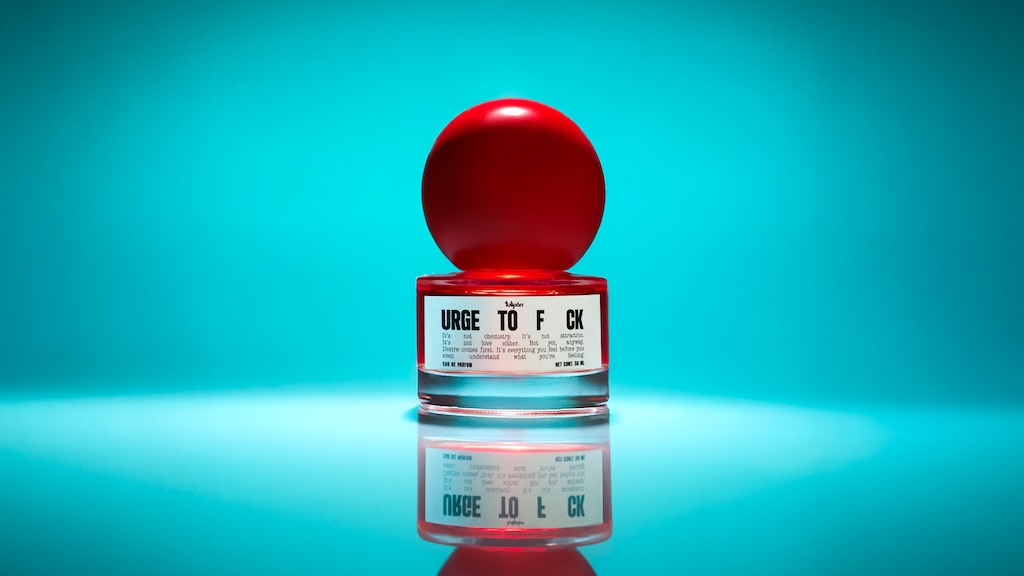
With young people engaging in less sex these days, Argentinian condom brand Tulipán responded by developing a fragrance called “The Urge to F***.”
The perfume anchors a broader campaign created by the Zurda agency. The initiative encompasses product development, a mock documentary, social outreach, OOH, streaming and more. The effort allows the condom brand to take part in cultural conversations, transcending the category itself.

“We live in a time when apparently we’ve never talked so much about sex, never had so much information available and it’s never been easier to meet people,” says Diego Gueler Montero, co-founder and CCO of Zurda. “But at the same time, different studies show that young people are having less and less sex.”
“We started thinking about what Tulipán could do to make people want to have sex again—or at least to get them talking about it.”
The initial step was to jumpstart conversations on the topic by announcing on the brand’s social channels: “We don’t know what else to do to get you to f***.”
“The whole country thought the brand was shutting down,” recalls Montero.
Then came “Ganas de Coger” (“The Urge to F***”), which is limited-edition in scope and aims to keep the cultural conversation alive.
“We’re not saying it’s an aphrodisiac or that a perfume is going to solve the sex recession,” Montero says. “But it can work as an excuse to approach someone, get off the screen and start a conversation.”
The mockumentary that followed was designed to feel more like something people would stumble onto than an ad. It allowed Zurda to explore why people are having less sex. It gives experts a tongue-in-cheek platform and helps the brand build “a world in which Tulipán is genuinely trying to solve this problem,” Montero says.
Zurda worked with production company Mamá Húngara, and directors Carmen Rivoira and Federico García Rico.
“They understood that we needed to build situations and characters and then allow something to happen, rather than trying to control every single word,” says Montero. Improvisation was critical; it helped provide a measure of authenticity amid a sometimes absurd premise.
“We showed up with a cultural tension and a business problem, and together we started building what the answer could be.”
“If we manage to get people to have a little more sex, Tulipán will probably sell more condoms. So it’s a fairly altruistic and commercial goal at the same time.”