Newsletter
 Events

GS&P’s Rich Silverstein Puts His Legendary Career in Perspective
After 43 years of crafting great campaigns—and treating each project as if it was 'life or death'—he’s stepping down


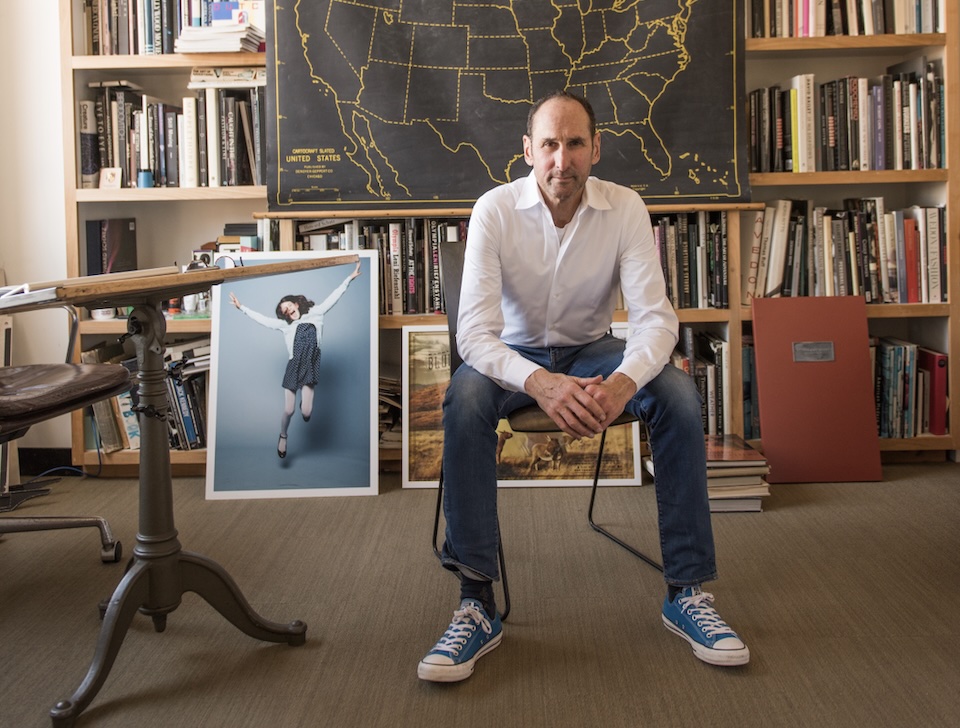
“I put one foot in front of the other. Each project felt like life or death to me,” Rich Silverstein tells Muse. “I took every one of them so seriously, and no job was too small or too big.”
“That’s how I created my life. Worry, put your head down and create, then worry some more about whether it’s any good. I believe you make your own good luck.”
At year’s end, Silverstein, 77—an art director by trade who cofounded Goodby Silverstein & Partners 43 years ago and serves as co-chairman—plans to step back from day-to-day operations and and take the title of chairman emeritus. Co-founder/co-chairman Jeff Goodby, CEO Sarah Thompson and CCO Margaret Johnson will continue to guide the agency, long one of adland’s brightest creative lights.
Silverstein looks to pursue passions outside the business. One example: 13 Days: the Musical, a take on the 1962 Cuban missile crisis created with AI.
“I’ve done the best advertising I can do,” Silverstein says. “Now I want to challenge myself to do something I’ve never done before.”
Below, Rich chats about his lengthy tenure in the biz, the changes he’s seen and what comes next.
Was there even an “a-ha” moment in your life that made you realize what you wanted to do?
Being introduced to Milton Glaser, Saul Bass and Charles and Ray Eames at the Parsons School of Design sealed my fate. Each in their own way was a modernist. Look at Milton Glaser’s Dylan poster today, and it’s still great. Charles and Ray Eames had the furniture design, the animation of the tops and “Powers of Ten,” which is still a great film. Those timeless ideas just spoke to me.
What was your career pinnacle? What did you learn from it?
Jeff and I walking on stage at Cannes to get the Lion of St. Mark [in 2019] was amazing. I thought, “What? How did I get here?” It was great to hold that heavy Lion and carry it onto the plane. I still remember that. What it taught me, and still teaches me, is to be humble and teach others. Don’t rest on your laurels.
What was the very worst moment of your career, and what did you learn from it?
The worst moment is every single time the client doesn’t buy something remarkable, which happens a lot. I get devastated. I ask myself, “What am I going to do? Why don’t they understand it?” Then I take a deep breath, put my head down and go at it again. So, the worst moment comes around every couple of months. But seriously, I have a whole deck on my computer, “What Work I Couldn’t Sell.” It’s pretty great.
What’s your absolute fave campaign for a client you never worked for?
Here are the two best commercials I’ve ever seen. First is The Guardian’s spot, a story told from different points of view. It’s so brilliant. Until you see the whole perspective, you don’t understand what’s happening. It’s in black and white, and it’s still good today. I’m in awe of it. Second, of course, is Lee Clow and Chiat/Day’s “1984” Super Bowl spot for Apple, directed by the great Ridley Scott. They made a film in 60 seconds that changed the history of what a Super Bowl commercial could be. They set the mark.
Can you pick a campaign of yours that crystalizes what you think creative can and should achieve?
A great campaign builds on itself. It has to be simple, powerful, honest and highly entertaining. That’s our E*Trade Super Bowl campaign [from 2000] by Gerry Graf and Dave Grey, shot by Brian Buckley. I watch those spots and still laugh. Two guys and a chimp dance to “La Cucaracha” in a garage, with a super: “We just wasted 2 million dollars. What are you doing with your money?” Then there’s a guy in the hospital with money coming out the wazoo. The super implied, “You should be so lucky!” Honestly, I’m not sure anyone would buy these ideas today. E*Trade almost didn’t. I promised that if they wouldn’t, we’d make it ourselves. But they came around.
What are your greatest strengths and weaknesses as a creative person?
Honesty. It’s my greatest strength and my greatest weakness. I can be blunt. Honesty cuts both ways. Sometimes people don’t want to hear the truth, but you must tell them.
You can give one piece of advice to a young ad person, what would that be?
Tell the truth. Find the truth in the problem, and the idea will unfold from there. If you make something up, it’s going to feel made up. “We just wasted 2 million dollars.” That was the truth. We did that. And everyone got it.
If you could do it all again what’s one thing you wouldn’t ever change—and one thing you would?
I’d never change being partners with Jeff. And it started with Andy Berlin [the agency’s third founder]. It wouldn’t have happened without Andy dragging me, and then the two of us dragging Jeff. That’s how it went: one, two, three. The one thing I would change is the company’s name, to Silverstein Goodby & Partners. That was my biggest mistake.
Like all right thinking people, you’re stepping into eternity as an AI. What’s up with that?
My PR head, Meredith Vellines, conceived GPT Rich to keep me around forever. And no, GPT Rich didn’t answer these questions.