Newsletter
 Events
What Advertising Can Learn From Fantasy Football
What if fans drafted brands instead of players?


Every Super Bowl Sunday, millions of people do something strange. They watch commercials … on purpose. But what’s even stranger is how they do it. They debate winners and losers. They post highlights on Instagram and roast bonehead strategies in group chats. They even delight in trick plays—like when Tubi had my dad angrily reaching for the remote.
They laugh. Sometimes they cry. And inevitably, they insist that this year’s lineup isn’t nearly as good as it was “back in the day.” If you’re a Cowboys fan, that last part should sound hauntingly familiar.
In other words: they behave exactly like sports fans.
Advertising Is Already a Sport
Advertising, at its best, is a sport. The screen is our field. Creativity is our playbook. And it’s a game of inches for the scarcest resource of all—attention. (Cue Al Pacino yelling at a room full of junior creatives.)
So, it’s no surprise that sports and advertising are inexorably linked. According to the Sports Business Journal, of the 100 top-rated TV shows in 2025, 96 were live sports. Streamers are fighting over rights. Brands are lining up for partnerships. In an increasingly fractured media landscape, live sports, like the Indiana Hoosiers and Curt Cignetti (“Google him!”), remain undefeated.
If advertising wants to stay culturally relevant, it should probably learn from sports culture.
And like any sport, the fun isn’t just in watching—it’s all about participation.
Stuck on the Sidelines
With the lone exception of the time we frantically entered a DoorDash promo code the length of a Sean McVay play call, Super Bowl advertising is mostly a one-way street.
Movies have Letterboxd. Sports have fantasy leagues. Books apparently have … steamy dragon fan fiction. Every major form of entertainment has figured out how to turn audiences into active participants rather than passive consumers. Except us. Advertising has … X? Grok, please don’t put my ad in a bikini!
What If We Let People Play?
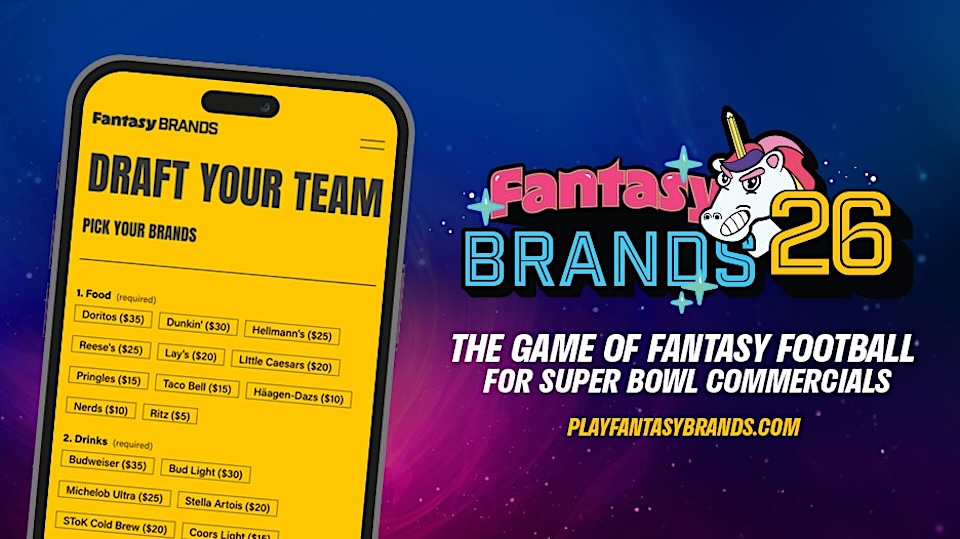
That question led us to a small experiment called Fantasy Brands. What would happen if we treated Super Bowl commercials like a game of fantasy football? If people drafted brands instead of players? If ads earned points based on how audiences and industry experts rated them—Rotten Tomatoes-style?
The idea started in ad school and lived for over a decade as a messy spreadsheet shared with friends and family. We assumed only ad nerds would care. We were wrong.
Year after year, we got requests from people with zero connection to the industry—parents, quirky aunts, kids and some mildly intelligent dogs—asking to play.
They cheered when their ad crushed it. They mourned bad ads like game-deciding interceptions. They talked trash. They had fun. And they always asked if we were doing it again next year.
Turning Consumers into Fans
So why does this work? The shift, from casual viewer to participant, is a literal game changer.
When people can play, they pay closer attention. They remember more. They care more. And for one night a year, commercials aren’t a break in the action.
They are the action.
So why not give people a way to get in on it? Not just with better content, but with a gamified experience. Because advertising is a sport. And sports don’t survive on passive viewers.
They thrive on fans.
Even Bears fans. God bless them.
If you want to learn more about Fantasy Brands, visit playfantasybrands.com. And if you work in advertising and are interested in helping rate this year’s ads as part of our Industry Panel, you can reach us at [email protected].