Newsletter
 Events
The Super Bowl Isn’t a Creative Outlier. It's a Cultural Mirror
A campaign's effectiveness starts and ends with the consumer



Every February, the advertising industry treats the Super Bowl like a creative holiday. Budgets balloon. Celebrities multiply. Expectations soar.
And yet, year after year, the same uncomfortable truth emerges. Even the biggest stage in advertising doesn’t magically make ads effective.
The Super Bowl isn’t a creative anomaly. It’s a magnifying glass. What works there tends to work everywhere else, and what fails there usually fails quietly the rest of the year.
At System1, we’ve tested every Super Bowl ad with real people for the past six years, more than 90,000 consumers, alongside millions more across everyday U.S. advertising. What we’ve learned is refreshingly unglamorous. Effectiveness doesn’t come from spectacle. It comes from emotion, consistency and clarity.
If People Don’t Feel, They Don’t Buy
Creative effectiveness starts and ends with the consumer.
When we test ads, we don’t ask people what they think. We measure how they feel. Decades of behavioral science tell us why: emotional response is far more predictive of real-world behavior than rational evaluation.
Ads that generate strong positive emotion are significantly more likely to drive long-term brand growth. Ads that create emotional intensity, positive or negative, are more likely to drive short-term sales. The true enemy of effectiveness isn’t bad taste or controversy. It’s neutrality.
And here’s the reality check: most advertising is neutral. Around half of all ads sit squarely in the middle on emotional response. Just 1 percent create the kind of feeling strong enough to separate a brand from its competitors and deliver meaningful market share growth of around 3 percent.
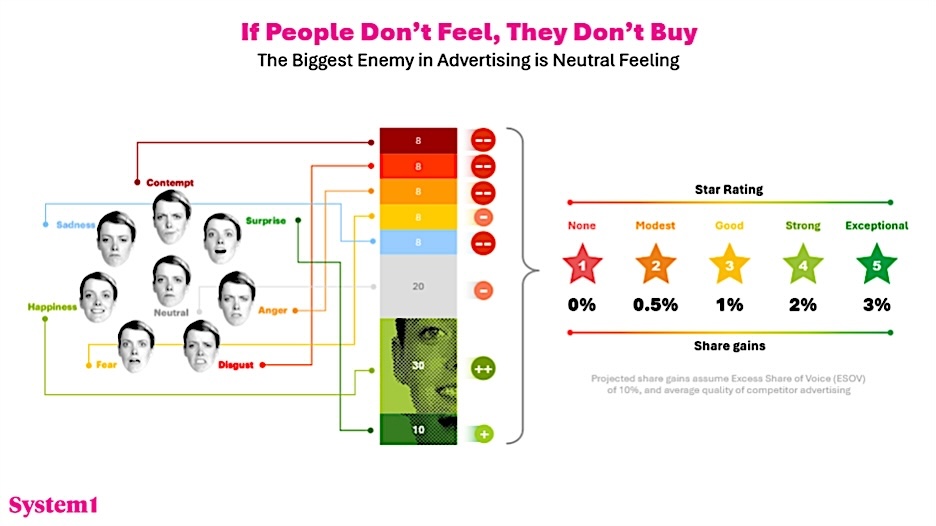
Super Bowl ads do slightly better than the norm, but not by as much as their price tags would suggest.
Bold Beats Safe. Every Time.
Great advertising tells stories. And effective stories move people.
Some create tension and resolve it. Others take viewers on an emotional journey with peaks, dips, and surprises. What they share is a willingness to avoid the mushy middle.
That often means embracing negative emotion in small doses—sadness, fear, discomfort—before resolving it into something hopeful or joyful. Ads that dare to go there are remembered. Ads that play it safe are forgotten.
The lesson here isn’t to shock for shock’s sake. It’s to stop mistaking politeness for effectiveness. Feature-heavy ads, testimonial montages and inoffensive storytelling don’t build brands. They quietly disappear.
The Most Powerful Super Bowl Ads Aren’t New
When we look at the most commercially effective Super Bowl ads over time, those that combine emotional impact, sales response and brand recognition, a clear pattern emerges.
The winners aren’t usually the most novel. They’re the most familiar. Think the Budweiser Clydesdales. The M&M’s spokescandies. Brands that return year after year with recognizable characters, assets and ideas consistently outperform those chasing one-off fame.
That’s not an accident. Brand-owned characters outperform celebrity led ads by nearly a full effectiveness star on average. They drive stronger sales response. They deliver better brand recall. And unlike celebrities, they don’t leave you scrambling when a scandal hits or a contract expires.
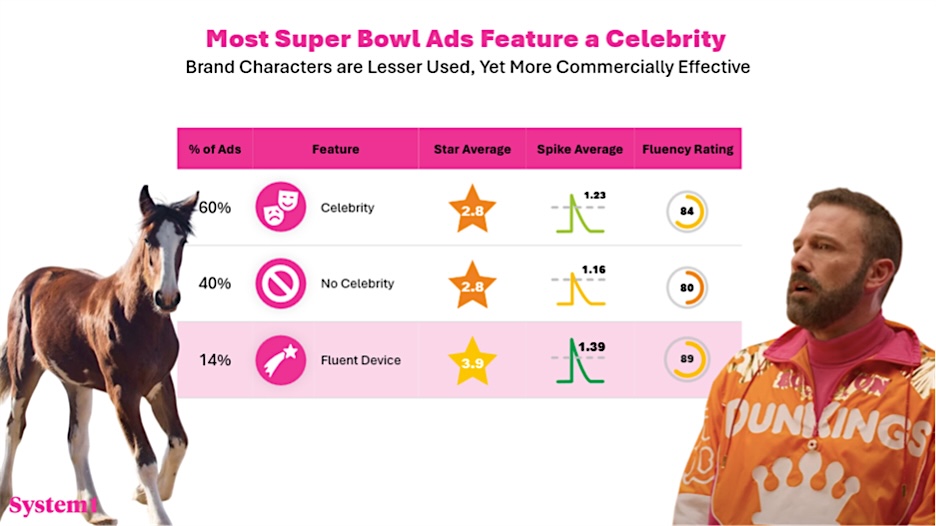
Celebrities can work, but only when brands commit to them long enough for familiarity to compound. When the same celebrity appears consistently across campaigns, like T-Mobile’s dynamic Super Bowl duo of Zach Braff and Donald Faison, effectiveness rises sharply. The problem is that consistency is hard. Characters, however, are brand-owned shortcuts to memory.
They take time to build, typically a few years, but the payoff grows. By year five, character-led advertising delivers meaningful share gains. The brands that benefit are the ones willing to invest past the first campaign.
Your $8 Million Problem: Brand Recall
There’s another hard truth hidden in Super Bowl advertising, one that should make CFOs wince.
Last year, average brand recall across Super Bowl ads was 79 percent.
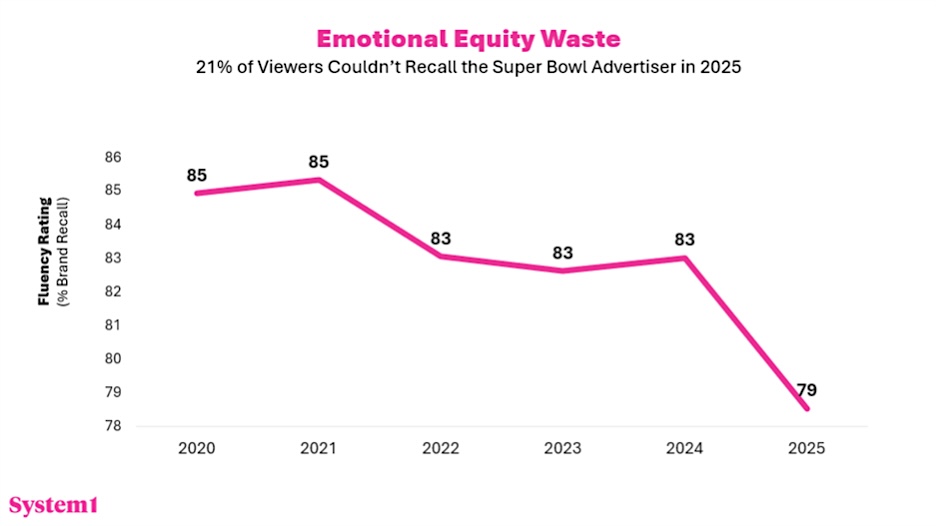
That means roughly one in five viewers couldn’t confidently tell you which brand an ad was for.
Why does this happen? Because some Super Bowl ads prioritize suspense over signals. Brands hide until the end, hoping the reveal will feel cinematic.
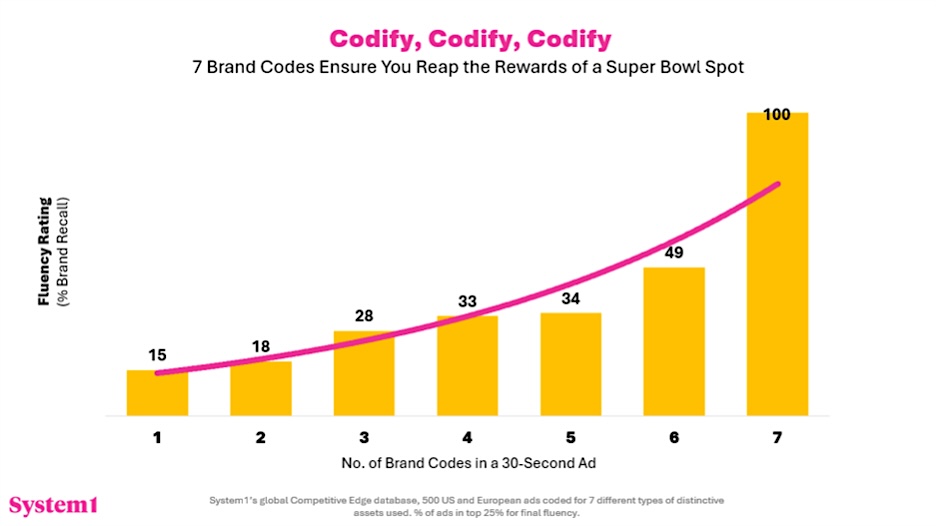
But effectiveness doesn’t require heavy handed logos. It requires distinctive brand cues, colors, characters, packaging and sounds, woven naturally throughout the story.
When ads consistently embed enough of these cues, brand recall can reach 100 percent. Not eventually. Immediately.
The Super Bowl Lesson That Actually Matters
The biggest mistake marketers make is assuming the Super Bowl requires a different rulebook.
It doesn’t.
The same principles that drive effectiveness on the biggest stage apply to everyday advertising: make people feel something, show up consistently, and make sure they know it’s you.
The Super Bowl doesn’t reward bravery because it’s special. It rewards bravery because bravery works.
The question isn’t whether your brand can afford to advertise like this once a year. It’s whether you can afford not to do it the other 364 days.