Newsletter
 Events

How TaylorMade Told the Human Story Behind Its Drivers
Candid doc explores the process behind perfection


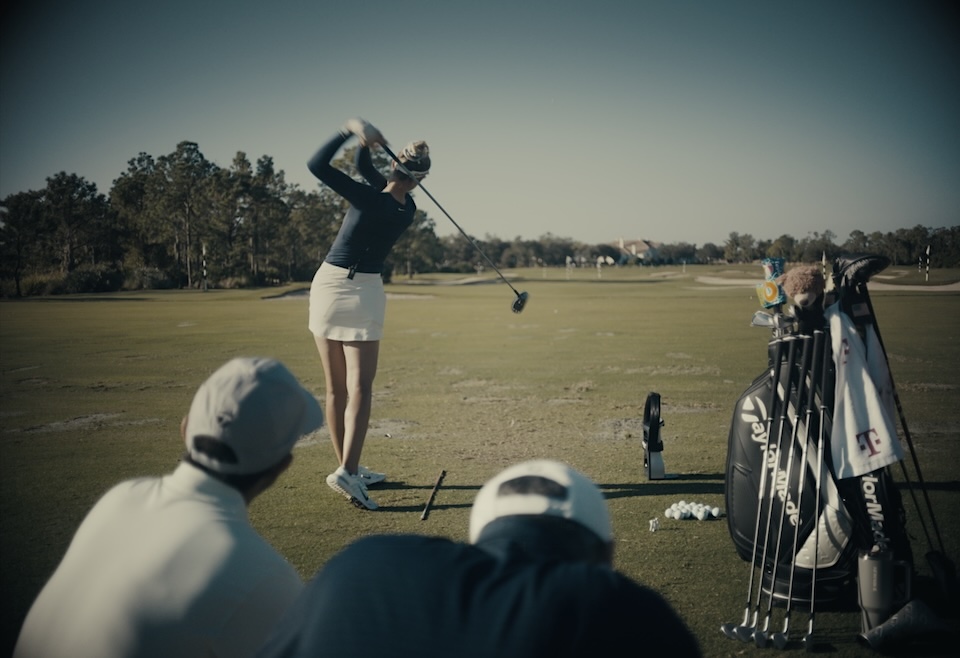
Sports marketing is about certainty: What works, what performs, what wins. But in my experience, the real story is much closer to iteration, failure and doubt. This is where the tension lies. With “Finding Fast,” this is where we started.
When Zambezi approached me with the idea of crafting a long-form documentary for TaylorMade, the brief appeared simple. Launch the Qi4D driver with a film about speed. It’s the kind of story that resolves itself before you start.
So from the jump, we foraged for a deeper story about how the brand even got here. The relentless push for new tech. Setbacks. Testing. Missteps. Rollbacks. Engineering teams at TaylorMade are in constant negotiation with what isn’t working yet. TaylorMade embraces failure in its process and was keen to make this clear.
Armed with this commitment to candor, we set out to get as intimate a look as we could inside a category that usually hides process behind perfection. For me, honesty requires connection—and connection through a lens is relative to proximity. I needed the subjects to buy in on me getting uncomfortably close. Near enough that I took on the role of DP. Narrowing the gap between subject and storyteller is the best route I know to find some sort of truth.
I also tend to approach documentaries like a conversation. Uncovering as I go. I want to discover something in making a doc. If I don’t, probably neither will the audience. The best docs are malleable and felt. You can hardly pin a theme to them. Flannery O’Connor’s sentiment rings true: “Discussing story-writing in terms of plot, character and theme is like trying to describe the expression on a face by saying where the eyes, nose and mouth are.”
To their credit, the team at TaylorMade embraced the vision we were after and allowed space for us to find the film’s shape. Even when it wasn’t clear what that shape would be.
Films like All That Breathes and Nomadland were front of mind for me. There’s a candor inherent to indie film that more brands could benefit from. We used very few lights. Embraced negative space. Let the story unfold at its own pace. For lensing, I went with Camtec’s “Astra” Master Primes, developed with Hoyte van Hoytema. They lured the film to a more tactile place.
We kept repeating the phrase “heavy is the crown” during production. I knew this film needed to have teeth. Thankfully, Zambezi creative director Jay Morrison was willing to trudge through uncertainty with me to find them. Production consisted of several nimble teams in various locations across the country, often awaiting the call from producer Pia-Louise Lauritsen. We were poaching actual testing sessions where players decided whether they would switch to the new driver. Real-time development and testing like this are rarely made available for filming.
Notice was short, but the tension was invaluable.
In the end, this film had to be about people. More than product, tech or even golf. Alongside executive story producer Daniel Amigone, we discarded the formalities of traditional interviews, bypassed celebrity varnish and flattened the hierarchy. Tour players, executives, fitters, engineers—they all spoke candidly. No soft edges or mannered soundbites. Just driven people working through something in real time.
The success of “Finding Fast”—over 10 million views in under two months—has very little to do with speed. It has to do with a brand being honest and an entire team being willing to sit inside the unknown.
We didn’t make this film by being certain. We made it by trusting the process would hold, even when it didn’t look like it would.