Newsletter
 Events
Brands Ignore 'Pre-Parents,' a Virtually Untapped Market, at Their Own Peril
Muse chats with Andrea Syrtash of Pregnantish


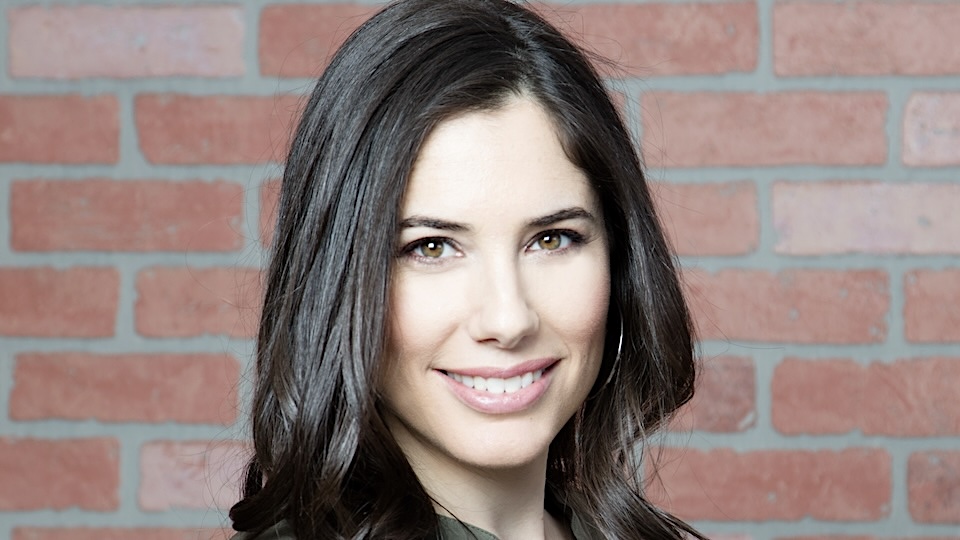
Author and founder Andrea Syrtash tells us about Pregnantish, an online platform she created in the fifth year of her fertility journey. She also talks at length about pre-parents and pre-moms, a demographic of millions. We’re as surprised as she is that this category remains not only unlabeled but also largely untouched, especially now that pop culture has begun to address fertility with more sensitivity and nuance.
Lastly, we work our way to the World Fertility Awards, celebrating thought leaders and change-makers in the fertility space.
Tell us about you and Pregnantish.
The most important thing in the world is relationships. I have dedicated my career to helping people navigate them better. Not only the relationships they have with others, but also the ones they have with themselves.
I’m a relationships author and former TV host who came from the world of broadcast, with experience hosting shows in the U.S. and Canada. My publishers are Penguin Random House and Harper Collins. That background taught me how to speak to the masses—but with Pregnantish, I discovered the power of narrowcasting. (In this Toronto Star article from the early days, you can see how “new” this concept was.)
Those who require “help” to have a baby needed a dedicated channel. When we launched, Pregnantish became the first media platform focused on helping people navigate infertility and fertility treatments.
I was told the topic was “niche.” But there’s nothing niche about it. Infertility impacts at least 1 in 6; pregnancy loss is 1 in 4 … and that’s just what’s reported. Singles and people in the LGBT community are building families in record numbers. This is a large and largely underserved audience.
Tell us about the category you call “pre-parents” or “pre-moms.” What is this demographic and what makes them so unique?
“Pre-moms” and “pre-parents” are people who already love the children they haven’t met and are fighting to bring them into the world. They’re using everything they have—emotionally, physically, financially—to consciously create a family. This audience is highly intentional, hyper-aware of what goes with their bodies and often just beginning major life decisions like home buying. It always surprised me that so many marketers overlook them.
How can marketers and advertisers better address them?
This audience is not only overlooked, but they really notice when brands do notice them. Most are educated millennials with the income to match, making them an appealing demographic. (Sad but true: fertility treatments are still largely inaccessible without a certain level of education and resources.)
As they consciously create homes and families, it makes sense to reach them early in that journey. Yet, most brands that engage our community are still rooted in the traditional fertility space. It’s a mystery why more consumer brands don’t see the opportunity. Before founding Pregnantish, I was a spokesperson for major consumer and luxury brands—Movado, 1-800-Flowers, MSN and others. I understand branded content, and I believe we do it especially well at Pregnantish, because our audience is genuinely interested in products and services that support them as they try to conceive.
Why has no one thought to create such a category before?
So many follow the masses and I get it—we do what we see works, as it feels less risky. I joke that “mom bloggers” are so 2007. It’s not that they’re not worth paying attention to, but it’s an overly saturated category. This is a fresh demo, I believe. So many possibilities…
Are there ethical considerations to account for when approaching this group?
Reproductive health and laws vary around the world and in the U.S., even state by state. We always say that infertility is non-partisan. It impacts people of all backgrounds.
In terms of ethics, it’s generally a vulnerable population whose highest value (to have a baby and expand their family) comes at a high cost emotionally, physically and financially. It’s easy to exploit them and I’m grateful that our channel is trusted by the community. We wouldn’t market something we wouldn’t use or rely on ourselves.
From what I understand, the Pregnantish community is broad and not only very engaged, but hugely supportive of each other.
Our IG channel (where it looks like we reach about 43K, but actually reach over a million a month generally—many behind the scenes) has been called a “lifeline.” One way you can see people show up for each other on Pregnantish is through our popular “Talkback Tuesday” series on the channel.
What kinds of consumer brands do you see approaching this group?
So many! Financial institutions and credit cards, lifestyle products, travel products and services and so many more. People on this journey rely on things to provide support, relaxation and also improve their physical and mental health.
Can you tell us about the World Fertility Awards?
Content and community is the pathway to getting people the help they need to build or expand their families. Our live events became popular through the years. We’ve run about 45 since our inception and have reached millions.
The World Fertility Awards felt like a natural extension of those events. They work to break the taboo, elevate the conversation and support those silently struggling to have a baby. They scale our awareness and reward the thought leaders and change-makers driving the future of fertility. It felt important to celebrate the innovation in this category and the people driving change.
We reward thought leaders in three main areas: Access x Awareness, Innovation x Technology and Equity x Inclusion. I’ve heard from advocates in areas like Africa who remind me that it’s still highly stigmatized to struggle to conceive and that this event brings hope. An associated “Break the Taboo” campaign reached millions on Instagram when the event launched.
The World Fertility Awards are part of a larger initiative called “The World Fertility Project.” We invite people to take our free pledge and nominate change-makers.
What kinds of brands would you like to see supporting the “pre-parent” demo?
We have some great brands on board now like Lending Club, Ferring Pharmaceuticals, Carrot Fertility and LabCorp. And top global fertility clinics like IVI RMA, Rhea Fertility and U.S. Fertility. It would be great to see more consumer-focused brands supporting this event, which has so many public people and media editors involved (from outlets like The Today Show, Katie Couric and more).
Angela Natividad is the European markets editor at Muse by Clios. She also writes about gaming and fashion, and whatever else she’s interested in, really. She’s based in Paris and North Italy, so if you’re local, say hi. She might eat all your food.