Newsletter
 Events

BETC Paris Stages 9 Births From Different Eras to Hype 'Humankind 2'
Time-tripping from the POV of a baby entering the world


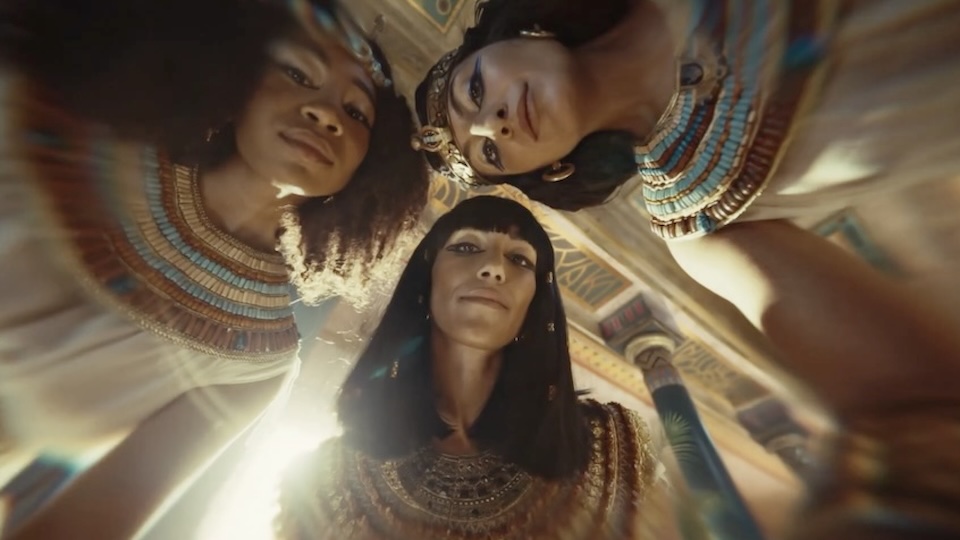
Humankind is about to begin again. And again and again and again…
Releasing next year, Humankind 2, the second installment of Amplitude’s history-focused strategy game, announces its arrival through the audacious 95-second film below. We travel through nine distinct time zones, from the distant past into the future, observing each era from the point of view of a baby being born.
BETC Paris CDs Benjamin Le Breton and Arnaud Assouline conceived and directed the storyline, working with Havas/BETC Group production arm Prose on Pixels. Digital effects and CGI come into play, but the team skipped generative AI altogether.
The result feels dazzling, synched to the game’s theme of humans learning from and ultimately transcending cultures and civilizations to create … something more.
That’s a Kubrick-2001-style conceit, and the video captures such cosmic scope in epic yet relatable detail. There’s a palpable sense of wonder, but glimpses of Ancient Egypt, a Viking ship, the Old West and London during the Black Death prove intriguingly familiar.
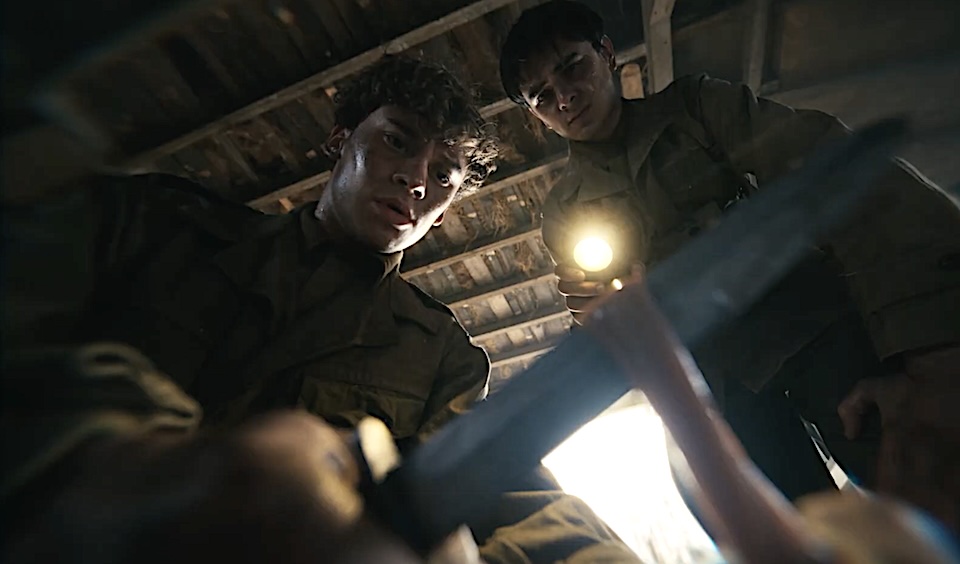
Clearly, we just witnessed the most umbilical-cord cutting in the history of advertising. Such scenes up the intensity and add visceral resonance. The Mayan wielding a blade seemed ominous, given that culture’s penchant for human sacrifices. Still, it works in context, suggesting another layer (cycle of life) to keep viewers engaged.
Here, Le Breton and Assouline guide Muse through their labyrinthine creative process:
MUSE: How was this idea born, as it were? How’d you hit on the concept?
Benjamin Le Breton and Arnaud Assouline: Humankind is a strategy game where players move through different eras and build their own version of human history. When Amplitude asked us to imagine the campaign, our starting point was pretty simple: how do we tell that journey through history again without repeating what we had already done for the first game? What we really wanted was to find a way to put the audience inside history rather than simply show it to them.
That’s how the idea of birth came about, and very quickly, the POV followed. In every scene, we open our eyes on a new era for the very first time. We’re born in the Stone Age, then born again somewhere else, in another period, another culture, another situation.
From there, our idea was: Humankind is about to begin again.
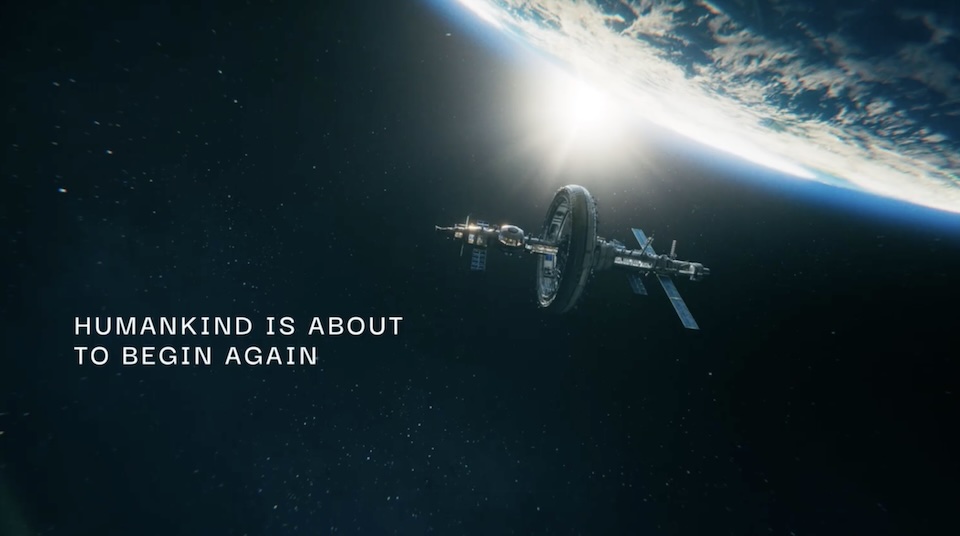
The concept flows directly from the gameplay, yes?
Birth felt particularly right because Humankind 2 isn’t a DLC or just an extension. It’s a new game that builds on the foundations of Humankind while rethinking them in a much deeper way. Rebirth gave us a very simple way to express that: something you know is coming back, but in a new form.
And there was a second layer that interested us even more. Every time you start a new game you enter a world you have to understand and gradually shape. You move through different eras, different cultures and different contexts. You constantly have to adapt, make decisions and build your own history.
In the film, you don’t watch history unfold. You’re born into it. You open your eyes in a world whose rules you don’t know yet. Sometimes it’s welcoming, sometimes it’s completely hostile. But every time, you have to understand what’s around you, adapt to it and start making choices.
That’s what we liked about the double meaning of the idea. Birth represents both the arrival of a new Humankind and the feeling of starting to play.
You didn’t use AI—why was that?
It’s live action, shot with real actors, on physical sets, with real costumes and props. That felt pretty natural to us. We were talking about birth, bodies and human beings coming into the world. It needed to feel organic. We wanted to feel the materials, the water, the fire, the faces, the people around the camera.
There was another important requirement as well. Humankind has a very precise relationship with history. Amplitude actually has a historian working full-time alongside the game’s development teams. We wanted to bring that same level of care to the film. The costumes, props and sets couldn’t just be visual approximations of a period. We had to do the research and get the details right.
Of course, there are VFX and post-production in the film. But everything we started with was real.
What’s funny is that after the film came out, some people thought it had been generated with AI. Some were even asking to see the making-of as proof that it was a real shoot. Maybe the level of detail we tried to bring to every era is actually part of what created that impression. Which is pretty ironic, because that level of precision is exactly one of the reasons we wanted to build these worlds for real.
You must have faced all sorts of challenges throughout the creative process.
The biggest was probably that the concept only worked if we were ambitious enough. To really feel this idea of being born again and again throughout history, we needed enough eras. With only two or three, it could quickly have felt like a gimmick. But every additional era meant a new set, new costumes, new actors, new props.
So very early on, we started writing and producing at the same time. While we were working on the script, we were already looking at available sets, imagining what they could become, what we could realistically shoot there and how we could move from one era to another.
Did the newborn POV make everything that much harder to frame and design?
Showing a birth from the newborn’s point of view was something we’d never seen treated this way before. So there wasn’t really a reference we could turn to. We had to imagine what that point of view could actually be. Where exactly do you put the camera so it feels believable? How high should it be? How close should the actors be? What could a baby actually see at that moment? And how do you make the audience immediately understand where they are?
All of those directing questions were already coming up while we were writing. Production constraints were shaping the script, the script was creating directing challenges. And the solutions we found could then change the writing again.
And on top of all that, you were first-time directors.
By the time we were thinking about the concept, the sets, the camera position, the shots, the transitions and the production solutions all at once, we were already directing the film before we ever stepped onto the set. On a project with this many moving parts, keeping that continuity between the idea, the writing and the execution became essential.
What specific experience stands out the most?
There’s one pretty simple memory that sums up what this experience meant for us. Usually, as creatives, we’re very involved on set. We wrote the film, we talk with the director, we follow the takes, but we’re not the ones who say, “Action.”
The first sequence we shot was World War II. And this time, we were behind the camera. We said, “Action.” The camera started moving. The actors started performing, some just inches away from the lens, others firing rifles in the background. Everything we’d imagined and prepared for weeks suddenly started coming to life in front of us.
And then came the first boom. The first explosion. It was pretty magical. The machine was running. And from that point on, there was no turning back.
Related: Ad Council Puts Firearm Safety Convos in Video Games