Newsletter
 Events

Inside Change the Ref's Grand-Clio-Winning 'Final Exam'
It's much more than a game


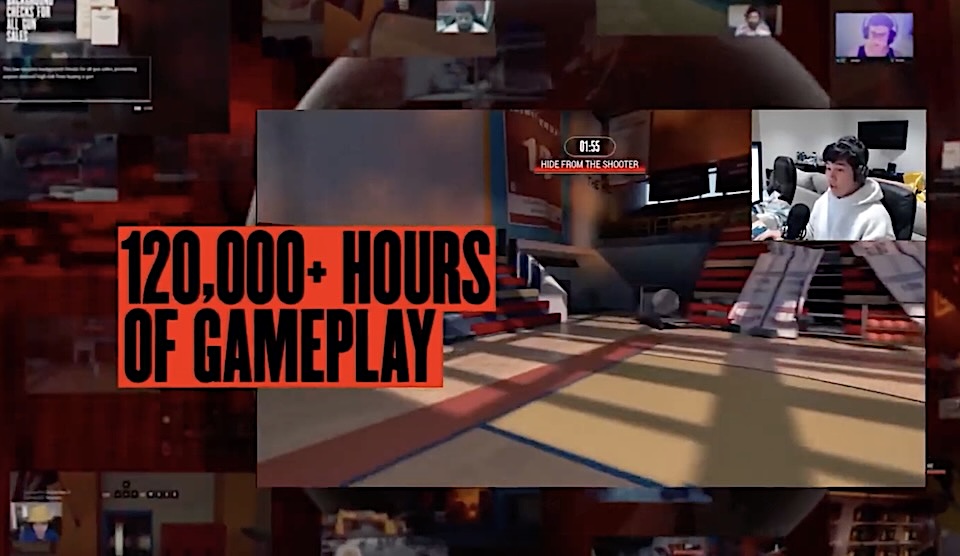
You can’t really know what kids and teachers endure during a school shooting until you’ve raced down the harrowing halls in their shoes or hidden behind desks, praying the threat will pass you by.
That notion informed “The Final Exam,” a playable experience from nonprofit Change the Ref. Launched in late 2024, the game simulates the horrors young people and educators face all too often.
“Ever since the Columbine High School massacre in 1999, U.S. politicians have tried to blame video games for the gun violence epidemic, despite many studies that have debunked any connection,” Josh Gross, CCO at BBDO Chicago, tells Muse.
“Research revealed an irony: the medium most demonized for causing violence also possessed the greatest potential to prevent it. Academic studies demonstrate that video games shift attitudes through immersive, lived experience, exactly what passive PSAs cannot achieve.”
“Final Exam” serves as a teaching moment on two fronts. It builds empathy for flesh-and-blood school kids who fear losing life and limb in a hail of bullets. What’s more, players could “escape” the carnage through compiling information on five legal bills designed to curtail gun violence. (The hope, of course, is that after folks turn from their screens—ears rattled by alarms and eyes stung by disturbing imagery—they will demand that their representatives support the legislation.)
At last night’s Clio Awards ceremony in NYC, “Final Exam” won a pair of Grands, honored for excellence in content, culture and influence.
Below, Muse and Gross discuss the campaign’s development and impact.
MUSE: What’s the specific advantage of focusing on video games?
Josh Gross: The gaming community represents 66 percent of Americans, with 85 percent of teens participating. Teens are culturally influential, personally invested—as gun violence’s primary victims—yet completely absent from the advocacy conversation. Gaming was the perfect vehicle to reach them.
You based game-play on actual events, correct?
The entire game environment was built from analysis of real data from past school shootings, like Columbine, Parkland and Sandy Hook. Reports, timelines, interviews, architectural layouts and witness accounts were translated into the game’s design. This data informed the structure of the school, classroom and hallway layouts, object placement and the behavioral patterns that drive the threat inside the game. The map also contains hidden Easter eggs that educate players with information from past shootings, including statistics, student stories, murals and other details.
Talk about the TwitchCon tie-in
We launched “The Final Exam” at TwitchCon by placing a branded stand with a school desk right at the festival entrance, stopping thousands of gamers to play right on the spot. While attendees played in our stand, our team moved throughout the event distributing free copies of the game to gamers, streamers and influencers, putting it directly into the hands of the community.
Beyond the on-site activation, ABC San Diego covered “The Final Exam” activation live from TwitchCon, featuring a live interview with Patricia Padauy-Oliver, Change the Ref’s founder.
The activation quickly gained momentum. In the first week alone, many players who discovered the game organically at the event went on to stream it online, helping spread the game across America.
The numbers are massive—2.5 billion earned impressions—but can you talk in some way about the broader cultural impact?
Change The Ref has done many powerful campaigns over the years. But what makes “The Final Exam” different is that it can live forever. A year and a half after launch, gamers across America are still playing. They’re streaming, posting and sharing, driving organic conversation that won’t stop until gun violence does.
The game was a teaching moment for players. But what did you learn while making it?
We interviewed survivors, listened to traumatic experiences, studied the laws and learned how different bills and policies could directly impact these situations. The biggest takeaway was just how easy it is for these tragedies to be reduced to headlines or statistics unless you’re willing to sit with the human side. Hearing the personal stories changed the way we approached the work. It made us more thoughtful, responsible and aware of the emotional weight a creative project can carry.
It also reinforced for us that games and interactive experiences can be more than entertainment. They can create empathy in a way other media sometimes can’t, because people are actively participating instead of just watching.
Gaming’s so huge. It’s strange that more organizations don’t tap into its reach on a regular basis.
One thing that really stayed with us was something co-founder Manuel Oliver, the founder, said: Change the Ref should think and fight back with the same mindset Joaquín had as a 17-year-old kid. [Joaquín Oliver lost his life in the 2018 Parkland tragedy.] The goal is to be the kind of organization Joaquín himself would have created if he were still alive. He loved video games. That’s what makes creating a video game to further the cause so powerful.
Teens keep discovering it. If you go on YouTube, you’ll still find new streams of the game every single week. Just a month ago, with zero push from the brand, a streamer played the game and the video reached 10 million views.