Newsletter
 Events

How Rich Foster of Left Field Labs Bends Time and Space for Montblanc and Google
Where luxury vibes meet advanced tech


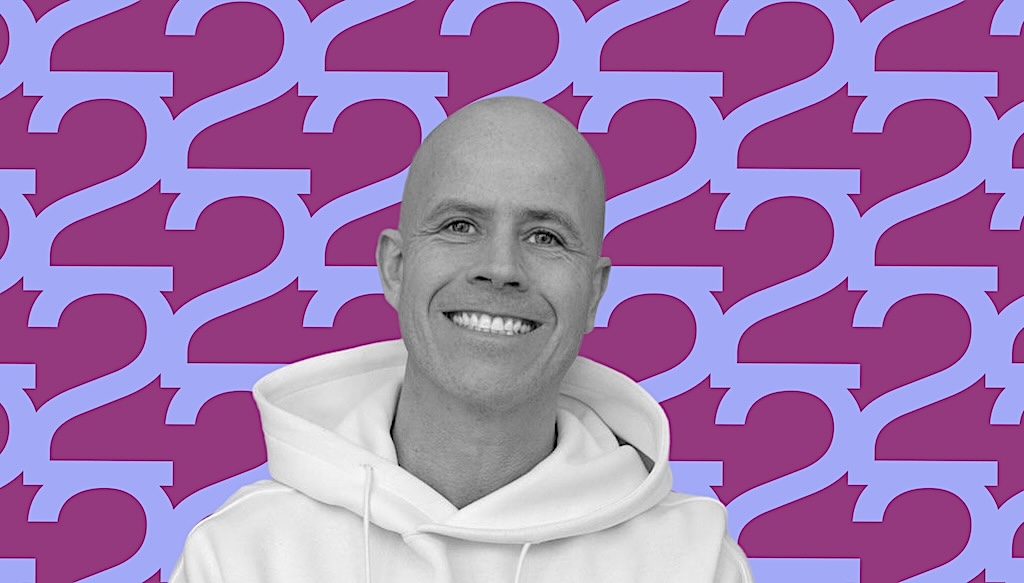
Rich is an Emmy Award-winning creative leader with two decades of experience helping global brands navigate moments of technological change via digital platforms and connections with AI-powered products. Rich is currently ECD at Left Field Labs.
We spent two minutes with Rich to learn more about his background, his creative inspirations and recent work he’s admired.
Rich, tell us …
Where you grew up, and where you live now.
I grew up in Tamworth, a suburb of Birmingham in the U.K. I moved around during college and eventually settled in London before moving to New York 25 years ago. I landed in Brooklyn and haven’t left since.
How you first realized you were creative.
I was always drawing and making things as a kid. I remember making posters when I was 8 years old, doing a lot of hand-drawn type and looking at graffiti books for inspiration. Even now, when I’m trying to figure something out, I’ll step away from the computer and grab a pen and paper. That’s usually where the thinking starts.
A moment from high school or college that changed your life.
I tried a bit of everything in college. Printmaking, photography, fine art, textiles. The U.K. Foundation course you take before your degree is a great chance to experiment. I initially leaned toward fine art and illustration and completed two years of study. But a work experience placement at a graphic design studio changed everything. At the time, they were designing record sleeves for electronic music labels, and that world completely pulled me in. Music and design always went hand-in-hand. Back then, album sleeves were a huge source of inspiration and ultimately what pushed me toward design. The rave scene was another influence. There was this explosion of color and an overload of design that felt loud, raw, experimental and full of energy.
One of your favorite brands you’ve ever worked on.
I enjoyed working with Montblanc on two smartwatches. They challenged us to think about what a luxury experience should feel like in a digital product. It’s an interesting tension. Luxury objects are usually designed to last a lifetime. A watch is often passed down through generations. But a smartwatch is almost the opposite, with a lifespan of just a few years. Designing within that contradiction was a fascinating challenge. Another constraint was designing within a circular frame. We live our lives in boxes and spend most of our time designing in spaces with corners. A watch face forces you to think differently about space and composition, especially when working with type.
A recent project you’re proud of.
Google’s latest “Save the Date.” For several years, we’ve been creating games that, once completed, reveal the conference date. This year, the idea wasn’t to control everything. It was an experiment to see whether developers would take small games and remix them. That creates a conversation. It became a great way to connect with the developer community by letting them change and adapt the experience, adding their own spin. A lot of the work we’ve been doing recently sits more in the vision space. We’re often positioned to answer the question: What’s next? These typically run as 4-week sprints where we explore new ideas and experiment with emerging technologies, often using AI to create experiences that deepen engagement.
Someone else’s work you admired lately.
I love Ressence Watches. One of their recent editions, the Type 3 with Marc Newson, is stunning. It avoids the typical language of luxury watches, which can sometimes feel overdone or showy. Instead, it takes a minimalist approach with a unique mechanism and way of telling time. Creating something distinctive within an established category and finding a way to rethink a familiar space is inspiring.
Your main strength as a creative person.
Curiosity and enthusiasm. Making complex things easy to understand. I am 50 percent craft and 50 percent fascinated by the mechanics of how things work.
Your biggest weakness.
Trying to make things perfect. Sometimes you have to let go.
A visual artist or band/musician you admire.
Orbital has always been brilliant. You have to see them live. Mark Farrow’s work for them has always been the perfect visual counterpart.
What you’d be doing if you weren’t in advertising.
DJing more and spending far too much money on records.
2 Minutes With is our regular interview series where we chat with creatives about their backgrounds, creative inspirations, work they admire and more. For more about 2 Minutes With, or to be considered for the series, please get in touch.