Newsletter
 Events

Why Taste—not Talent or Tech—Offers the Real Advantage
AI exposes a key creative gap


For years, creative conversations have revolved around talent. Who has it, how to spot it, how to scale it. More recently, attention has shifted to AI and all things technology—new tools, new platforms, new efficiencies promising to unlock creativity faster than ever.
But beneath the noise, something quieter is happening. As tools become more powerful and more accessible, the real differentiator is not talent or technology. It’s taste.
AI hasn’t killed creativity. What it has done is expose a gap.
When anyone can generate ideas instantly, output stops being the problem. Selection becomes the work, taste shows up in what gets kept, what gets cut and what gets ignored.
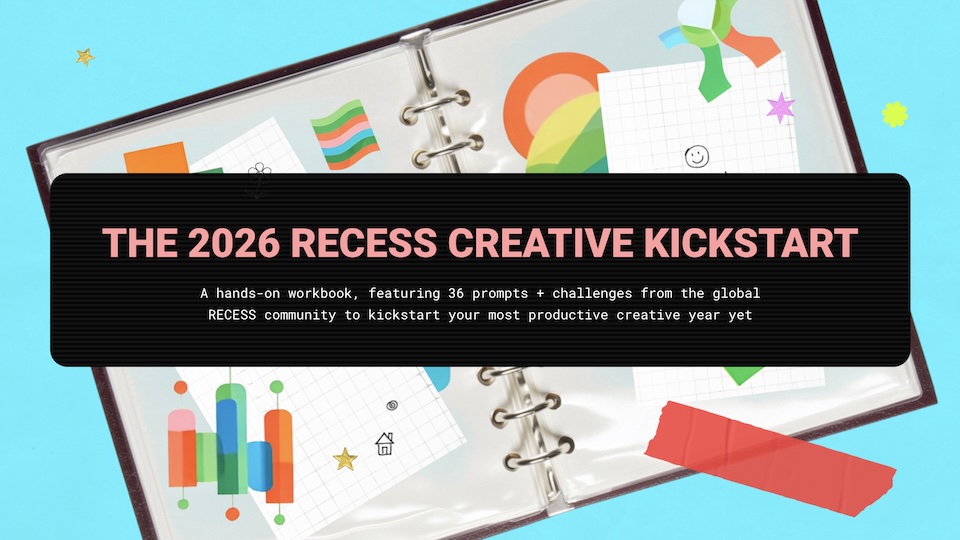
That distinction is becoming clearer across creative disciplines. Tools can produce options, but they can’t tell you which option matters. They don’t know when something feels finished—or when it’s merely complete. That pattern became increasingly hard to ignore while creating the 2026 Recess Creative Playbook, through conversations with 48 creatives working across more than 20 countries.
This is where deep reference knowledge suddenly matters more than ever. Otto Plesner, creative director at RenaiXance, says, “For visual worlds: learn your history. Know good references for painting techniques, lighting, or artists of the past that you really love. That way you can give AI influence by knowing exactly what aesthetic you seek to achieve.” The quality of the output is inseparable from the quality of the input—and taste is what shapes both.
This is also why many creatives are increasingly skeptical of AI’s authority. Not because it isn’t capable, but because capability isn’t the same as judgment. As Gustavo “Goose” Solis, ACD at Spotify, offers bluntly: “I personally believe AI has terrible taste. So I prefer to use my terrible taste than ChatGPT’s.”
For most, AI is assistive rather than aspirational. A way to speed up early stages, organize thinking, or explore directions—but rarely a source of final decisions. The danger isn’t replacement. It’s resemblance. When tools are trained on what already exists, they tend to reinforce what’s familiar. Without strong editorial judgment, creative work begins to converge. Different inputs, similar outcomes.
Tony Bowe, a junior art director at Leo Burnett, actively pushes against that sameness. He says, “It definitely has raised the bar in the ideas I come up with. I now fear going to meetings with basic-sounding ideas that people might suspect are generated by ChatGPT. This makes me go the extra mile to bring human, interesting, original ideas.”
This is also why imperfection has gained value. When polish is easy, taste shows up in restraint. In leaving things slightly unresolved. In protecting the human signal inside the noise. As Ledeebari Nwizug, senior copywriter at Spice 360 Ltd., notes, “AI would never use improper grammar—but some great copy only works because it’s technically wrong. AI isn’t on the streets. It wouldn’t know how I jumped on a bus in Lagos and a conductor begged me for my banana.” Taste lives in lived experience, not just pattern recognition.
This is where taste reasserts itself as a creative advantage. Not as a mysterious instinct, but as a practiced skill: editing, restraint, knowing when to break the rules and why and the ability to say no to ideas that technically work but don’t feel necessary.
The future of creativity won’t be decided by who adopts new tools first. It will belong to those who can filter well, recognize when something is technically impressive but creatively empty and understand that originality often comes from subtraction.
Technology will keep evolving, and talent will remain unevenly distributed. The ability to decide what’s worth keeping and guide new tools in the right direction may be the most durable creative advantage we have right now.
Technology is useful. But taste is non-negotiable.

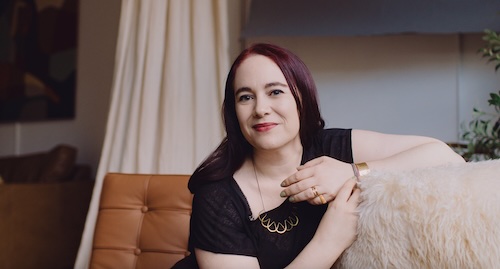
Jody Orsborn Medina is a Toronto-based freelance experiential creative director and founder of Recess.