Newsletter
 Events
How NextUp Changed Meritxell Ruiz's Creative Brain Chemistry
Inspiring a new generation of leaders


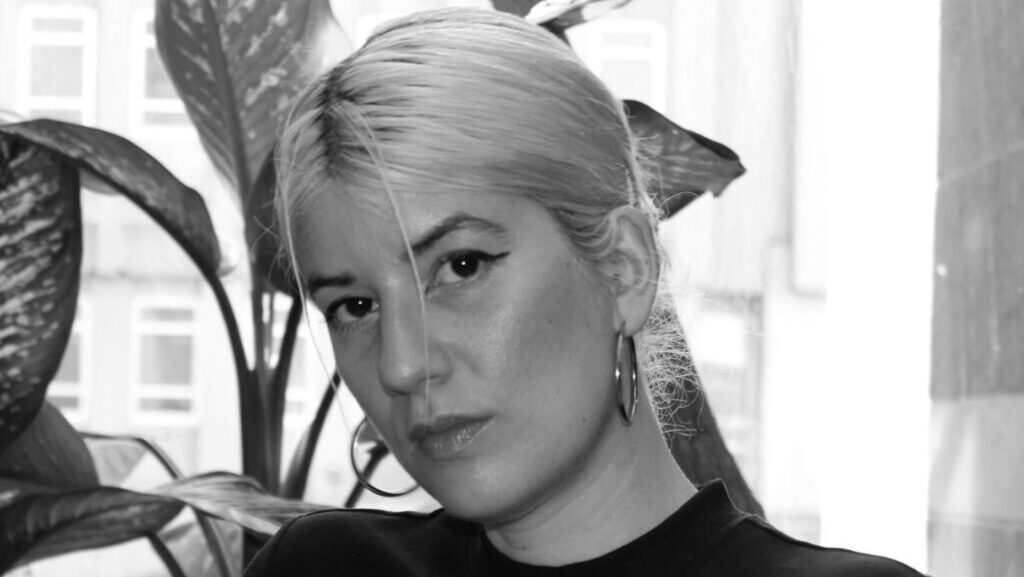
“What I loved most was the openness. People carried their hearts on their sleeves, they were willing to listen, re-evaluate, change their minds. And that is not something you see often in a room full of grown-ups,” says Meritxell Ruiz, an associate creative director at McKinney, who served as a Clio Health NextUp juror.
As we continue our efforts in nurturing future talent, NextUp is Clio Health’s jury of emerging creatives who review and award the student entries in each year’s Clio Health program. Associate creative directors and CDs are invited to participate. The experience also includes master classes and networking opportunities with award-winning mentors across the health advertising category. The jury is curated through industry research and nominations. If you wish to put someone forth for the jury, please refer to this nomination form.
Muse chatted with Meritxell on her overall juror experience, some wisdom imparted by the mentors on hand, and when you get right down to it, how everything is health.
Muse: What was it like being a part of the NextUp jury room for the first time?
Meritxell Ruiz: Big, fun, but with real responsibility. It was my first jury room ever, and I was the youngest person there. Young, female, outspoken … it ended up being a great experience.
The room was stacked with talented people from all over the world. Super diverse, which made it feel exciting and fair. The vibe was a mix of hype and caution, you felt like you belonged because it’s similar to a portfolio review, except you’re actually giving out awards, not just compliments.
It was challenging but really rewarding—and kept you close to the work. I liked the low-key “best of both worlds” vibe. The selection process reminded me that there are many good ideas waiting to happen.
The biggest surprise? The respect in the room. Everyone listened. Every opinion got heard and taken seriously. That made the whole process feel supportive and engaging.
How did the mentorship or guidance you received from more senior jurors shape your experience?
This was crucial for me. We kicked off with an actual training session where Emily [Emily Seal, executive director at Clio Health] and Francesca [Francesca Saracino, manager at Clio Health] walked us through everything. There was no “sink or swim” vibe. All the tools to set you up for success were given to us, and everybody understood that we weren’t in the room on a because-I-know-everything basis, but because we were willing to learn as much as possible.
We met with the mentors early on, who were on hand to help us navigate the process, but by no means were they there to influence our opinion. Some of the mentors gave us incredible tips.
June Laffey, a great mentor and coach, holds a special place in my heart. She shared her most valuable jury tip: “The 3 Hs (head, heart and hand).” I have carried that with me in every other jury room I’ve been in.
One moment that stuck with me was when Franklin Williams asked: “What does it mean, as a juror, to award (or not award) this piece of work?” It reframed everything. It wasn’t just “Do I like it?” It was “What are we saying by choosing this?”
What I loved most was the openness. People carried their hearts on their sleeves, they were willing to listen, re-evaluate, change their minds. And that is not something you see often in a room full of grown-ups.
In what ways did participating in NextUp help you grow – either personally, professionally, or creatively?
Creatively it changed my brain chemistry. Personally, it was fulfilling and exhilarating. I spent weeks thinking about how it made me feel, what my fellow jurors noticed, and the little moments that stuck. I still keep up with a few of them and it’s been great watching them step into other jury rooms; shoutout to my girl Priscila, who’s crushing it.
Professionally, it didn’t change my title—I don’t think a jury invite suddenly makes people see you differently—but it definitely changed how I judge creative work. I’m more thoughtful about standards, context, and what we’re actually rewarding.
It made me even more grateful for the awards I had received throughout my career. For the first time ever I really saw how good your work has to be for a diverse group of people to align on it. That bar is high, and it should be.
Why do you think programs like this are important for the next generation of creative leaders?
The NextUp program not only gives you a seat in a jury room but it also helps you define who you want to be as a juror. After NextUp, my lens got wider: I became a better creative with a broader, more thoughtful perspective. I’ve been in other jury rooms where people spoke out of turn, called others “crazy,” or reacted viscerally to someone’s opinion—and I can’t help thinking that if they’d gone through NextUp, the boundaries and the way they communicated would’ve been different.
I also believe most of us are figuring things out as we go. My boss Omid said in an interview “Nobody knows what the f*ck they’re doing.” That’s exactly why programs like this matter: they create a space where you’re invited to listen, learn, observe, and then speak. Yes, share your opinion, but always do it with love and respect. That’s something our industry urgently needs to learn.
How do you see programs like NextUp influencing the future of creative leadership in our industry?
Most people don’t really understand Health. They might understand Pharma, but Pharma isn’t Health. As Emily always says, anything could be health. Everything is health. Life is health. Teaching women in isolated communities about abortion? Health. Educating men to manage their anger issues and end domestic violence? Health. Pushing for greener ways to get around the city? Health. These ideas directly impact society, they make us healthier. And that’s the biggest lesson I took from NextUp, something that will forever shape how I see the work, and sometimes, how I judge it.
It’s never easy to judge an idea, sometimes it involves listening to your instincts, and to me an idea is only good if the room where it was conceived was diverse, because that means that it was judged, questioned and analyzed from every POV. That’s exactly what happens on a diverse jury. If, like in most agencies. the room is filled with only white straight men, then the ideas will be … pretty cancellable (wink to the diapers idea). That’s just bad leadership.