Newsletter
 Events
Brand Experts Parse the Hottest Trends at Clio Creative Summit
Lessons from Twitch, Oatly, UMG, BBDO and more


Authenticity, taste as a strategy and brand purpose were hot topics discussed at the Clio Creative Summit, held this week at Omnicom’s office in NYC. Emily Seal, executive director of the Clios, hosted the annual event.
Below, we look at highlights from each panel.
For Sound as Signature: How Holistic Music Strategy Shapes Brand Identity—presented by Universal Production Music—UPM’s Jamie Glenn spoke with Zach Golden, CD at Elias Audio Branding, on how music can elevate a brand story.
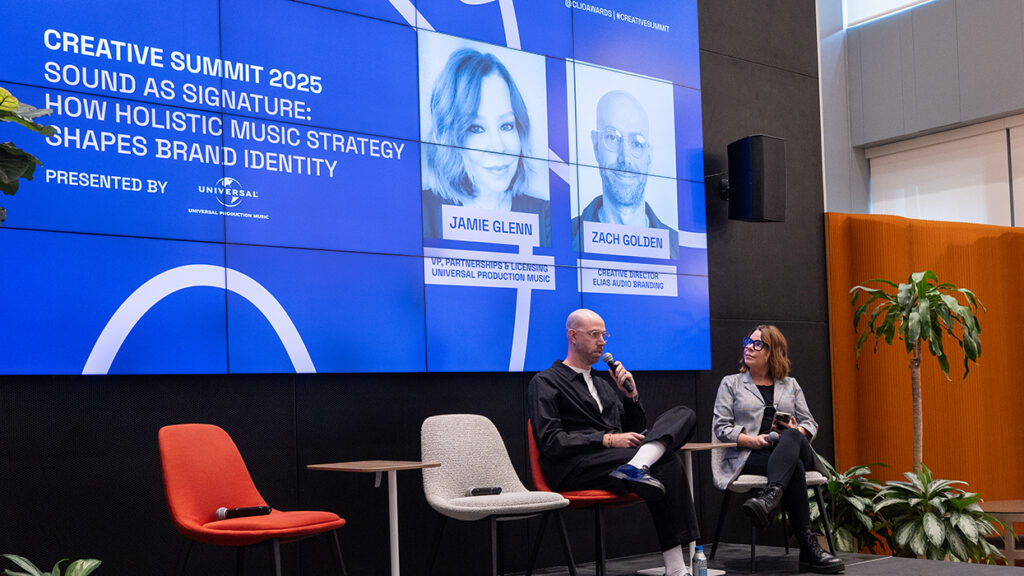
“Music is able to transform people and also to take them back to that emotional state,” said Golden. “Ninety-five percent of consumer decisions are made on a subconscious level. When you use an audio asset, it can increase branded recall by 800 percent. A greater reason to think about your music holistically.”
In Livestreaming Under the Influence … of Brands—presented by Twitch—Patrick Moses, U.S. creative production lead at the company’s Brand Partnership Studio, explained how Twitch succeeds with sponsored content by stressing authenticity.
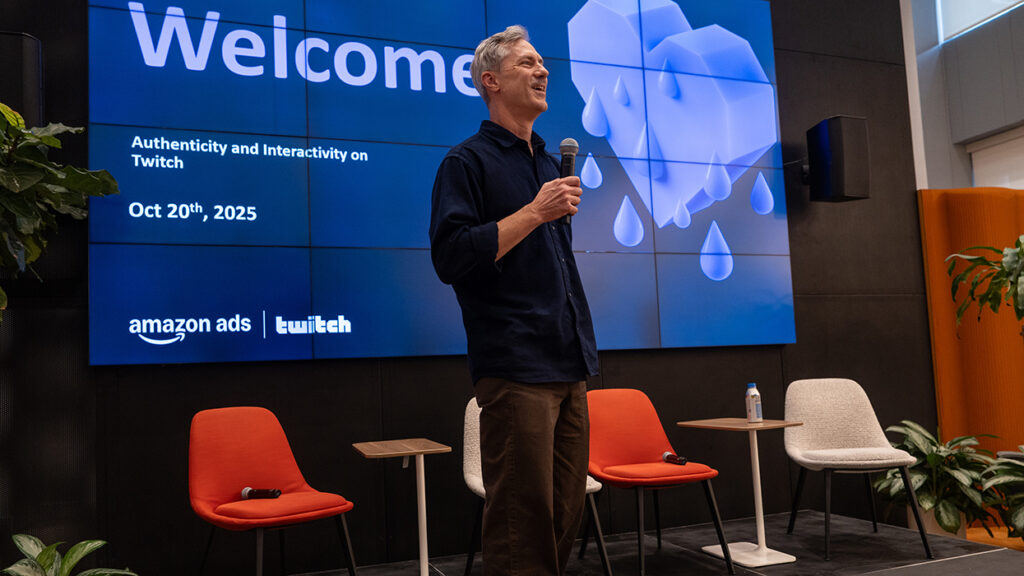
“Why do these cultural moments keep happening on Twitch?” asks Moses. “There’s three things. One is that Twitch is really long-form. And the audience really gets into it. Secondly, it’s a live format. There is no editing. This is unfiltered content coming to you. You are getting the streamer as exactly who they are. And that’s a big—you don’t find that anywhere else. And people are looking for that authenticity more than ever before. Third, it’s interactive. The streamer is talking to the audience. Those three things, when you bring them together, it’s extremely special.”
The Clio Awards x Luma AI in Conversation With AI Challenge Powered by Dream Machine Finalists was presented by Luma AI. Jon Finger, creative workflow executive for Dream Lab, Los Angeles, spoke with the three finalists about their work.
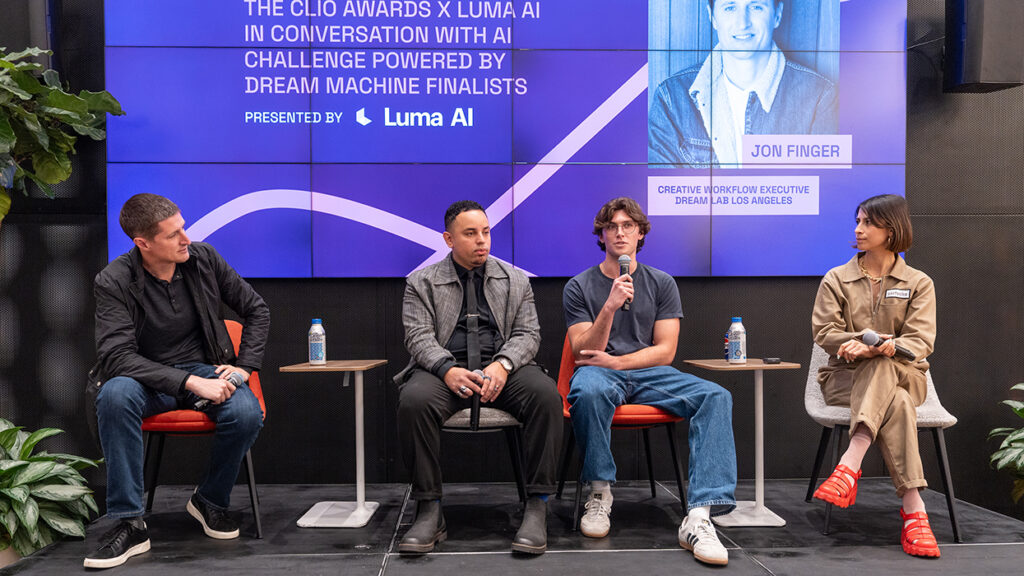
“People are very concerned about this swarm of perfect noise machines putting out tons and tons of media, but if you see a lot of something in one mode, it’s just gonna get boring. How do I connect with this further?” said Finger. “It’s connecting with humans that created the thing and how we convey that is going to be a very important thing.”
In Why Taste Is Strategy: The Aesthetics of Influence, moderator Ashley Rudder of HAUS OF SÔS spoke with Alex Booker of BBDO New York, Jeremy Elias of Oatly and Quynh Dang from Away about “how taste is where strategy turns human. It’s about when values turn into visuals,” per Rudder.
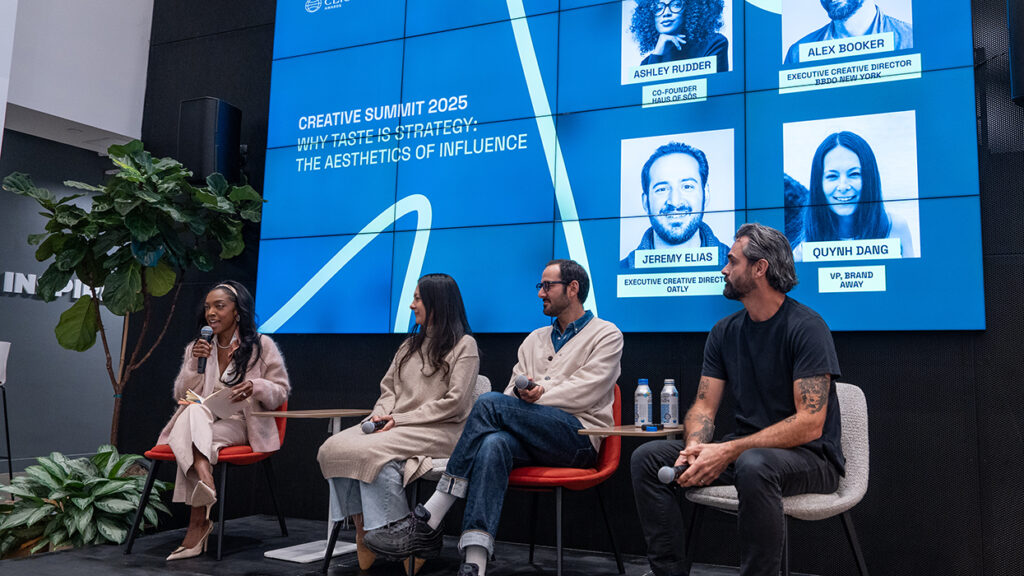
“There’s a beauty about travel that is inherently global. And it is also local,” said Dang. “So I think there’s this huge breadth of experimentation that can happen between globalization and localization.”
“If you can get or define that taste with something that’s a little bit more foundational, it might manifest itself in a thousand different ways across a TikTok creator’s feeds or a celebrity’s feeds. You’re just going to open yourself up to a lot more possibilities,” said Elias, referencing a brand partnership with U.K. rapper Giggs.
“Give me a 10 or give me a zero,” Booker said. “Do not give me fives. I can get fives anywhere. I’m not going to present fives. Just swing for the fences and hopefully you crack it and if you don’t it’s a good experience to learn from.”
Repicturing Rural America: Tackling the Visual Gap and Driving Authentic Storytelling was presented by Getty Images. Tristen Norman, the brand’s head of creative for the Americas, illustrated how Getty teamed up with Land O’Lakes to use visual storytelling to highlight underrepresented communities.
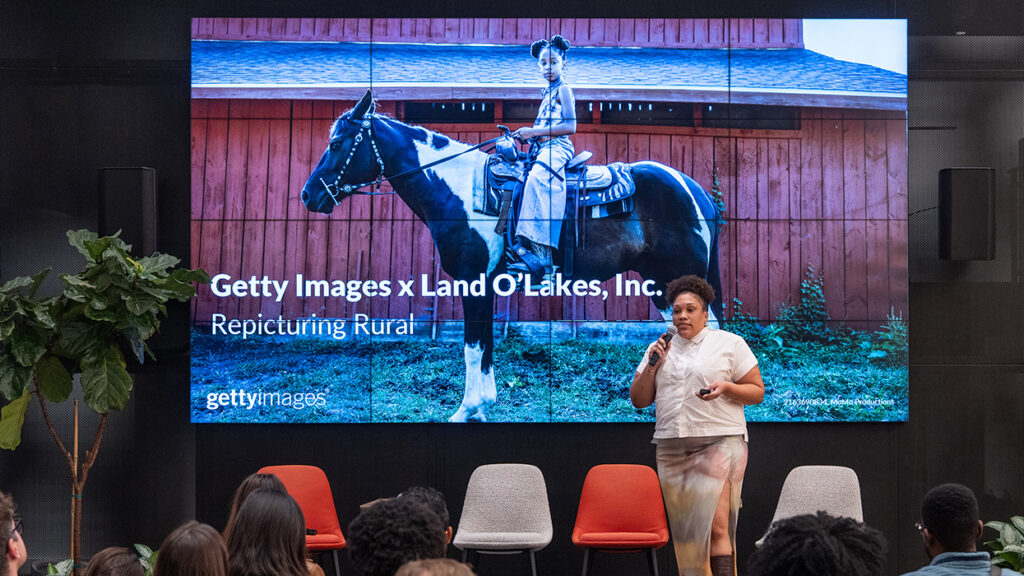
“Rural is not the opposite of urban,” Norman said. “They wanted to reinforce that rural communities are about community and connection. And as much as urban places, that rural communities are way more diverse than people often realize, and that we leave a lot of stories out when we assume that there’s one archetype of who lives in a rural place. Our goal was to get about 1,000 images and we got 1,700. It’s like, okay, this work is not done. And we want to create new stories for the industry overall.”
Lastly, in Doing Well by Doing Good: Lessons From Patagonia’s Radical Playbook, bestselling author and NYT scribe David Gelles and Vincent Stanley, director of Patagonia philosophy, discussed the brand’s value-driven decisions and keeping purpose at the forefront.
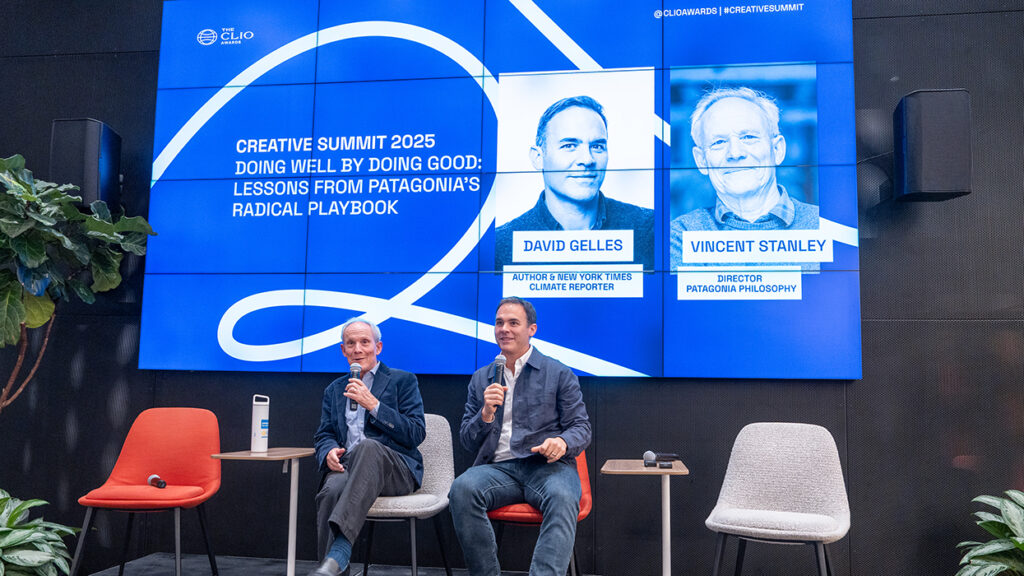
“When we learned that cotton was the most environmentally damaging fiber that we use, we looked once again at the question is there something we can change,” Stanley said. “And we could make a change because organic cotton was still being grown [in various areas around the world]. That was key.”
“When people react to the Patagonia brand they may not know the details of these stories but there is something that has been transmitted over all these decades of doing this kind of valued-led work that has really shaped the public imagination,” said Gelles.