Newsletter
 Events

The Considered's Diego Freitas on Wellness Shaping Culture
'I'm excited that health is finally learning to speak human'


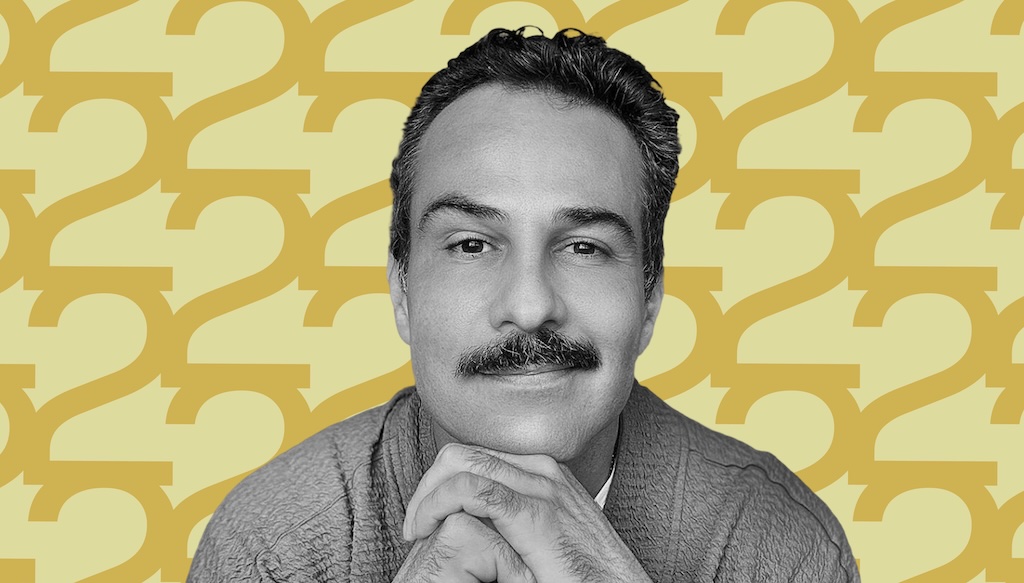
Diego is EVP and global creative partner at The Considered. He learned craft the slow way in a very old-fashioned print shop instead of a global advertising agency. That experience taught him to care about details and confirmed that an economics degree was a questionable life choice.
After a short time in Madrid, he ventured to Lisbon and worked in wellness advertising, but stepped out of the category to test himself with Nintendo, Fiat and Heineken. Those were fun briefs that taught him a life lesson: Great healthcare work can change how people live.
We spent a few minutes with Diego to learn more about his background, inspirations and his favorite projects.
Where did you grow up, and where do you live now?
I grew up in Brazil, spent 10 very important years in Europe, and now live in São Paulo. Work has me bouncing between Brazil and the U.S. so much that I’m not entirely sure where I live anymore.
How did you first get interested in health?
Almost by accident. I started in a print shop, learning the craft by hand. Then I fell in love with design and web design, back when that was the exciting new thing in the early-2000s. When I got into advertising, I wanted the big consumer brands: the burgers, the cars, the usual dream. But health pulled me in because the stakes felt different. In consumer, you can help sell more things. In health, when the work is good, you can help change how people understand, access and live with care. That felt harder, more meaningful and honestly more interesting.
Tell us about one of your favorite projects you’ve ever worked on.
“Parkinsounds,” a project that used music as a rehabilitation tool for Parkinson’s patients. It helped people find songs that matched their ideal walking pace, then added audio cues to make the music more useful for therapy. It was recognized at Cannes and The One Show. But what stayed with me most was how simple, useful and human the idea felt.
What’s a recent project you’re proud of?
The current project I’m working on is making me very proud. It’s in mental health, with a psychedelics angle, so it naturally touches science, culture, stigma and hope. I can’t say much yet, but it feels like one of those rare moments where the work could help change how people think about treatment.
What’s one thing about how health is evolving that you’re excited about?
I’m excited that health is finally learning to speak human. For a long time, health communication felt cold, overprotected and overly engineered, like it was made to avoid mistakes more than to create connection. But people don’t experience health as charts, claims and disclaimers. They experience it as fear, hope, identity, family, culture and daily life. The more our industry embraces that, the better the work becomes. Not softer. More honest. More alive.
Describe someone else’s work, in health or beyond, that you admired lately.
Klick has been producing such quality work for a long while now. Not just compared to the health industry, but honestly compared to a lot of consumer work, too. It feels sharper, braver, more culturally awake. The Trial is a perfect example. It turns today’s attacks on reproductive rights into a Salem witch trial. Bold, uncomfortable, impossible to ignore.
Name a book, movie, TV show, or podcast you recently found inspiring.
Nietzsche’s Thus Spoke Zarathustra. It is one of the most radical books about reinvention. It challenges inherited ideas, comfort, morality, ambition and the temptation to simply follow the crowd. For a creative, that feels incredibly alive. It reminds me that the best work usually comes from the uncomfortable act of questioning everything and building your own point of view.
Name a visual artist or band/musician you admire.
I admire artists and musicians who build worlds, not just albums. David Bowie is the obvious answer, but still impossible to beat. The reinvention, the visual intelligence, the courage to be strange before it was safe to be strange. And then there’s my favorite ridiculous Bowie mythology: the idea that when he died in January 2016, he ripped a hole in the cosmic fabric, and the world immediately gave us Brexit, post-truth politics and whatever timeline we’ve been trapped in since. I’m not saying I believe Bowie was an “anchor being” holding reality together. I’m just saying the evidence is aesthetically convincing.
Who’s your favorite fictional character?
The Dude, from The Big Lebowski. He’s the anti-hustle hero. No personal brand, no 5-year plan, no performance of importance. He just abides. And honestly, in a world obsessed with becoming, that feels weirdly radical.
Who’s someone worth following on social media?
Pablo Rochat, @pablo.rochat. He treats social media as the medium, not just the place where ideas go to die. His work is playful, weird, stupid-smart and perfectly native to the internet. The kind of creativity that feels effortless, which usually means it’s annoyingly well thought-out.
What’s your main strength as a marketer?
I’m good at finding the human tension inside complicated categories. Especially in health, the real idea is usually not hiding in the data alone. It is in the discomfort, the fear, the hope, the thing people do not say out loud.
What’s your biggest weakness?
Procrastination. But not the lazy kind. More the dangerous, creative kind where I pretend I’m “letting the idea breathe” while secretly waiting for the panic to make it better. Sometimes it works. Sometimes it’s just self-sabotage wearing a very nice conceptual jacket.
2 Minutes With is our regular interview series where we chat with creatives about their backgrounds, creative inspirations, work they admire and more. For more about 2 Minutes With, or to be considered for the series, please get in touch.