Newsletter
 Events

LOVE's Meghan Labot: 'If You Don't Start Big, You Will End Small'
Why creative inspiration isn't found in a single spark


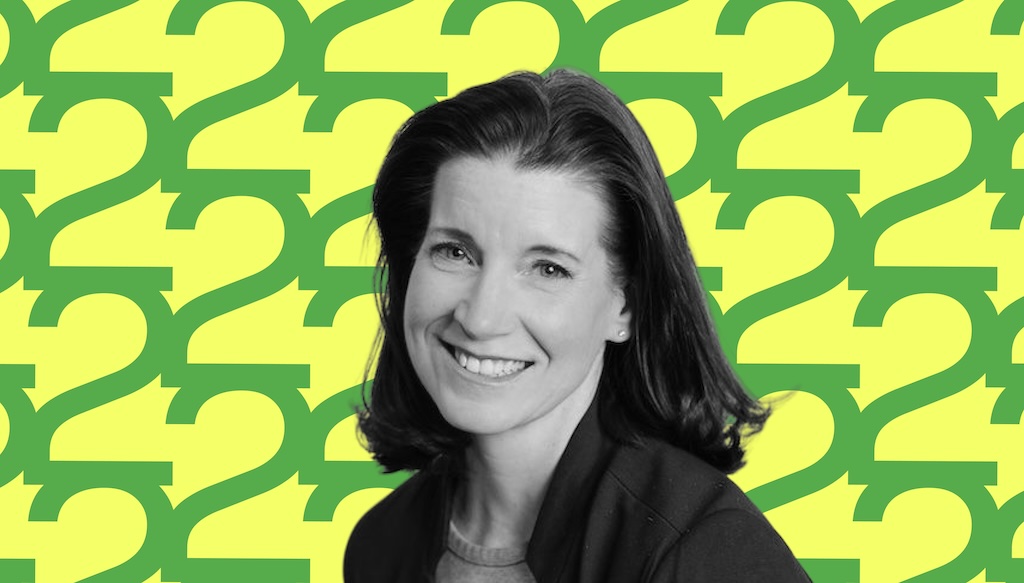
Meghan is managing director at LOVE NYC, a creative agency that has worked with brands including Möet Hennessy, Penfolds Heineken, Sol, Wildmoor and Jim Beam.
We spent two minutes with Meghan to learn more about her background, her creative inspirations and recent work she’s admired.
Meghan, tell us …
Where you grew up, and where you live now.
I grew up in central Pennsylvania in a small town surrounded by farms. It was quite different from New York City, where I moved shortly after college. Today, I live in Glen Ridge, N.J. It’s also a small town, but close enough to the city that you can still enjoy the benefits of a big cultural center. And far enough away to have space for a garden.
How you first realized you were creative.
In 2nd grade I was given an assignment to draw a box around the nouns in the sentences. But I drew my boxes in three dimensions. My teacher and parents thought it was hilarious. I suppose I just wanted to make the task more interesting. And they did technically say “box,” not “square.”
A moment from high school or college that changed your life.
When I was trying to figure out what to study my freshman year of college, I discovered Art History and I loved it. It was fascinating to be able to understand the motivation and context behind a piece of visual expression.
Your most important creative inspirations.
Recently, I’ve been falling in love with Manchester. It’s a place built on grit, culture and independence. You can feel that spirit in the agency’s work and culture. It reminds me a lot of New York in that way.
One of your favorite creative projects you’ve ever worked on.
The re-staging of Molson Canadian at the 2010 Vancouver Winter Olympics. In less than 12 months, I worked with a team that redefined the brand positioning and identity of the lager. We then extended the identity across a massive program that included packaging, advertising and activations at the Olympics. The highlight was Molson Canadian Hockey House, an event venue in Vancouver that brought the brand to life. It quickly became the best place to watch the games if you didn’t have a ticket. It was a cross-functional effort that touched upon every way a brand can come to life for consumers.
A recent project you’re proud of.
I am so proud of the work LOVE has done with Back to Nature in the last year. I worked on Back to Nature when it was owned by Kraft many years ago. At the time, the brand was trying to find its place in the mainstream, but it struggled to maintain its identity while remaining competitive.
It is wonderful and incredibly rewarding to see Back to Nature now confident, distinctive and demanding attention.
Someone else’s work that inspired you years ago.
The MTV identity system of the ’80s was a big source of inspiration for me. I have always admired design systems that broke conventions and rules. MTV in many ways was one of the first brands to sacrifice a bit of itself to become more embedded in culture. Very few brands can demonstrate that level of bravery, even today. MTV showed that brand consistency does not have to be a “set of matched luggage.” It can be dynamic and fluid. And when done correctly, it allows the brand to live in many different contexts. If not for MTV, we would not have the dynamic ecosystems of today, like Coca-Cola, LA28 and even what LOVE did with the Haagen-Dazs packaging system.
Someone else’s work you admired lately.
The visual identity of the Savannah College of Art and Design , where my son is a freshman. The school is spread across Savannah and has left a visible, modern and complementary mark that doesn’t try to compete with the city’s historic character and roots. The design system is confident, diverse, dynamic and flexible, but clearly held together by a common ethos and the permission to be creative.
Your main strength as a creative person.
My role in the creative process is often connecting the dots between culture, behavior and the client challenge, then pushing the thinking bigger. I believe that if you don’t start big, you will inevitably end small, and I hope that my contributions give people the confidence they need to create.
Your biggest weakness.
Being naturally optimistic about big ideas. Sometimes the team needs to remind me about the realities of budgets and timelines.
A mentor that helped you navigate the industry.
I met my husband, Rich Labot, at Grey early on in both our careers, and he has been a constant presence, helping me navigate the industry ever since. My path has been anything but straight. Rich’s guidance has been important in keeping me on track.
What you’d be doing if you weren’t in this industry.
Running a small Etsy shop selling customized party swag and spending the rest of my time in the garden or watching college football.
2 Minutes With is our regular interview series where we chat with creatives about their backgrounds, creative inspirations, work they admire and more. For more about 2 Minutes With, or to be considered for the series, please get in touch.