Newsletter
 Events

How Design Engineer Harshal Ambekar Turns Ideas Into Reality
Moving from concept to production without losing the original vision


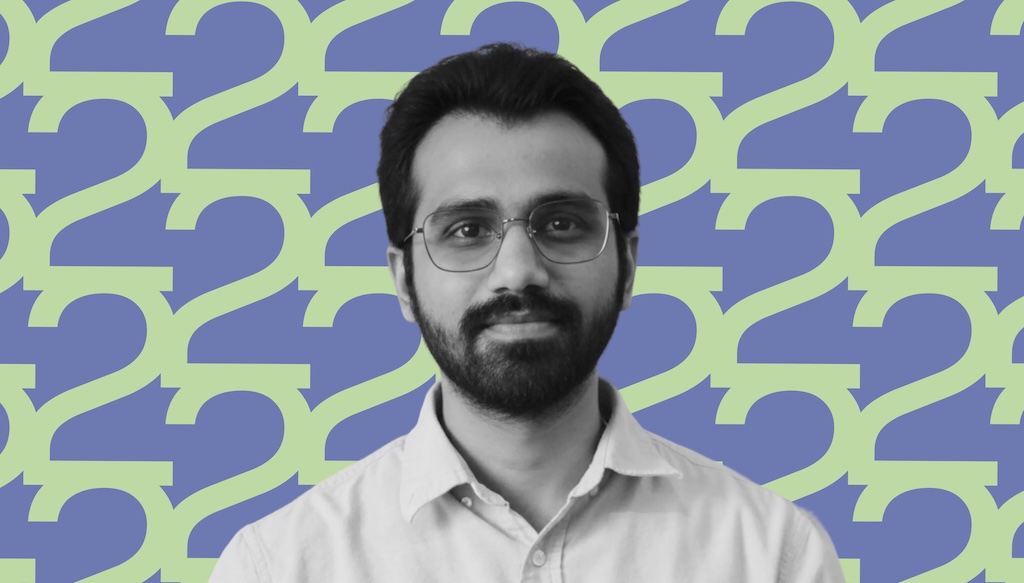
Harshal is a product design engineer with a focus on bringing complex hardware to market at scale. Drawing on a global background spanning India, Italy and the U.S., his work includes consumer products and EV charging infrastructure now deployed in 30+ states, with an emphasis on manufacturability, cost optimization and cross-functional execution.
We spent two minutes with Harshal to learn more about his background, his creative inspirations and recent work he’s admired.
Harshal, tell us …
Where you grew up, and where you live now.
I grew up in Mumbai, completed my design training in Milan and now live in Delaware. This combination of high-volume manufacturing culture, European design sensibility and the demands of real-world execution shapes how I approach every project.
How you first realized you were creative.
As a kid, I was the one taking things apart, because I was more interested in how something worked than imagining what it could become. This changed when I had to build something real for the first time—not sketch it, not pitch it, but build it. Suddenly, the idea became the easy part. The hard part was the material that would not behave, the cost that did not fit and the timeline that left no room for elegance. And somewhere in the middle of solving all that, I realized I was being creative. Not despite the constraints, but because of them.
A book, movie, TV show, or podcast you recently found inspiring.
The Hard Thing About Hard Things by Ben Horowitz. It cuts through the polished narrative around building companies and speaks honestly to what the experience actually feels like: uncertain, messy and high-stakes. That mirrors product development.
A recent project you’re proud of.
I led the mechanical design and DFM (design for manufacturing) strategy for an EV charging hardware system that progressed from concept to deployment across more than 30 states. The result is not a prototype. It generates revenue and performs in the field.
Your main strength as a creative person.
I make ideas real. I move from concept to production without losing the original intent. Where others hand off between design and engineering, I stay in both, keeping the vision intact while making it buildable.
Your biggest weakness.
I have a natural inclination toward precision that can sometimes exceed what a given timeline demands. Over time, I have developed a clearer sense of when shipping a well-executed solution matters more than continuing to refine it.
What you would be doing if you weren’t working in design.
I would still be making things, most likely combining photography and 3D printing to create and document physical objects. A different medium, but the same underlying instinct: build things that exist in the real world.
2 Minutes With is our regular interview series where we chat with creatives about their backgrounds, creative inspirations, work they admire and more. For more about 2 Minutes With, or to be considered for the series, please get in touch.