Newsletter
 Events

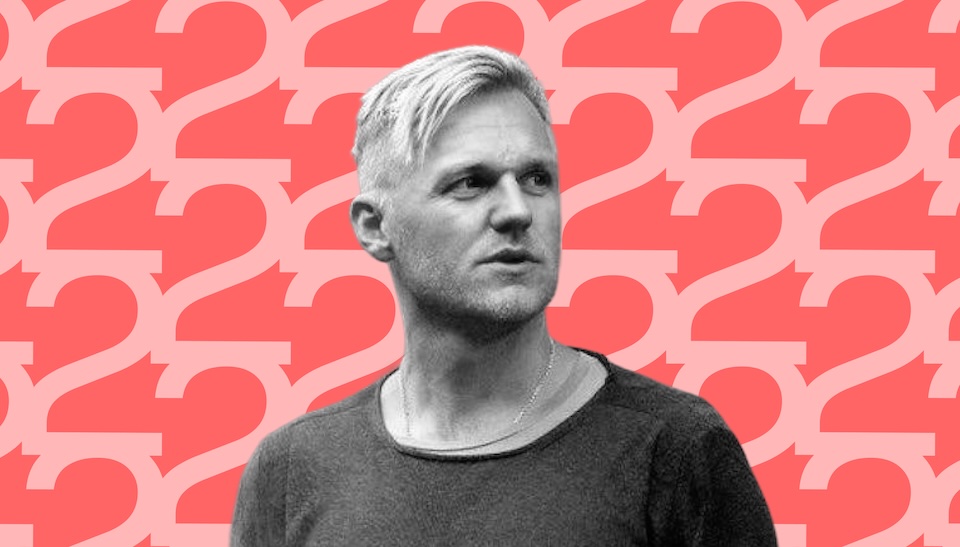
Director Adam Berg Doesn't Like Playing It Safe
'Painting by numbers hasn't created that many great works'


Hey, Adam Berg—what’s your origin story?
“The Sweden I grew up in was socialist and the unions were investing a lot in the education of workers,” the Smuggler-repped director tells Muse. “Coming from a working class family, you could get a little money to educate yourself or start a band, learn how to paint or do gardening. Or… go to the movies.”
“We figured out that if you wrote a review of that film and discussed it in a group afterwards, they would cover the ticket price. So, my friends and I started a film club and saw everything we could get our hands on. We rented films over the weekend, copied them on VHS and watched them over and over again. That led us to make zombie movies in the backyards, spraying our parents and siblings with fake blood.”
Since then, Berg’s excelled across commercials, music videos and feature films.
His brand work ranges from Uber’s visually beguiling “Boxes” and Apple’s exhilarating “Balloons” to Crocs’ busy mannequins.
No doubt plenty of aspiring filmmakers would like to pick Adam’s brain for career advice. They’ll get their chance in NYC on Sept. 17. Berg will appear as part of a PrePros panel designed to teach young creatives more about the business of production.
Smuggler executive producer Carlin Wilson-Webb will also participate, along with Flower Shop founder/CCO Alastair Merry. Brandon “Jinx” Jenkins will moderate the convo. They’ll parse how work gets made—from treatment to final commercials—with an emphasis on the agency-director relationship.
Below, Muse sneaks a peek inside Berg’s headspace, exploring his early inspo and willingness to push past comfort zones.
Where did you grow up, where do you live now, and how do the two compare?
I was born and spent my childhood in a small industrial town in Sweden, where you played football. I did not. So, I escaped into my imagination, into books and films. I didn’t really grow up until I moved to Stockholm after my military service and started studying. Then I had a few more growth spurts. Having kids was definitely one, and moving to L.A. was another. Now we’re back in Stockholm and it feels like a small town. I travel so much, so it is nice to come back and walk everywhere in a city that kind of fits in your pocket.
The comparison to where I grew up is harder to make. When I was a kid, you had to work hard to find what you liked. So once you did, you held on to it, made it part of your personality. Now it all washes over you, everything is fighting for your attention.
Is it a question of big city vs. small town?
A small town isn’t so small anymore. The world is not as far away from Eskilstuna now as it was back then. Moving away, anywhere, abroad or to another town, lets you split off into someone new, a blank sheet to reinvent yourself. I’ve found that coming back, it’s hard to squeeze into the person you once were. The person you became out in the world keeps calling you. It makes for a restless life, but an interesting one.
Was there an “a-ha” moment that made you realize what you wanted to do?
When I moved to Stockholm I studied law, psychology, criminology and a variety of other things. Trying to find a way to fuel the rocket that would take me to a new world. I didn’t find it there. Running out of options, I returned to my first love, movies, and took a film course at uni. I met kids whose parents worked in the industry and realized that creativity could actually be a job. It hadn’t really occurred to me that I could work in the film industry. That was a definite a-ha moment.
What creative hill would you die on?
Trust your instincts.
Tell us about a recent project you’re proud of.
Last year, my brother’s band Kent did a few reunion shows in Stockholm. He asked me to be in charge of the visual world. We didn’t have a lot of money but we had total creative freedom. We made a lot of stuff, starting with a teaser film where ghosts were hovering above Stockholm, returning to the arena. We made visuals for a lot of the songs. Kind of amazing to see and hear 40,000 people react to your images and your brother’s music. Even my kids thought it was kind of cool.
What movie set do you wish you got to visit in real life?
Being on the set of the first Star Wars must have been amazing. No one had a clue of what was going on except Lucas. Kind of amazing how that chaos changed the world.
If your life was a movie, what would the logline be?
At least we had fun making it.
What is your favorite film? Favorite director?
I think the film I’ve seen the most times is probably Bladerunner. I have seen a lot of different versions and I still return to it. The world building is phenomenal. Every frame is like a painting. I kind of fell head over heels into that world the first time I saw it and I still fall for it.
My favorite director is trickier. I grew up with Spielberg, Scorsese, Scott and Bergman. Very few can make films as good as those. In modern times, Villeneuve has made some great films. But I would perhaps rate Hayao Miyazaki up top. I have a soft spot for imagination and escape.
You’ve got 2 minutes with the industry. What’s your hot take?
The best work has always come from teams being brave together. The directors, agencies, producers, clients, all pulling in the same direction to make something that turns a few heads. Creating something that makes someone think, feel, react. That still happens. And when it does, it’s magic.
I’d just love to see us trust ideas more again. Being a little nervous about them is good. A great idea should push you beyond your safe zone. Not exactly knowing what it will become is great. Painting by numbers hasn’t created that many great works.
2 Minutes With is our regular interview series where we chat with creatives about their backgrounds, creative inspirations, work they admire and more. For more about 2 Minutes With, or to be considered for the series, please get in touch.