Newsletter
 Events

Major League Soccer Enters a New Era of Leadership
What does that mean for its brand on and off the pitch?


Major League Soccer is entering a new era of leadership, and now it must decide how the league wants to be branded on the pitch, in culture and beyond.
MLS held a press conference on Aug. 4, with commissioner Don Garber handing over the reins to LAFC owner Larry Berg.
The move came shortly after the finish of the 2026 FIFA World Cup. In the tournament’s aftermath, fan excitement surged across North America. MLS reaped the rewards in the form of more ticket sales across its 30 franchises, as well in TV ratings.
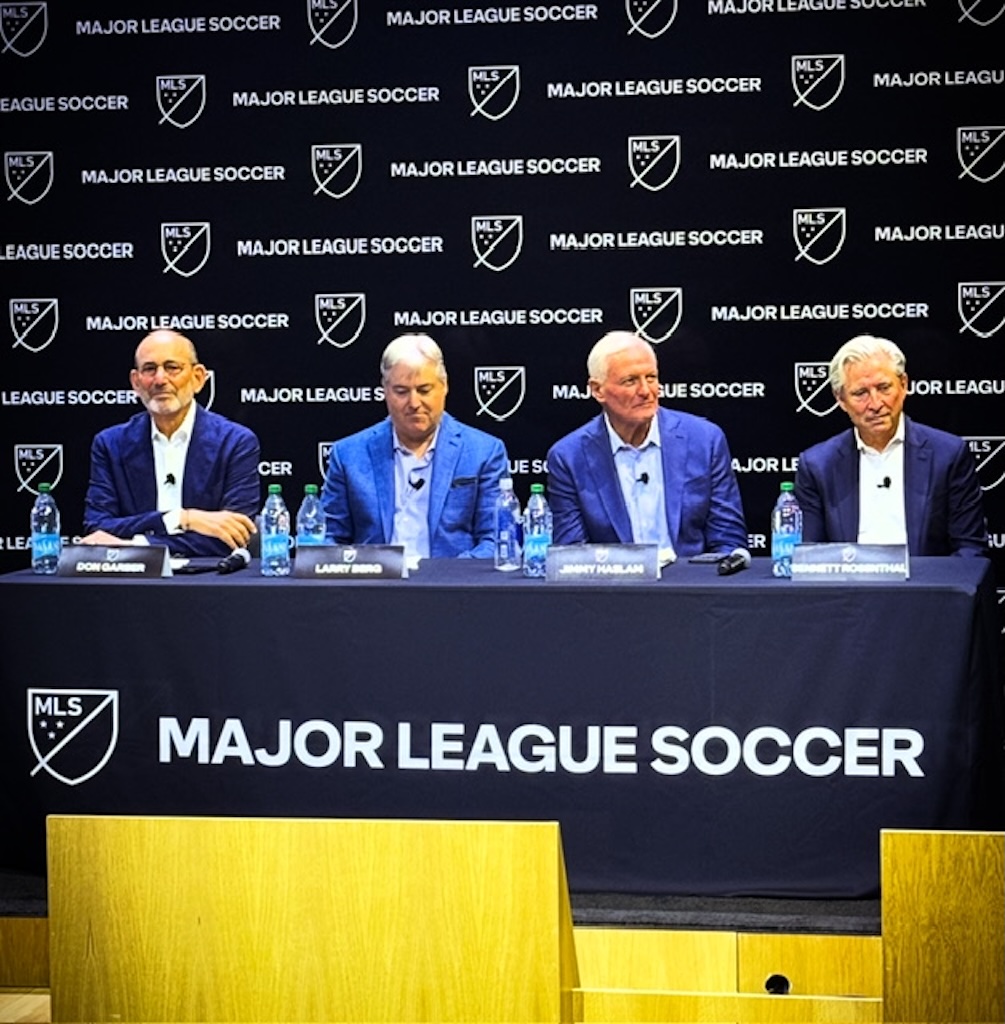
Berg assumes the mantle officially in 2027. Commissioner Garber, who now elevates to chairman, emphasized that during his tenure, MLS built a soccer nation. This was evidenced by the show of support from U.S. fans this summer during the World Cup.
Critics say the U.S. is not quite there yet.
Indeed, the spectacle did much to stir the soccer masses. FIFA data says the tourney reached “unprecedented scale” and Time Magazine said it was one of the “biggest global events in human history.”
“We have seen what took place this past summer where the world came to our country to take advantage of—and experience—all the things we have done—to build what was the excitement around the most incredible World Cup in the history of the sport,” says Garber. “There couldn’t be a better time for someone to take it from here. We love that tagline our marketing folks created” [That would be “Thanks World, We’ll Take It From Here.”]
But Garber noted that while it’s important to reflect on MLS’ achievements, “It really is about the future—the future path that will be guided by new leadership.”
Berg becomes the third commissioner of MLS. He’s been a passionate fan since childhood, a big selling point in his bid for the top job. And he is unfailingly optimistic for MLS’ next chapter.
Berg points to what transpired during this summer’s tournament, noting that millions of people across North America experienced the passion of the world’s game firsthand. “They fell in love with the drama, the atmosphere and the emotion that makes soccer unlike anything else,” he says. The “extraordinary opportunity” now lies with those individuals who experienced their first meaningful introduction to the global game.
“The question is what we do at this moment,” he says. “Our responsibility now is to make sure that people who discover our league today become supporters for life. That means strengthening the connection between our clubs and our communities, creating unforgettable experiences for fans and making sure the excitement generated this summer becomes lasting momentum for Major League Soccer.”
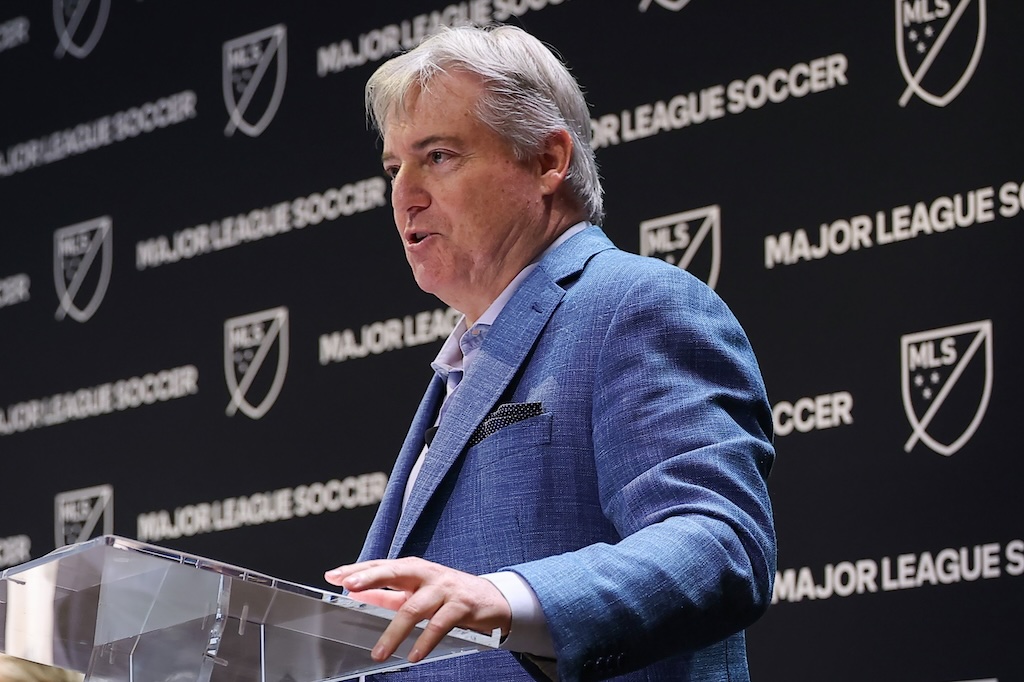
Berg’s first job is to spend time with owners, players, coaches, fans, league staff, leaders throughout the soccer community—and commercial partners.
“Every one of them has ideas that can help shape our future,” he says.
One area of importance is to continue to build the MLS brand through media partnerships.
The league signed a 10-year deal with Apple TV in 2023, which includes coverage of all MLS matches, the Leagues Cup—an annual competition between MLS clubs and Liga MX from Mexico—as well MLS Next and MLS Next Pro matches, in-studio programming and other video content.
During the World Cup, the league launched four docuseries that streamed on Apple TV, Amazon, Fox and Tubi.
“It’s about finding media partners who want to co-create the future with us,” Berg says. “It’s about ‘what’s interesting to them is interesting to us.’ How do we change certain things to their benefit.”
One example he gave is introducing media who are unfamiliar with the Leagues Cup, which has existed since 2019. And of course, MLS’s ambitions are to create a better product on the field. This won’t be guided by promotion and relegation.
Across global soccer, the U.S. is among just a handful of countries that doesn’t utilize the merit-based system—that often gives fans high-stakes drama on the pitch.
“I have had the opportunity and experience in investing in a few clubs in Europe,” Berg says. “I don’t think it’s a great way to build a league, or to get stadiums and training facilities built. It isn’t appropriate for our league—I think Don said before: ‘never say never,’ but I don’t see it happening anytime soon.”
Michael Bradley, head coach of the New York Red Bulls—and a former USMNT, MLS and international player—supports the ideals that U.S. soccer remains true to its values.
“One of the questions I’m always asked is: ‘when will soccer be at the same level as the NBA, the NFL, when will soccer be, like it is in Europe?’ And the answer for me is that we have our own soccer culture—and the culture that we have, we should be proud of,” says Bradley. “Does it need to continue to grow? Absolutely. But the way the game looks in this country—we as a sovereign nation—is going to be different than it is in other places.”
“And that’s okay. We should be proud of that. We don’t need to pretend to be something that we’re not.”
Related: How Brands Can Forge Post-World Cup Strategies