Newsletter
 Events

Is Levi's Quiet World Cup Rebellion On Brand?
The covered logo plugs into the culture, but long-term goals feel undefined


Right now, draped high above Levi’s Stadium in San Francisco, hangs a Levi’s logo covered in a white sheet—its iconic batwing shape still visible, still quietly making its presence known. The marketing world has already erupted with excitement: hot takes, lessons, breakdowns, “what this teaches us about branding.”
That’s the story for marketing. But this isn’t a win for marketing. It’s a win for people, and it doesn’t have a name yet.
Marketing sees the mechanics. People see the meaning.
And the meaning is this: that covered logo is a symbol of rebellion against a rule-heavy institution. A metaphor. People vs. power. The individual against the system. It’s a win for anyone who’s ever had to find a way through a process built to keep them out.
It’s a cause for celebration. But you can’t celebrate what you can’t name.
There’s a real platform sitting idle here—a rare moment where a brand doesn’t need to shoehorn a sports trope to earn its place at a major event, doesn’t need a celebrity to validate its presence. The moment has already flipped itself. It’s being applauded within the marketing world. But it hasn’t made its way into people’s lives yet.
This is a special moment for Levi’s if they can harness it—because it conveys a powerful notion of permission. And there is no such thing as a safe rebellion.
It’s easy to forget that, historically, Levi’s clothed laborers and factory workers—hard-wearing denim, warm and durable. Then the preferred social uniform became the shirt and tie, a symbol of progress and conformity. When Marlon Brando started wearing denim, the youth followed. It was a stance of defiance. And it wasn’t popular with everyone.
This summer at the FIFA World Cup, denim has invaded the stadium. An imperial game taken over by Americana, on American soil.
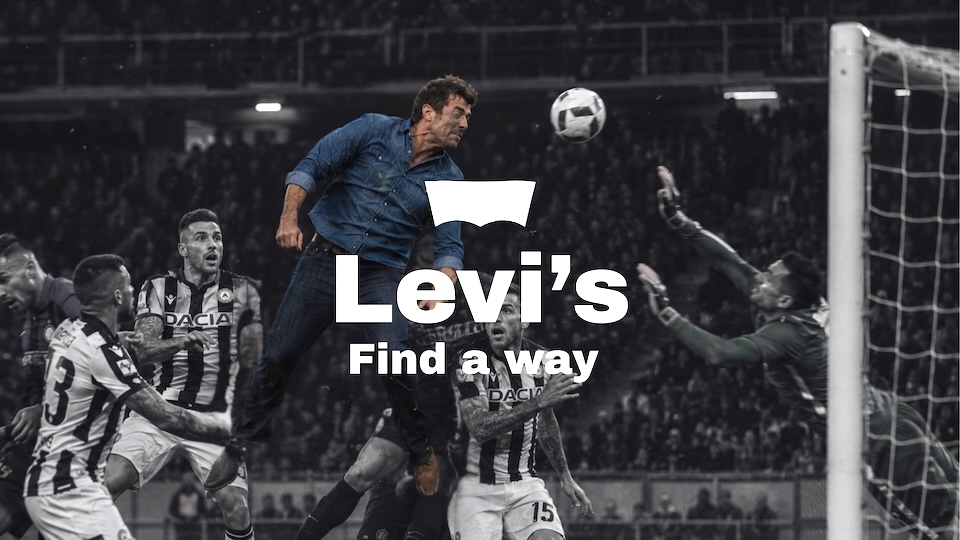
We watch a brand charging onto the pitch in full denim, finding its way to the penalty box and heading the ball clean into the goal. They wrong-footed the institution and sent the goalkeeper flying the other way. But the audience needs to see that in full color. Right now, only the marketing folks are clapping.
We hear the word “culture” used a lot in advertising, like it’s some kind of accessory to be mixed in at the final stage. The reality is that without culture there is no brand because there is no place to stand. Brands have to stop thinking of themselves as institutions and towering buildings. They are bridges, and that is all they need to be. They allow people to get to another part of themselves.
People need to see this because they’re hit with these life issues every single day—systems that exclude and gatekeepers that block. This moment is better than clever, it’s human.
It’s a message: When someone tries to cut you down or shut you out, find a way.
And if that doesn’t capture the original spirit of Levi’s, nothing does.


Brian Deady is a creative strategist from Ireland exploring the emotional mechanics of culture and performance.