Newsletter
 Events
The Rise of Creators as Production Partners
How influencers feed the infrastructure


For years, brands have hired creators primarily for distribution. The value was access: reach their audience, borrow their credibility and spark conversation in places traditional advertising struggled to penetrate.
That model has not disappeared. But a second use case is rapidly scaling. Brands are no longer hiring creators only to post. Increasingly, they are hiring them to produce.
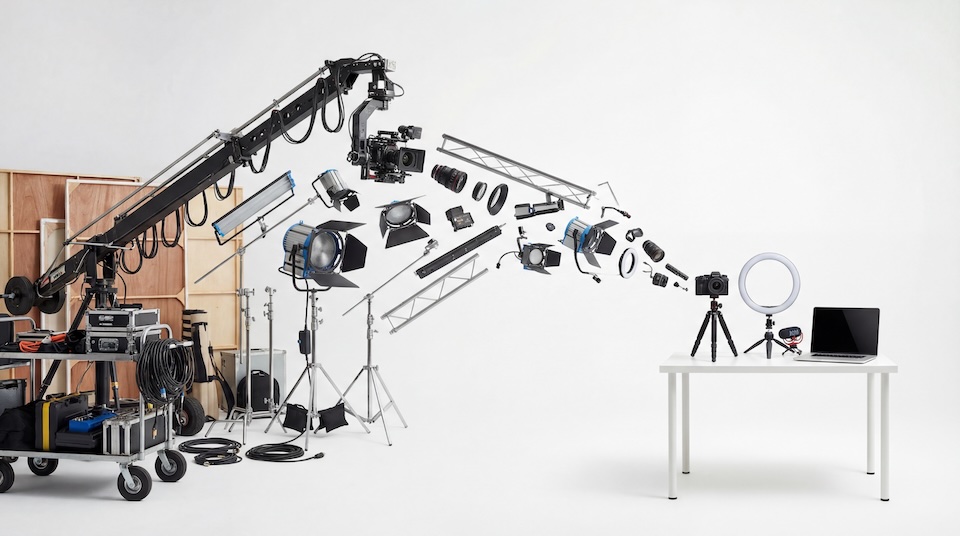
What looks like influencer marketing on the surface is becoming something closer to a distributed production system.
The New Production Stack
Modern creators often operate with capabilities that rival small production teams: filming, editing, motion graphics, sound design, trend fluency and real-time iteration informed by performance data. Many can concept, shoot and deliver platform-ready assets in days, sometimes hours.
This is not scrappy content. It is platform-native creative engineered for feeds where authenticity, speed and relevance outperform polished but distant brand messages. Creators are also optimized for volume and variation, producing multiple formats and storylines that can be tested and redeployed across channels. For marketers, this is not just content. It’s optimization fuel.
The challenge is that most brand organizations were built around centralized production: long timelines, tightly controlled shoots and limited outputs. Creator-driven production flips those assumptions. When hundreds of creator assets begin flowing into paid media, owned channels retail, and e-commerce, friction can appear. Legal teams encounter usage scenarios that don’t fit legacy contracts. Creative teams face approval cycles that outlast platform trends. The constraint is no longer creative supply. It is organizational readiness. Brands often unintentionally dilute the speed and cultural relevance they hired creators to deliver by routing them through processes designed for a different era.
Instinct is the Real Differentiator
What separates creators from traditional production partners is their proximity to audience behavior. Many have been publishing consistently for years, living inside comment sections, testing formats and watching performance signals shift in real time. That repetition builds instinct.
Creators know when something will resonate because they have felt resonance before. They understand pacing, framing, tone and tension from daily feedback loops with real communities. A creator can post, test a hook and know within hours whether it sparks conversations—then refine and scale what works before a traditional campaign would even enter final approval.
That ability to prototype in public is why creative freedom matters. Overly prescriptive briefs interrupt the feedback loop that makes creators valuable. When brands treat creators as rigid executors of prewritten scripts, they miss the deeper advantage: a creator’s fluency with their audience and ability to navigate performance signals without losing authenticity.
From Campaign Oversight to Production Orchestration
As creators take on a larger production role, marketers must shift from managing discrete campaigns to orchestrating ongoing content ecosystems.
That starts with upstream planning. Briefs should define objectives, guardrails and use cases rather than prescribing every creative detail. Usage rights need to be considered early if assets will travel across paid, owned, commerce and in-store environments. Approval workflows must prioritize speed. Measurement should evaluate performance across iterations, not just a single deliverable.
Forward-thinking brands are also building processes to redeploy creator content as modular building blocks. One creator shoot can support weeks or months of activity when captured with downstream uses in mind.
GoPro and Airbnb have long operated with creators as a distributed production layer, sourcing campaign assets from users embedded in real experiences rather than staged shoots. At the same time, many brands (especially CPG, home goods and beauty) now rely on anonymous or “faceless” UGC creators to mass-produce product demos and lifestyle clips, effectively outsourcing everyday content production to a network of micro-studios.
The Bottom Line
Treating creators solely as media channels limits their potential. Treating them as production partners, and giving them the creative freedom to operate as such, unlocks scale.
The rise of creators as production partners is not a replacement for influencer marketing. It is an expansion of it. Brands that adapt their legal frameworks and asset strategies will unlock speed and relevance across channels. Those that rely solely on legacy production models may find themselves unable to keep pace with the volume and agility modern marketing requires.
Creators are still powerful voices. Increasingly, they are also the infrastructure shaping how brand content gets made, tested and scaled.