Newsletter
 Events
How Tombras Turned a Shattering Suicide Stat Into an Inspiring Story of Survival
Beauty emerges from what's been broken


When you collaborate with a client whose mission and vision are clear, the creative process becomes not only efficient, but deeply meaningful. While most nonprofit organizations operating in the suicide space focus, rightfully, on prevention, Project Unbroken is dedicated to something equally critical: postvention. They support the families who remain, the ones navigating grief, guilt, silence and the long shadow left behind.
Early in the process, we came across a statistic that reframed our understanding of the issue. Folks who have lost family members to suicide are three times more likely to take their own lives. It was a sobering metric, but also a call to action.
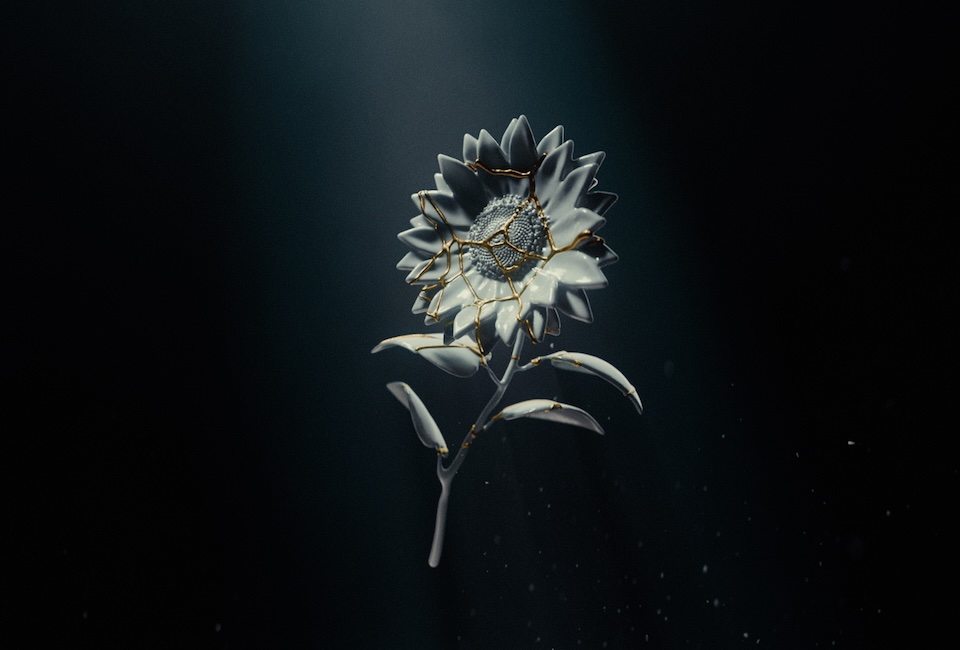
Project Unbroken’s founder, Trina Roffino, who lost her husband to suicide, shared a metaphor that guides the foundation’s work: Kintsugi, the Japanese art of repairing broken pottery using lacquer mixed with powdered gold. Instead of hiding fractures, kintsugi turns an object’s history and imperfections into a renewed kind of beauty.
This philosophy mirrors Project Unbroken’s mission: to help families gather their pieces, remove the stigma and acknowledge that the cracks are part of their stories. With that insight in mind, we faced a creative challenge: How to communicate something this heavy without overwhelming the audience.
The answer emerged through the families themselves. Real people, real grief, real resilience. Through their stories, we discovered a tone that balanced vulnerability with possibility. Our goal was to craft a film that transformed grief into a form of hope—quiet, dignified and deeply human.
Working through the foundation, we connected with families who had lost loved ones to suicide. Before, during and after filming, we interviewed them extensively. We asked each person to choose an object representing their lost loved ones—something emotionally loaded, something that held memories. On set, we expanded those conversations and reunited them with that same object, now repaired with golden seams. These moments were intimate, emotional and profoundly grounding.
We had more than two hours of recorded interviews, and our next step was choosing the right music. We selected “Gold” by Sigur Rós, a soaring soundscape that perfectly matched the tone we were striving for.
We then conducted a meticulous editorial process—reviewing every word, every breath, every pause–to find the lines that would carry the narrative with authenticity and clarity.
From there, we turned to CGI. Each object was digitally reconstructed, broken apart and then rebuilt, mirroring the arc of the families’ stories. Our aim was to create a visual language that was poetic, cinematic and synchronized with the lyrics and the testimonies.
As the film came together, the emotional weight we felt on set returned. That’s when we knew the piece had found its truth: a story not only of loss, but of reconstruction.
Sound design elevated the final experience. We partnered with Berlin-based Nicolás Teubal, who crafted a sonic environment that felt tactile and immersive—as if viewers were sharing the same physical space as the families, listening to them speak directly, heart to heart. This sensorial approach became the backbone of an art exhibition as well, where the restored objects were displayed alongside extended testimonies at an installation in New York.
In the end, “Beauty of Broken” became more than a film. It became a space—emotional, artistic and communal. Here, people could witness the beauty that can emerges from what has been broken.