Newsletter
 Events

A Millennial’s Love Letter to a Misunderstood Las Vegas
A blueprint for how Sin City can reinvent itself for Gen Z and beyond


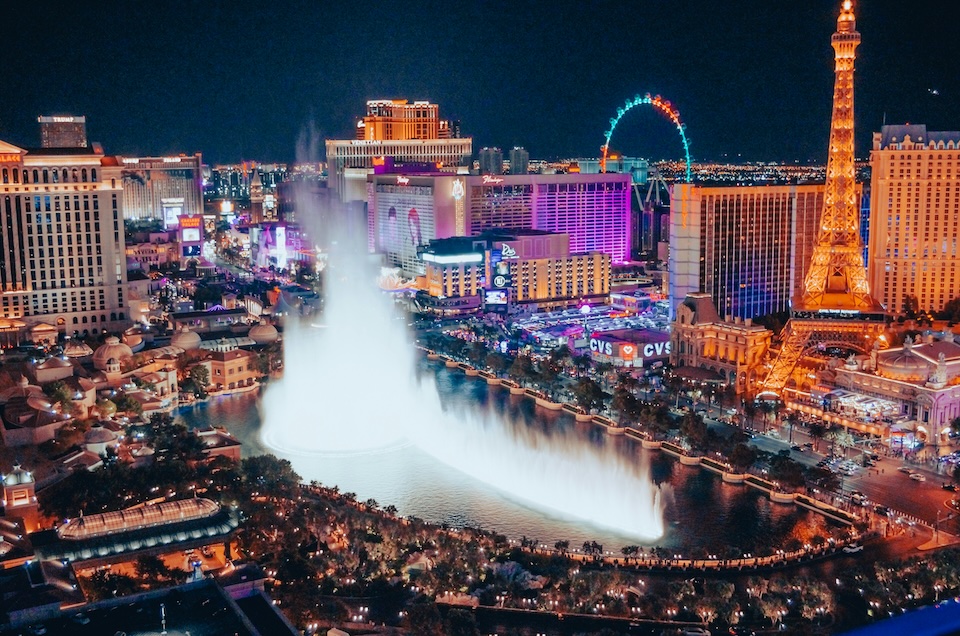
Vegas has long been one of the most iconic destination cities in the world. For 70 years, it’s sold the promise of a weekend escape from your normal life—neon signs, feathers and sequins, manufactured permission, and a signature “What happens in Vegas stays in Vegas” attitude.
But none of this changes the fact that Las Vegas just recorded its worst decline in annual visits since the pandemic began, recording a 7.5 percent year-over-year drop in 2025. Gen Z isn’t lining up for the classic 48-hour bender. And all those promises sold to Vegas tourists over the last 70 years? Gen Z doesn’t buy it. Doesn’t even want to buy it.
Now in full transparency, I’m a card-carrying millennial who grew up in California. I’ve been to Vegas dozens of times, primarily in my 20s—each time seeking a bit of warmth and a pool or chasing the promise of a few watered-down casino drinks and a good night out.
So, this stat really shocked me. And it got me thinking—Vegas can’t possibly be doomed, right? It’s too iconic to be lost forever. I have to believe it’s just under-imagined for today’s youth. Which in turn means its tourism problems are solvable.
We need to recognize that this generation chooses culture over casinos, connection over chaos and working vacations over blacked-out weekends. They turned Coachella into a networking event and have transformed food into a joyful exercise of self-exploration. They don’t want the “What happens here, stays here” promise of escaped identity. They’re looking for constant self-revelation instead.
In short, the things that brought Vegas to its original fame are no longer seen as benefits to this new generation; they’re now seen as liabilities.
So how might hospitality brands—or even the city at large—re-think the next iteration of experiences to proactively turn “destination cities” into Gen-Z relevant icons again?
First off, let’s trade excess for meaning.
Gen Z came of age during a pandemic and watched remote work collapse the boundary between productivity and leisure. They developed an almost allergic reaction to experiences that feel designed for someone else’s era. Each of these has left a lasting impact.
Which is to say that they don’t reject indulgence—they reject empty indulgence.
While some assume that Gen Z are penny pinchers, that couldn’t be farther from the truth. They just allocate their pennies more strategically than I ever did at their age. They spend lavishly on festivals, immersive dining or anything that feels genuine and curated. In fact, Gen Z dedicates as much as 30 percent of their income to travel and experience—a stat which should thrill hotel and hospitality groups.
What’s more, Gen Z and Millennials travel more frequently than older cohorts, averaging close to five trips per year compared to fewer than four among Gen X and Baby Boomers. All to say that the $500 Sphere ticket will continue to sell out. But the $500 blackjack table? It won’t ever command the same cachet for Gen Z as it had for their parents.
Next, let’s recognize that privacy is the new luxury.
Gen Z’s entire existence has been one of expanded digital surveillance, oversharing and cancel-culture anxiety. Their lives have been on full display since childhood. As such, privacy has become the ultimate luxury.
The original Vegas promise of “What happens here stays here” is no longer valid. Revelers are no longer able to enjoy that wild night out with abandon—they have to be aware that Instagram and TikTok pack the potential to spill their news with zero-lag speed.
But Vegas’ original promises of discretion, anonymity and a sanctioned space to be someone slightly different—those may be the very luxuries Gen Z can’t find elsewhere.
Hotel and hospitality groups should be thinking about phone-free parties, private immersive theaters and analog social spaces designed to exist entirely off-feed.
Lastly, let’s embrace why timelessness can be a good thing.
Sure, New York is the city that never sleeps. But Vegas is the city that doesn’t distinguish between night and day. And it should not abandon that core aspect of its identity.
No other major destination has permission to blur time the way Vegas does: no clocks, no conventional social rhythm, no one telling you when to stop. And while that feature used to be aimed at encouraging people to lose time at the slot machines or pursue afterparties, it now poses profound potential for a generation that doesn’t live 9-to-5 anyway.
And for a generation that studies at 2 a.m., grocery shops at noon and has never stepped into an office, a city built around eschewing traditional 24-hour schedules can offer infinite opportunity for creative living and vacationing.
Think hospitality programming with late-night creative talks that bleed into sunrise sessions, sunrise sound baths, 3 a.m. chef collaborations, midnight cultural salons, artist residencies that unfold across a full 24-hour cycle… you get the gist.
Sure, Vegas is the case study. But any city—big or small—or hospitality brand can (and arguably should) contemplate these three things when trying to future-proof themselves:
How can I reactivate my place’s original truth? This means stripping away the dated executions and finding the core human need the place was always serving. For Vegas, that’s escapism, permission and transformation—needs that never expire. What’s your equivalent?
Why are the believers already coming? Find the cohort that’s already half-convinced—for Vegas, that’s the Sphere crowd, the Meow Wolf audience, the festival loyalists. Strive to understand their needs as the foundation for future experiences. Build something undeniably perfect for them.
What’s the one asset that no other place has—or at least has in the same way as you do?
This means identifying the unfair advantage that geography, history or design granted you, and leaning into it unapologetically. For Vegas, it’s the extremes: nowhere else on earth puts world-class food, spectacle, nightlife and risk under one roof and calls it a Tuesday. That buffet of experience is the product. Build in-step with an asset you can credibly own.

Kate Fairweather is the co-founder and head of human strategy at Electric Innovation.