Newsletter
 Events
Here Are Your AI Dos and Don'ts for 2026
Habits and attitudes worth encouraging—and others best left behind


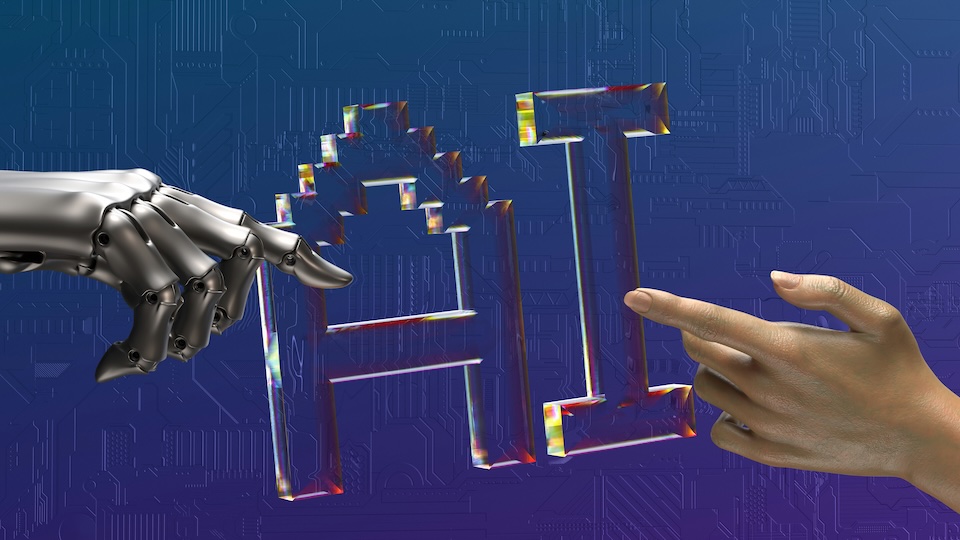
AI has me feeling a bit like the first day back at school: familiar, but with that sense that something different is starting.
In 2025, we mostly saw AI as a helpful tool, that could speed things up or fill in the blanks. In 2026, AI may start to feel more like a creative partner in some moments—not replacing us, but helping shape ideas in new ways.
So, as we look ahead to 2026, there are a few things to absolutely carry forward—and a few to forever leave behind.
TAKE THESE INTO 2026…
The Productivity Stack That Actually Moves the Work Forward. AI has become the unseen chief of staff—not because it replaces thinking, but because it clears the underbrush. So, bring the tools that genuinely streamline your days, from synthesizing complex briefs to prepping for meetings and managing feedback loops. ChatGPT Enterprise can be your backbone for that system, especially through custom modules.
Example: My team’s “Famous Idea Test,” and a series of briefing tools that keep client and industry intel relevant, organized and immediately accessible. Perplexity and Claude, under enterprise licenses, provide quick research sanity checks and their voice features help structure thoughts when users need to talk something through.
Try this: Working late and don’t want to ping a teammate but you’ve got a spark of an idea? Talk it out with Claude or Perplexity’s voice mode. Ask it questions and push back on its answers. Sometimes it’ll feel like you’re sparring with an intern, sometimes with a senior strategist—but the quality comes from how you probe. Set clear guardrails upfront so it doesn’t simply “yes” you. Make it challenge you. That’s where the value is.
Collaboration Tools That Expand the Table. The best creative work happens when more people can meet the idea earlier. AI collaboration unlocks the ability for strategy, creative and production to work inside the same ecosystem in real time—especially when we’re not physically together. ChatGPT has become invaluable for shared exploration; Perplexity supports rapid voice-based ideation; tools like Envato and Artlist help shape visual and audio direction alongside clients during the concept phase and beyond.
Dip your toe in the water: Bring early creative into one shared AI workspace and use fast-turn visual and audio tools to set mood and direction. Treat it like a mood board on steroids and it creates alignment faster, sharpens the brief and accelerates cohesion without adding more meetings.
Stress-Testing the Work. If there’s a superpower AI gives our creative industry, it’s the ability to test ideas more rigorously. Before anything reaches an internal review, I run it through my idea modules—persona simulations, the Famous Idea Test, clarity passes and narrative proofing. It’s not about outsourcing creativity; it’s about giving ideas friction so they’re stronger by the time they hit the room.
Stress-test concepts with a simple AI loop before sharing them. It raises the floor instantly. Try a quick three-prompt check for clarity, audience fit and risk. And maybe ask directly where the idea could fall apart.
LEAVE THESE BEHIND…
Ambiguity in How We Use AI. End the coyness. Using AI in the creative process isn’t shameful or cheating; it’s not something to hide. Teams and clients deserve transparency about when AI is part of the process and when it isn’t. Clear language builds trust and raises the quality bar for both human and AI-generated contributions. Ambiguity helps no one. Clarity strengthens everyone.
To leave coyness behind, add a simple line to your workflow: “AI-assisted for structure; final creative by the team.” The adjustment removes the mystique and sets a consistent expectation.
The Sea of AI Slop. We all know the kind of work I mean: the unedited, unexamined output that gets passed forward without anyone validating whether it’s strategically sound, or even relevant. The slop is particularly harmful for junior talent, who deserve real mentorship in thinking, not shortcuts. And while we’re at it, let’s also leave behind the flood of cold-call AI emails filled with incorrect info and volume-based revenue desperation. That’s not innovation; that’s noise. AI isn’t to blame for slop. Leadership is.
The way to change: Require a human edit pass before any AI-generated text, image or idea moves forward. Read it. Question it. Align it to the actual brief. Non-negotiable.
Fear of the Tools. The fear of AI, especially in advertising, is outdated. We’ve evolved through every major shift in how ideas are made and shared. This is just the next evolution. Our job isn’t to resist the wave; it’s to surf it with intention.
Your way around fear: host low-pressure “play sessions” where the team experiments with ChatGPT, Perplexity, Claude, Envato, Artlist, Sora, and/or whatever’s relevant, with zero expectations of output. Curiosity kills fear faster than any training deck.
If you’re nervous that school’s back in session, pay attention. You came here to learn, and our industry is a great teacher. Regarding AI, you’re only a few changed study habits away from a passing grade—if not a gold star.


Kate Wolff is founder & CEO of Lupine Creative and No Sheep Studios. She also co-founded LumiCup and Do The WeRQ.