Newsletter
 Events

How Air Staged the Shortest CMO Tenure in Its History to Combat AI Slop
Lauded marketer Eric Toda helped shape the tech brand's hilarious mockumentary


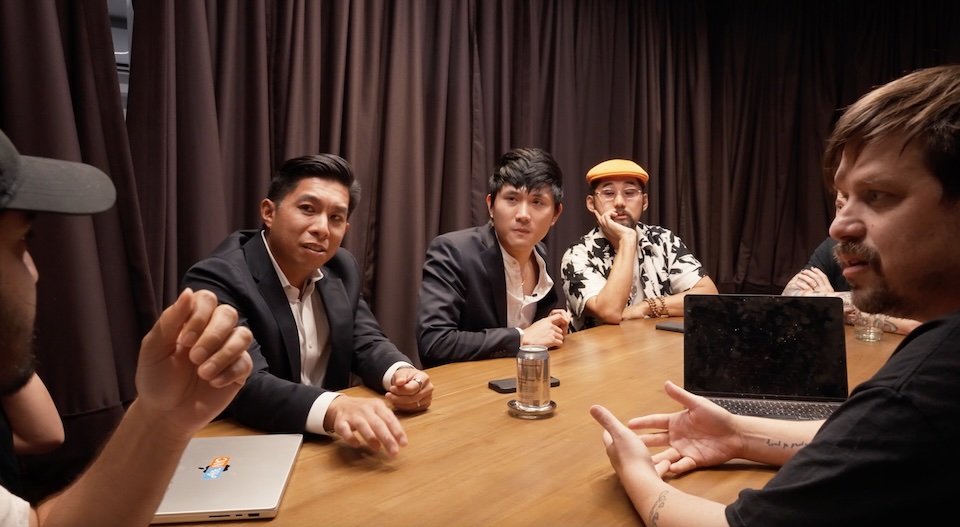
“This is extremely problematic” isn’t something a CEO anticipates hearing from a newly hired CMO into day one of the marketing exec’s tenure. Yet, that’s what unfolded last week at Air, an AI-driven creative operations platform.
The conversation was part of a larger regroup among co-founder and CEO Shane Hegde, Air staff members and newly appointed CMO Eric Toda. A video marking the “problematic” exchange was shared on social media, shocking users who had previously congratulated Toda on his LinkedIn post announcing his new position a few days earlier. Toda is an award-winning marketing exec known for his work at Meta, AirBnb, Gap and Nike, in addition to his strong advocacy efforts for the AAPI community. The initial post drew hundreds of reactions and comments, an indicator of both his reputation in the industry and the amount of eyes were on the career move.
A career move that ended six, maybe seven, hours later.
That short-lived relationship was the hilarious focal point of a five-part mockumentary, directed and edited by Mike Lavin, spotlighting Air’s repositioning as an agent for creative tasks (not an “Asian for creative tasks” as stated in the satirical clip). In addition to Toda and Hegde, the ensemble included: Hegde; comedian Charles Hsu; creators Jaeki Cho and Timm Chiusano; and Air staffers Ariel Rubin, Emmeline Vu and Sarah Teferi.
“Many tech companies have been putting out videos of a founder in front of a camera pitching, but we never thought that would resonate with our customer base,” Hegde shared with Muse. “What it became is this narrative around the modern CMO and the chaos they deal with. We were willing to flex towards that part of the story because it was also interesting and opens up the door for how a modern CMO can deal with this reality.”
All episodes can be found on Air’s Instagram. Muse chatted with Hegde, who shared how the viral posts came together, how the content play reflects the platform’s approach to B2B marketing and the plan to maintain momentum.
The following has been lightly edited for length and clarity.
How did this genius marketing plan come together?
Like any good idea, you start with a kernel. People kept saying “agent,” and my VP of content [Rubin] and I would always think they said “Asian” instead. We thought that was pretty funny. Our product marketer Emmeline, whose family is ethnically Vietnamese, had a couple ideas for comedians we could bring in.
Then you just start beating up ideas. This is like any amazing creative process where it’s always a “yes and,” and it builds from there. We’ve known Eric for years and always wanted to do a project with him. We happened to be catching up and mentioned this stupid idea we had. He loved it and really leaned into it. He worked with us on shaping it.
If you look at the commentary, none of it has to do with the original joke. It has to do with this hokey CMO coming in and the chaos they have to deal with, and a lot of that came through Eric’s vision. To his credit, he’s a creator. And one of the ways our business has succeeded is by giving creatives the space to shape a campaign. We’ve done that with dozens of creatives, from Kareem Rahma to Oren John and the Rizzler. Working with Eric was no different.
It’s not like we had the most genius idea; we just let it run. We didn’t try to control the narrative; we just let it escape. That narrative was different than what we thought it was going to be as we started, but it was beautiful in its own right.
What was the original narrative, and where are we now?
The original narrative was that we’ve repositioned the business around AI. Air is now an agent for creative tasks. Many tech companies have been putting out videos of a founder in front of a camera pitching, but we never thought that would resonate with our customer base. Making a 5-part mockumentary about our repositioning is an interesting way to get the message out there.
What it became is this narrative around the modern CMO and the chaos they deal with. We were willing to flex towards that part of the story because it was interesting and opens the door for how a modern CMO can deal with this reality.
Right now, brands are afraid to get a little bit risque, especially if it involves conversations involving ethnicity. Were you ever concerned about how this would be received?
When we execute on campaigns, there is a ton of thought and debate. I believe the audience is smarter than folks give them credit for, and they can see through any amount of BS. If you’re going to do a campaign like this, you have to work with a great comedian, a world-class CMO, and someone like Jaeki Cho, who helped shape the idea to make it authentic to their community and my community in the AAPI world.
What was really cool from my perspective as an Indian American was seeing several CMOs respond with things like “also the South Asian agent for creative tasks.” I also liked that the commentary extended beyond that. If you read the comments, the small piece about being Asian in the workspace ended up not being the primary narrative; the narrative was something much bigger. As an optimist, I love that the vast majority of people who looked at this had nothing to do with ethnicity or race. That’s a good world to live in.
Marketers are not typically known for acting skills, but everyone stayed in character. What was the direction and mentality on set? How many takes did it take?
You’re not going to believe me, but it was maybe a max of two takes. There were a few lines, but it was mostly improv. The “Pika Pika” Pokemon thing wasn’t written down anywhere—that was just Jaeki riffing. And to Eric’s credit, he’s a really good actor. He took the script, beat it up, and put it in his own words, asking what he would actually say.
When you do that, things feel natural. That all actually came from Charles, who does improv every single day on the internet. He brought this energy of treating it as if it were real. No one was acting. Eric has been in those rooms running marketing, Charles knows how to light up a room and Jaeki and Tim were just being themselves.
In this world of AI slop and perfection on Instagram, the world is starving for authenticity. It can feel risky to be authentically yourself, but when you are, there is so much joy represented in the work. You can’t lose when you’re having fun. This fear that marketers have around upsetting people comes with the asterisk that you’re a good person who wants good for the world; I don’t know how people can be mad at you when you’re celebrating something wonderful in a way that’s authentic to who you are.
The editing was great too. You could have just set up one camera, but this felt different. I assume that was your creative team?
Ariel Rubin runs our internal agency, which is a mixture of community, social, campaign and production folks. We took a lot of inspiration from Andy Pearson’s organizational structure over at Liquid Death years ago. We built this team under Ariel over the last three years, and our campaign work has been a testament to this strategy.
It did remind me of Liquid Death.
The magic of what Liquid Death has done is not that they have some unique view of the world, but they’ve set up the right org structure to support creative work. We implemented a similar structure with three components: the content team (internal agency) run by Ariel Rubin; the core marketing team run by Jeff Toos; and the growth team run by Torin, which handles outbound programs, paid ads and systems engineering. This separation allows each leader to be tactical across their focus area. They all support each other, so we don’t need to pump out a bunch of paid ads for awareness because our organic awareness is so strong. That builds a list that the paid ad team can then target.
It’s also way less intrusive. People naturally gravitate towards your brand and then don’t mind being messaged later.
Hundreds of CMOs have seen our work this week. I guarantee the 1,000-plus people who liked Eric’s announcement post are wondering what Air is. They’re digging in and looking at it. Our challenge is to keep that opportunity warm without being gross—not just saying, “You liked Eric’s post, book a demo.”
Great brand work gives you an opportunity to build a relationship, great marketing work fosters it and great growth work drives it to a meaningful next step.