Newsletter
 Events

Kill 2 Birds' Jonathan Ouellette Blasts Hyper-Personalization
Never underestimate the power of shared experience to boost brands


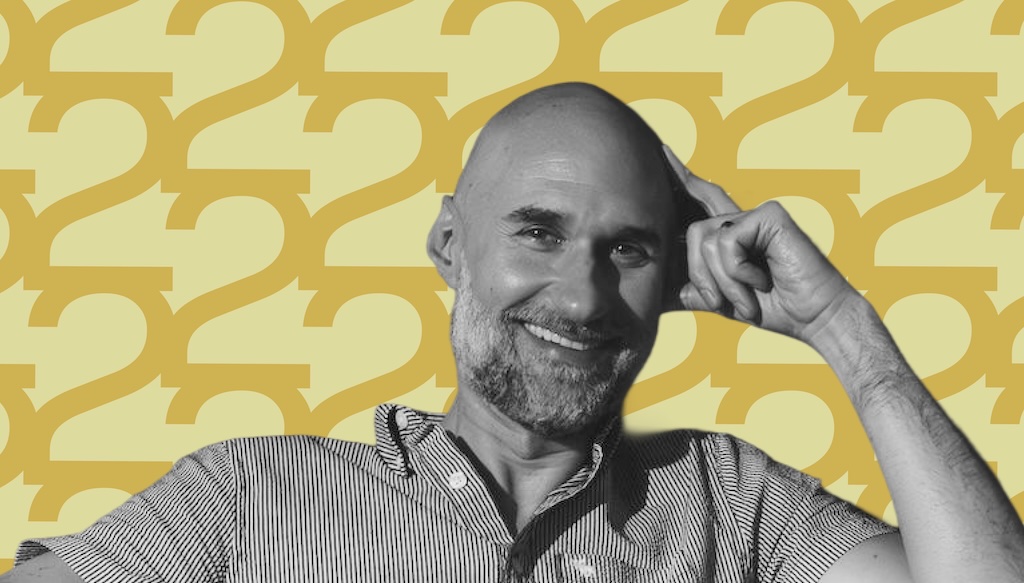
“There’s so much talk about advertising becoming completely individualized, with every message tailored specifically to you, based on what you like, what you do and what you’ve looked at,” Jonathan Ouellette co-founder and ECD at creative studio Kill 2 Birds, tells Muse.
That’s all well and good, but he believes “the best campaigns create cultural moments. Huge groups of people see the same thing, talk about the same thing, reference the same thing. There’s huge value in that shared experience.”
With a motion design career spanning 20 years, Ouellette founded K2B with longtime friend and colleague Thomas Bik. Based in Los Angeles and London, the company specializes in network branding, show packaging, custom opens, promotional and teaser campaigns, key art, typography and logo design.
We spent a few minutes with Jonny to learn more about his background, inspirations and creative process.
What creative hill would you die on?
If there’s no concept, it’s nothing. I had that drilled into me pretty early, and then relentlessly in art school. My professors would just keep asking, “What’s the concept? What’s the concept? What’s the concept?” Eventually it gets into your bones. There has to be thinking behind the work. Even when a client says, “Just make it look cool” or “Make it feel expensive,” we’ll still develop concepts. We need something underneath the surface that gives us a reason for every decision we make.
What belief about creativity have you changed your mind about?
I used to think being creative meant you had to be creating all the time. Any free time needed to feed the work. I’ve pretty much reversed course on that. Time away from the work is just as valuable. You need other things in your life that have nothing to do with your job. I keep bees. I’m a long-distance hiker. I play guitar. None of these has anything to do with motion design. And that’s the point. They give my brain somewhere else to go.
Was there an “a-ha” moment that made you realize what you wanted to do?
I was a sophomore in art school studying graphic design. Motion design was barely a thing back then. One day, a professor showed us Imaginary Forces’ reel. They had just launched, and it was all these incredible main title sequences (Seven, Sphere, The Island of Dr. Moreau). I remember thinking, “That’s what I want to do.” Seeing type and image move, and seeing design collide with film in that way, opened up this whole other world.
So I went out and bought a book on after effects and taught myself. This was well before YouTube tutorials, and my art school didn’t really teach software, much less motion design or animation. I had to figure out the moving part myself. That changed the direction of my life.
Is there a non-advertising industry you learn from?
The restaurant industry. I lived in Austin, Texas, for years, which has an incredible food scene, and that’s where my appreciation for the industry really took hold. I became fascinated by great restaurants and the people behind them. I’m constantly in awe of how hard those people work. It doesn’t have to be Michelin-starred or particularly fancy. Just a place with a great chef, a great team, and people who really give a shit about what they’re putting out. I was raised with a pretty intense blue-collar work ethic, so I respond to that. The hours, the repetition, the pressure, the physical grind. And then, in the middle of all that, you still have to make something great. I find that incredibly inspiring. There are a lot of parallels to running a creative business, too. The work has to be great. You have to market yourself. You have to get people through the door. The service matters. And after all of that, you have to give people a reason to come back.
What source of inspiration do you return to constantly?
Design books. I love that they get me away from the computer, away from Pinterest, blogs, algorithms and the endless scroll. A book forces you to slow down. You sit with an image for a little longer. You notice things instead of just collecting them.
Tell us about a recent project you’re proud of.
We recently finished a custom “HBO Movie Presentation” opener for Mortal Kombat 2. We’ve done a bunch of these for HBO now, including Minecraft, Superman and Wuthering Heights, but this is definitely the best one yet. I was probably 14 or 15 when Mortal Kombat 2 came out, and I played that game to death. So getting handed the HBO logo and basically being told we could beat the crap out of it with Mortal Kombat was pretty perfect.
The concept has Raiden, Sub-Zero and Scorpion attacking the HBO logo with their signature powers. Raiden electrocutes it. Sub-Zero freezes it. Scorpion burns it. Then his chain spear rips through, grabs the logo, and yanks it toward the camera as you hear that iconic “Get over here!”
The whole studio geeked out on it. When everyone genuinely loves the thing they’re working on, that energy tends to find its way into the work.
What’s your main strength as a creative person?
I’m good at letting my brain completely orbit the outer rings of Saturn. I can disappear into an idea, make weird connections, follow something without really knowing where it’s going. A lot of my best ideas come from letting my brain wander like that. But I’m also an obsessive unitasker. Once there’s something in front of me, I can focus on that one thing for a very long time. I’m not trying to juggle twelve other things. I’m paying attention, and that gives me a pretty meticulous eye for detail.
You’ve got 2 minutes with the industry. What’s your hot take?
Everybody needs to chill out a little bit. There’s a lot of anxiety about where the industry is going. There’s AI, consolidation, mergers and acquisitions, especially in entertainment, where we do most of our work. Things are changing fast. Probably faster than they ever have, and we need to adapt to that. But our industry has been through massive shifts before. The tools change. The business changes. The kind of work we make changes. And somehow, creative people keep finding a place in whatever comes next. I don’t think the future will look like what we have now. But I do think there will always be room for people who can think, make, design, draw, animate, write, and come up with great ideas. So my hot take may be incredibly un-hot: chill out, keep adapting, and keep making good shit.
2 Minutes With is our regular interview series where we chat with creatives about their backgrounds, creative inspirations, work they admire and more. For more about 2 Minutes With, or to be considered for the series, please get in touch.