Newsletter
 Events

How to Produce for the World Cup (Without a Coca-Cola Budget)
Executive producer Debi Rubbiani breaks down the new era of global activations, smart casting and cost-efficient shooting


As the ad industry navigates the A.I. era, it’s easy to shift away from human-only content production and lean into machine-assisted tools. But can AI protect the creative craft across borders, time zones and cultural nuances?
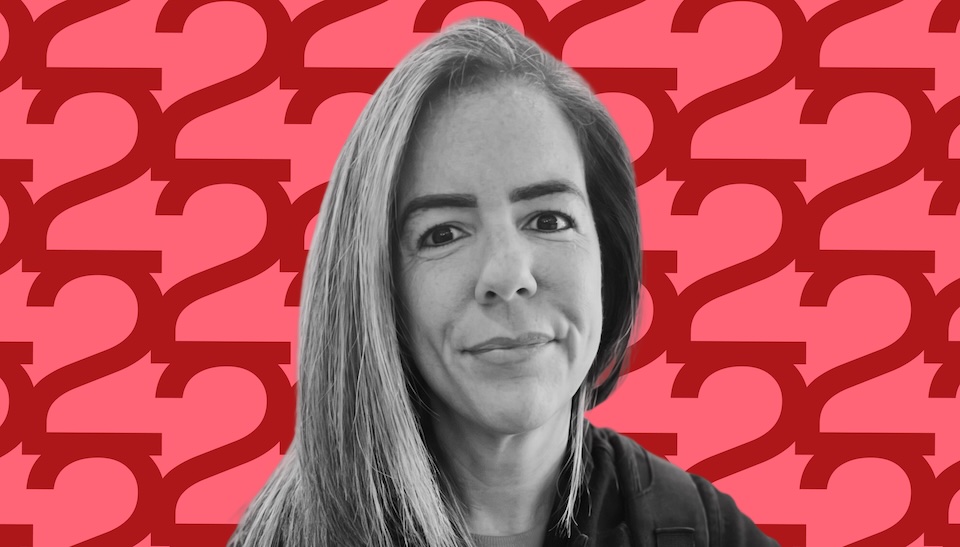
Global executive producer Debi Rubbiani’s done just that across an impressive portfolio of high-profile clients.
Starting her career nearly 20 years ago in music production, Rubbiani’s expertise in business and talent rights landed her a role at Coca-Cola, launching a trajectory from regional Latin American spots to global campaigns. Today, she is based in the U.S. and has worked on projects for brands including Meta, Netflix, AB InBev and Popeyes, collaborating with powerhouse agencies like Ogilvy, David and Grey.
As the ad industry finally sees months of hard work come to life through brand sponsorships and activations at the FIFA World Cup, we caught up with Rubbiani to talk about the complex logistics of global production. She offers advice for challenger brands looking to enter the global sporting event conversation and explains how growing up in Argentina shaped her resilient work ethic.
The following has been edited for length and clarity.
From a production standpoint, what makes the World Cup a completely different beast compared to a standard global campaign?
The main thing about these World Cup campaigns is that this global [event] happens once every four years. It’s not like another campaign—you really prepare your brand and your company for it. You [should] start two years in advance or more thinking about the strategy and partnerships.
We have the L.A. 28 Olympics coming up. What advice do you have for brands without big production budgets? How can they naturally enter these conversations?
It’s okay if you don’t have the budget from Coca-Cola, Apple or Google. I’ve been working since 2018 on these campaigns. Everything has changed so much with social media and the internet. If you don’t have the budget, you can still run great ideas with a small batch that will go on social media.
Your experience comes from navigating complicated crossborder logistics and languages. How do you protect that original idea when it has to be adapted for different markets?
As the global team, you have the responsibility to make that [creative] work and to make that happen, you test it. It’s not that you test the script—you send the scripts out all over the company, all over the world, to all the different markets. Make sure the message is clear and it’s working for all the markets.
What do you think has changed the most in terms of World Cup production?
[Before,] we were just doing mainly big TV commercials. Now, [brands] are not thinking of big TV commercials—that is kind of the past now. A huge change for me right now is [creating more] activations. Of course, in the U.S., Mexico and Canada, every brand is going to [create] different experiences. Today, it’s more about “what can we do on social? What can we do with influencers? What can we do with artists?”
We are seeing production in L.A. take a little bit of a hit. People are going to shoot in LATAM, Mexico City, etc. What does the production landscape look like right now?
A couple of brands directly ask us to shoot abroad because of budget. Sometimes, it could be any country. [For example], I have shot in Costa Rica inside a studio—not because we needed the location; it was a cost-efficient opportunity to go there.
For me, there are some [factors] that it depends on:
- Casting. Do you need talent that speaks to the camera? If [the talent] needs to speak American English, are we flying them from the U.S.? Or are we going to do a casting in another country for native speakers? If I have 20 [people], I need to think about where they live. It could be really expensive to fly them.
- Location. Example: Do we need to show New York City streets?
- Talent. Need [Lionel] Messi? You [will] need to travel to Miami because you are not [flying] Messi to any other place.
- Setting. Maybe it’s winter here but we need to shoot in summer. If you need beaches for example, I would say Mexico first and then Eastern Europe — right now it’s one of the places where you can shoot for a very reasonable budget.
What do you think is a misconception about being a freelance creative?
People sometimes [may think] you are freelance because you want to have more free time. Or they may not really value your seniority as a freelancer. I’m an executive producer so I struggle with that. The seniority and expertise doesn’t always translate.
How do you think your upbringing in Argentina has shaped your work and the way you tell stories?
Growing up in Argentina is challenging—economically, politically and socially. Because of that, we have great talent coming out of Argentina. We have incredible creative agencies, great directors, and of course, great producers.
I think it’s because of how we’ve been raised and everything we’ve seen. Life in Argentina is a challenge every single day . When I worked for other countries, or when I came here to the U.S., I felt there was a clear differentiator because of the way we grew up.
When you’ve been trained that way, it’s not just in your job—it’s in your life, too. Crazy things happen in Argentina. The economy shifts, the currency changes. I feel we are very resilient people. I’m not going to generalize and say every single Argentinian has these skills, but coming here, I really feel like I have an extra edge. It’s been tough, so you are used to working hard and you don’t get easily overwhelmed.
It’s not a coincidence that major creative agencies here [in the U.S.] have roots in Argentina.. I’m really proud to come from there because I feel prepared to handle really tough things.