Newsletter
 Events

Baptiste Limb of Real Chemistry on Creating Work That Lives in the Culture
Interactivity is key for healthcare and beyond


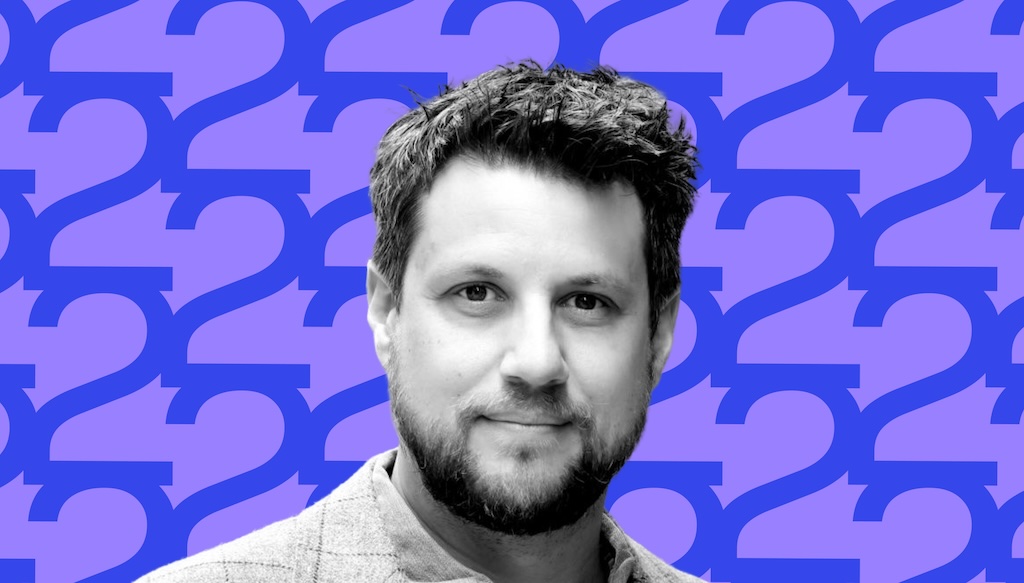
Baptiste is executive creative director of integrated communications at Real Chemistry. Over the past two decades, He has created work across entertainment, tech, consumer brands and healthcare.
We spent two minutes with Baptiste to learn more about his background, his creative inspirations and recent work he’s admired.
Baptiste, tell us …
Where you grew up, and where you live now.
I grew up in France and I’ve lived in Chicago for 16 years. France shaped my emotional relationship to creativity early on. Cinema, comics, satire, philosophy—all of that felt culturally important. Chicago sharpened the more pragmatic side of me. It’s ambitious, resilient, hardworking and maybe less performative than a lot of creative cities.
How you first got interested in health.
Health became a bit of a redemption arc for me creatively. Earlier in my career, I worked across almost every category imaginable: cereal, alcohol, tourism, consumer tech. I enjoyed a lot of it, but eventually I became more interested in applying creativity to things with human consequences instead of just feeding consumption cycles. Healthcare is imperfect and messy, but unlike most categories, what you do can genuinely change how somebody experiences their life.
One of your favorite projects you’ve ever worked on.
“Make It With a Fireman” for Sauza Tequila in 2012. At the time, long-form branded YouTube content was still considered risky. So we proposed putting everything into an absurdly over-the-top video about a ridiculously attractive fireman making cocktails, rescuing a kitten in a beret and embodying every romance novel cliché imaginable. The video hit 1 million views in under 24 hours and became one of the most watched branded clips on YouTube that year. The project permanently shaped how I think about creativity. If people genuinely want to engage with your work, you can outperform budgets 10 times larger than your own.
A recent project you’re proud of.
“Champions in Care” for Bristol Myers Squibb. The insight was simple: during Covid, healthcare professionals were treated like heroes, yet only a few years later many were exhausted, distrusted and emotionally invisible. So we imagined what a world of visible gratitude toward providers could feel like. The film starts with a single thank-you note handed to a doctor, then transforms into something almost surreal where appreciation begins appearing everywhere.
Also, “Highlights Real”—intentionally misspelled—for Nubeqa. We took the insight that after an advanced prostate cancer diagnosis, life can emotionally feel like it stops. We reframed real patient moments as sports-style highlight reels alongside Tony Romo and his father, a prostate cancer survivor.
To me, the best health creativity isn’t about delivering information louder. It’s about helping people emotionally reconnect with life.
One thing about how health is evolving that you’re excited about.
Healthcare is realizing that attention is increasingly voluntary. People don’t want to be interrupted anymore. They want stories, utility, emotion, participation, perspective shifts—things actually worth their time. The future belongs to organizations capable of creating things people want to carry into culture themselves.
A book, movie, TV show, or podcast you recently found inspiring.
I’ve been obsessed recently with Frieren: Beyond Journey’s End, because it shares a similar trope with one of my favorite films from the past few years, Anora. Most stories stop at the happily ever after: defeating the villain, achieving the dream. Both of these stories are interested in what happens after that point, when life simply continues and reality catches back up. That feels far more emotionally honest to me than the fantasy ending itself.
A visual artist or band/musician you admire.
Shigeru Miyamoto, a Japanese video game designer and filmmaker at Nintendo. The best Nintendo games are deceptively simple. Almost anyone can start playing immediately, but there’s incredible depth underneath. Great creative work operates the same way. Filmmakers like Quentin Tarantino and Michel Gondry also had a big impact on me because they create worlds that feel emotionally and visually unmistakable within seconds.
Your main strength as a marketer/creative.
Identifying emotional and cultural tension, then finding ways to release that tension in a way that is participatory. The best creative work doesn’t just enter culture. It becomes part of how people interact with it.
2 Minutes With is our regular interview series where we chat with creatives about their backgrounds, creative inspirations, work they admire and more. For more about 2 Minutes With, or to be considered for the series, please get in touch.