Newsletter
 Events

Nico Puertollano's Quest for Authenticity in a World Where the Word Can Mean So Many Things
Versus' new ECD says it should be the standard, not a shortcut


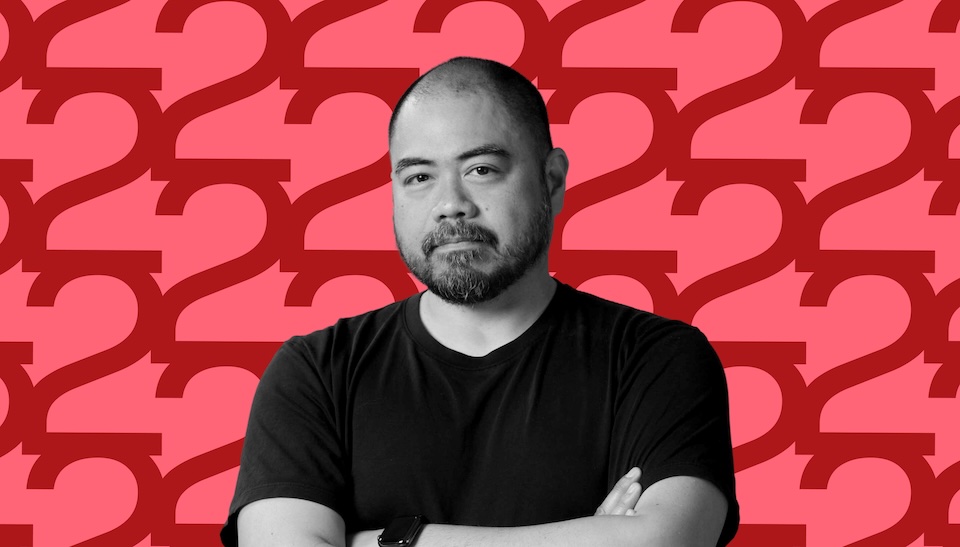
So, Nico Puertollano, you joined production and design studio Versus a few months ago as an executive creative director. What’ve you been up to?
“My first mission is simple: help make Versus the place people think of when they want to do the best work of their careers. To me, that starts with creating an environment where great work can happen consistently. Right now, I’m spending a lot of time listening—understanding how different teams work together, where friction exists and how we can improve our processes so people spend less time fighting workflows and more time thinking, creating, and collaborating.”
During his dozen years with Rezonate, which he co-founded, Nico deployed animation, motion design and brand storytelling across culturally attuned campaigns in healthcare, entertainment, tech, sports and more.
We spent a few minutes with Nico to learn more about his background, inspirations and belief that authenticity emerges when actions and values jibe.
Where did you grow up, where do you live now, and how do the two compare?
I was born in Manila and spent my early childhood there before my family moved to New York in the mid-’80s. I grew up in New York, then moved back to Manila in my late twenties, where I met my wife, started my art and design career and built a studio. I spent a decade before returning to New York, where we now live with our family. People often think of Manila and New York as opposites, but I’ve never experienced them that way. Manila carries a lot of Western influence because of its history, and New York has always been a city built by immigrants. They’re both loud, creative, restless cities that reward curiosity.
The biggest difference isn’t the culture—it’s the infrastructure. New York moves because its systems work. Manila moves because its people make them work. There’s a resilience in Manila that’s incredibly inspiring, and a pace in New York that’s constantly challenging you to grow. Having lived deeply in both places has shaped the way I see people, creativity and community.
Was there an “a-ha” moment in your life that made you realize what you wanted to do?
I’ve never had an “aha” moment because I’ve always made things. As a kid it was Lego, Fischertechnik, drawing, taking apart toys to see how they worked, taking photographs with my parents’ Minolta camera. Later it became comic books, animation, music, photography, editing, film and eventually design. Looking back, I don’t think I was searching for a creative career. I was just following my curiosity. The medium changed over the years, but the instinct never did.
What’s a creative hill you’d die on?
Culture doesn’t come from brands. It comes from people. Brands can participate in culture. They can support it, amplify it, or sometimes misunderstand it. But they don’t create it. The best creative work doesn’t start with trends or platforms. It starts with understanding people—what they care about, what they’ve lived through and what they’re trying to say.
What’s the best career advice you actually followed?
I’ve carried three pieces of advice with me. My editing professor, Alonzo Speight, told me I had to finish school—not because the diploma mattered, but because finishing something teaches you as much as starting it. That stayed with me. Another lesson came from several mentors over the years: Pause, listen and respond instead of reacting. That advice helped me just as much in leadership as it has in directing. And one from my father that somehow applies to almost everything in life: Measure twice. Cut once.
What source of inspiration do you return to constantly?
People. I know that’s a broad answer, but it’s true. I love sitting in public spaces and watching how people interact. I’m fascinated by how two people can experience the same moment and walk away with completely different stories. Outside of that, music has probably been my longest creative companion. Skateboarding, aikido, photography and film have all shaped the way I think, but they all come back to the same thing: observing people and understanding perspective.
What was the last campaign that made you think, “I wish I made that?”
“Assume That I Can” for World Down Syndrome Day. Not because of the production value, but because it trusted the audience. It challenged assumptions without feeling self-important or manipulative. It reminded me that the best storytelling doesn’t tell people what to think. It invites them to rethink what they already believe.
Tell us about a recent project you’re proud of.
One project I’ll always be proud of is AARP’s “A Living History of the LGBT Movement.” What made it special wasn’t the animation. It was the responsibility. We were telling decades of history in just a few minutes. The challenge wasn’t deciding what to include—it was deciding what not to include while still honoring the people whose lives shaped that history. That project reminded me that our job isn’t simply to make things beautiful. It’s to help people feel seen.
Can you recall a campaign or project that almost didn’t come to fruition?
One thing I’ve learned is that the projects worth making almost always reach a moment where they feel impossible. I’ve had projects where budgets disappeared, concepts changed completely, timelines collapsed or clients questioned whether the idea was worth pursuing. Those moments taught me that creative leadership isn’t about protecting your original idea. It’s about protecting the intention behind it while being flexible about how you get there.
For a long time, I thought my job was to make the work better. But somewhere along the way, I realized that leadership is a creative act. You’re designing teams, relationships and ways of working. When you’re solving a problem together and everyone is invested in the same outcome, the work gets better.
Sometimes the version that almost fell apart becomes the version you’re proudest of.
What’s overrated in marketing right now?
Authenticity. Not because authenticity is overrated—but because the word is. We’ve reached a point where almost every brand claims to be authentic. The word has become a shortcut instead of a standard. People don’t experience authenticity because you say it. They experience it because your actions, your work and your values consistently line up. I’d rather hear a brand talk less about authenticity and spend more time earning trust.
You’ve got 2 minutes with the industry… What’s your hot take?
Audience connection works best when the audience becomes part of the process. We spend too much time trying to interpret communities instead of involving them. We extract insights, filter them through our own experiences and call the result authentic. I’d rather build with people than translate them from a distance.
2 Minutes With is our regular interview series where we chat with creatives about their backgrounds, creative inspirations, work they admire and more. For more about 2 Minutes With, or to be considered for the series, please get in touch.