Newsletter
 Events


InHERitance: Breaking the Silence Around Hereditary Ovarian Cancer
Inside the powerful initiative from Digitas Health


This campaign didn’t begin with a brief or a whiteboard session. It began with silence.
An origin story that stretches back generations: a tiny mutation, threaded quietly into family trees. That mutation was carried forward not only by DNA, but by an unspoken rule: There are parts of a woman that you don’t talk about. For years, ovarian cancer moved through families like a rumor. Unnamed, unexplained, unchecked.
At the heart is a simple question: Why is a disease this serious still so silent?
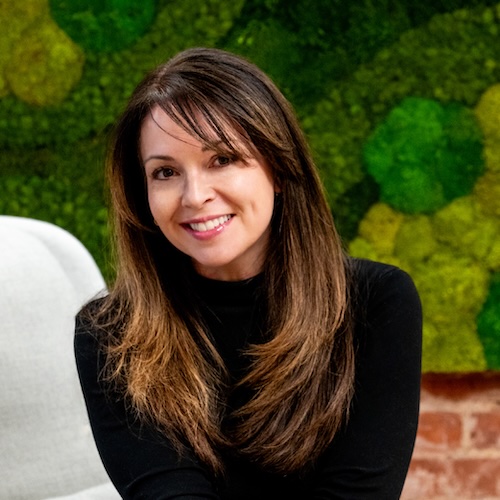
I’ll be honest, I too ran from talking about it. Maybe it was shame. Maybe I wasn’t ready. Then I met Evelyn Capistrano. She stood up in front of hundreds of people and did something simple and radical: She spoke the truth.
Evelyn didn’t want sympathy; she wanted clarity. After her own delayed ovarian cancer diagnosis, she was fueled by a need to change the conversation. “How does this happen when we’re doing everything we’re supposed to do?” Evelyn said. “Information isn’t present like it is for other cancers. They don’t do the same thing for ovarian cancer. It’s zero. There’s nothing, not a single thing that shows a woman that there is any kind of overlap with other symptoms, or her risk.”
Her story made our message clear: know your history, ask questions, pursue genetic testing if your family tree whispers suspicion. Evelyn’s role at Digitas Health then went far beyond VP, User Experience Design. She became our voice and our ambassador for changing the conversation around this deadly disease.
“Silence isn’t just the lack of conversation; it’s a barrier to care,” our partner Lauren Ashley German of the National Ovarian Cancer Coalition (NOCC) said. Unlike other cancers, ovarian cancer lacks routine screening. Women are told to “know the symptoms,” yet those symptoms often appear late. “By the time they present, it’s likely in later stages,” Lauren Ashley explained.
Without conversation, there’s no awareness—and without awareness, there’s no action. This gap, between what women are told and what they can actually do, was the space Silent inHERitance set out to address.
Time spent with Dr. Kara Long-Roche, MD, MSc, FACOG from Memorial Sloan Kettering, revealed more. “We now understand that this cancer starts in the end of the fallopian tubes, not in the ovaries at all. This was a big light bulb moment for us in understanding why this disease can be so difficult to diagnose.”
Regarding late-stage diagnosis, she adds, “People don’t have any signs until the disease is advanced, when they start feeling very ill, bloated discomfort, trouble moving their bowels, trouble eating. Unfortunately, by that point, the disease is almost always stage three or stage four.”
Dr. Long-Roche has dedicated her career to advancing prevention. She believes it’s the most immediate way to make an impact: “Prevention is the only way we’re going to make a difference right now. If we can identify who’s at high risk, we can act early, especially for those with a family history of the disease.” She also emphasizes the critical role of genetic awareness, noting that about 1 in 5 ovarian cancer patients carry a mutation. “When patients learn their status, it opens the door for family members to get tested,” she explains, creating a ripple effect that can help protect and even save lives across generations.
InHERitance was built to drive action. If early detection isn’t possible through screening, then understanding family history and pursuing genetic testing becomes critical.
This need became even more urgent as the science behind hereditary risk revealed how much has been missed. For years, BRCA dominated the conversation around genetic risk, usually centered around breast cancer, leaving many women not knowing their increased risk of ovarian. Additionally, emerging mutations like RAD51D are reshaping that understanding, proving that families can carry risk that traditional testing once overlooked. The implication is powerful: what we thought we understood about inheritance is only part of the picture.
As more mutations are discovered, it’s becoming increasingly clear that ovarian cancer hasn’t been rare or random; it’s been under-recognized.
That realization is what transforms InHERitance from a campaign about awareness into one about urgency. Without knowledge of family history, and without keeping pace with evolving science, women are left navigating vague symptoms without context. “That’s the piece you can control,” said Lauren Ashley. “You have a choice for you and for your daughters.”
Yet even that choice is often delayed or avoided. The campaign uncovered how stigma, fear, and misinformation prevent people from acting. Ovarian cancer sits at the intersection of medicine and taboo—tied to reproductive health, cultural discomfort, and long-standing silence.
“When you talk about that part of the body, people don’t want to go there,” Evelyn explained. “There are religious, political, and cultural layers. It’s not just medical; it’s emotional.”
Those layers don’t just keep people from talking; they keep people from getting care.
That’s why InHERitance doesn’t just raise awareness; it reframes the conversation. It shifts the narrative from reaction to prevention, from uncertainty to control. As Evelyn put it, “You can remove the ‘I wish I knew’ moment. Now we’re telling you what you can do.”
For Lauren Ashley, the mission is both professional and deeply personal. “I made it my mission to give ovarian cancer a seat at the table of women’s health,” she said. Because despite its impact, it has long been left out of the broader dialogue.
For me, the story is personal. My mother lived with ovarian cancer for 19 years; she had genetic testing and was told she was negative. After she died, a doctor encouraged me to get screened anyway. I did so, reluctantly. When we met to review my results, my doctor looked at me and said, “I think we just saved your life.” That sentence, the permission to act, to test, to prevent, is the counterpoint to generational silence. It turned an inheritance of fear into an inheritance of choice.
During the making of this campaign, I watched real lives reroute. Women decided to get tested. Find out uncomfortable truths. Families began sharing history they’d never talked about. That impact may never be captured neatly in metrics, but one life changed is enough to know the work matters.
Because what we inherit doesn’t have to define us.
But understanding it just might save us.