Newsletter
 Events

Minds + Assembly Celebrates 10-Year Anniversary
From a four-desk WeWork office on Wall Street to a full-blown creative commercialization partner


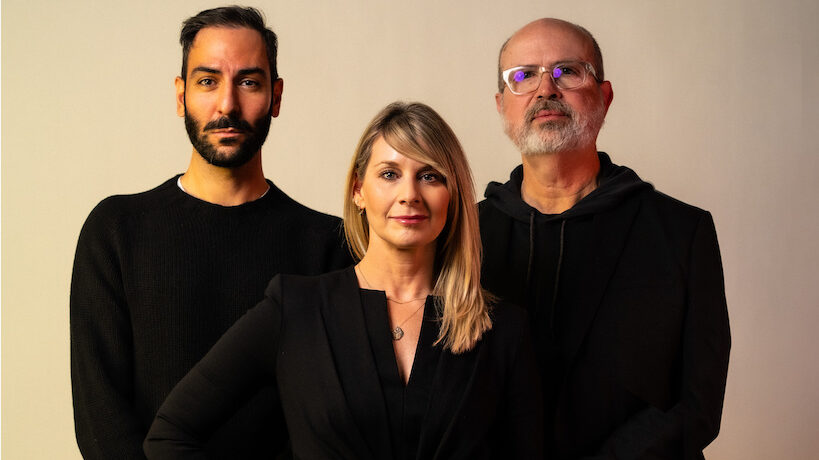
Daydreams give you something to hope for. But, what happens when they turn into reality? Just ask the founders of Minds + Assembly. Ben Ingersoll, Joelle Friedland and Stephen Minasvand were in that state of “wouldn’t it be great if we could erase the Sunday night gloom” and be in a work environment that would bring out the best in everyone?
“We finally understood that if we wanted to work at the agency of our dreams, we’d have to build it ourselves,” says Joelle Friedland, co-founder.
Thus Minds + Assembly was born, starting out as a four-person office in a WeWork down in lower Manhattan’s Wall Street area. And with it, twin principles of uncompromising standards and unconditional support, which the entire agency still lives by today.
“We created an agency unlike any other: a happy workshop where the best talent in the industry and like-minded clients could gather in an environment of love and trust to create and to learn and to share,” says Ben Ingersoll, co-founder.
The sector at the time was rife with what the trio deemed to be “bland and tired strategies and design.” Their core belief was that people–clients and HCPs and patients–deserved better.
“Why shouldn’t healthcare be beautiful? Why shouldn’t brand experiences be as unexpected as they are effective?” asks Stephen Minasvand, cofounder. “Ten years later, things have improved. Design has become somewhat important across the industry.”
Minds + Assembly built a clear mission: “We Believe Design Can Heal.” The founders started asking important questions like, why is so much associated with healthcare ugly and jarring? And why are hospitals so often soulless places filled with blinding fluorescence and unnerving sounds?
“People who are ill or even those who are simply pursuing health deserve better—of course visual design is at the center of that idea,” says Minasvand. “Beauty soothes and heals and attracts. But it’s always been part of a larger idea. Everything we do is by design. Always has been. This includes strategy, client service, data design–everything.”
Isabel Kalofonos can attest to this as successful thinking. Kalofonos was with Takeda when it signed on as a client for Minds + Assembly when the agency first hit.
“It was a leap of faith to bring such a new agency onto a major brand, but their strategic thinking, creativity, and passion were immediately clear,” says Kalofonos, who is now Crinetics Pharmaceuticals’ chief commercial officer.
In fact, the first brand they partnered with was TAKHZYRO, Takeda’s treatment for hereditary angioedema. The creative for the product launch was incredibly strong, memorable, effective, says Kalofonos, and “fully aligned with the brand’s positioning. A decade later, the campaign still stands, which speaks volumes.”
“Watching them grow from three ambitious founders to a powerhouse healthcare communications enterprise of over 500 people, all while staying true to their belief-driven model, has been remarkable,” she adds.
This is an important point in the company’s 10-year history. Friedland notes that two memorable moments in Minds + Assembly’s history were moments of rejection.
At the beginning of year two and reaching the 10-staff person mark, the company received an offer from a Top 5 agency to become its New York office. While acknowledging the honor, Minds + Assembly declined, holding the belief that more was in store for them. (Notably, within the year a similar offer came its way).
The other standout moment was “the pitch that never happened.” Early on, Minds + Assembly received an invitation to pitch for a rare-disease launch at a major pharma company—the agency’s first big break. However, previous employers refused to release them from their non-compete.
“With nothing to lose, we asked if we could still use our time slot to present something else, unrelated to the assignment at hand,” says Friedland. “The clients agreed and we ended up spending an hour with them talking about the power of love in advertising, how it is the most powerful force in the world and how clients should demand work that harnesses its power. Within the year, they became our biggest client.”
Minds + Assembly’s key differentiator is literally by design.
“It’s really that simple,” says Ingersoll. “And that complex. We approach every problem–whether it’s about promotion or medical communications, or anything else that will serve our clients and brands–with intention and purpose.”
Looking to the future, all three founders agree, Minds + Assembly are just getting started.
“The next 10 years will be even more transformative, not just for us, but dare we say, for the entire industry,” says Ingersoll.