Newsletter
 Events

Brooke Brazer of 'Roomies' Balances a Creative Career With Endometriosis Advocacy
Brazer uses her creativity to raise awareness of the condition



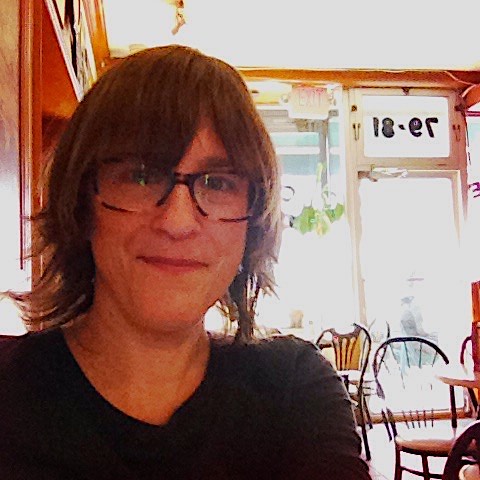
Brooke Brazer is passionate about her role as co-showrunner, producer and a cast member of the Bilt social-media mockumentary series Roomies on which she plays Rain, one of four roommates navigating life in NYC. Brazer is equally invested in the work she does through various organizations to spread awareness of the painful condition known as endometriosis. Which, conservatively, impacts 1 out of 10 women of reproductive age in the U.S. and often goes undiagnosed for years.
From the time she started menstruating, Brazer had what she thought were “bad periods.” It wasn’t until she went to college and lived among other young women who menstruated that she realized, “You don’t miss school for your period. You aren’t bedridden the first three days of your period. You’re not bleeding for seven-plus days,” she recalls.
After college, Brazer developed GI issues so intense they sent her to the emergency room. Still, it wouldn’t be until a few years later that she was finally diagnosed with endometriosis.
After enduring five surgeries, including an ileostomy and a colostomy, Brazer still contends with the side effects of what is a chronic illness.
Here, Brazer talks about her health journey and how her own experiences and creativity fuel her endometriosis advocacy:
You are a former ostomate [someone who has had an opening surgically created in the abdomen to allow stool and/or urine to exit the body]. So am I. I had to get an ileostomy after surgery for ovarian cancer. My ileostomy was reversed in May. I didn’t know anyone else personally who had an ileostomy or a colostomy, or both like you had, so I was glad you shared that. It was meaningful to me.
That literally brings a tear to my eye because I also didn’t know anybody that had had one. I relied on the Internet to give me that representation. I was looking at people on TikTok changing their bags.
Can you tell me a bit about your health journey and explain what endometriosis is? I remember not that long ago, and it might still be this way, that a lot of people felt like doctors were not taking this condition seriously.
Endometriosis is an inflammatory condition where you have this tissue that behaves very similar to the endometrium that occurs elsewhere in the body. It often can cause scar tissue, adhesions and pain, and it can impact other organs in the pelvic area.
My symptoms were mostly with my menstruation. But [after I graduated from college] and I entered the workforce, I started having a lot of GI issues. I would go an absurd amount of time without having a bowel movement. I would have really painful gas. I had what they would call endo belly, where you have extreme bloating. I was having a lot of cramping.
I went to the ER on one occasion explaining I haven’t gone to the bathroom in 10 days. They were like, “Maybe you’re pregnant.” They did an ultrasound. I was like, “You’re going to waste money on a pregnancy test. This is what this is.” Then they basically told me to drink water and eat more fiber. Meanwhile, my periods were getting worse. I lived in Park Slope at the time. On the day of my period when I had to go into work, I had a 40-minute commute to the Grand Central area, and I would pop in a super tampon. By the time I got to the office, I had to change. I always had to carry extra underwear with me.
Even though you suspected you had endometriosis because your mother had it, you were gaslit by some doctors. Why is there resistance among doctors to diagnosing someone with endometriosis? I don’t understand.
I also don’t understand. I think it partly comes down to a lack of research. For a long time, doctors would say, “Get pregnant.” There are some people whose endometriosis symptoms are lessened during pregnancy, but that’s not ultimately a cure.
After undergoing multiple surgeries, you are still living with a chronic invisible illness, which is a lot to deal with. But you are also devoting time and energy and using your skills as a performer and a writer to educate others about endometriosis. How did that begin?
As a writer and an actor, I have an instinct to tell stories, and, hopefully, in a way that makes people feel seen or makes people feel heard. Early in the surgery thing, I was trying to make sense of it all, and I started to retroactively journal about my first period, the time in high school where I completely bled through my tights in the cafeteria and had to wait for it to clear out to clean my seat. These montages of different moments that maybe all make sense in retrospect but didn’t at the time. I called it “The Heating Pad Diaries.” As I was writing it, I noticed it had a darkly comedic tone that’s interesting.
I really do think that humor has been this gentle way to make myself feel more comfortable as well as make other people feel more comfortable when you’re talking about something that’s very heavy or dark or stigmatized. I often say, “If I don’t laugh, I’ll cry.”
You are so open and willing to talk about everything involved in having endometriosis, which is so helpful to anyone in search of support and information. Not everyone is capable of sharing in that way.
For whatever reason, I just won’t allow myself to feel shame about it because that’s the ultimate vehicle of destruction.
Another plus for you as an advocate: While you are known for your work on Roomies and have acted on shows including Law & Order: Special Victims Unit, American Dynasty and FBI: Most Wanted, you once worked in medical device sales and spent a lot of time in operating rooms.
Yeah, I am grateful for that. I have in my arsenal a deeper understanding of not only the actualities of surgery, but also a little bit of how that healthcare landscape works.
It must feel so good to have the creative success you have had with Roomies, which has shown a social media series can be just as entertaining and well produced as anything on TV/streaming. What has it been like to work on the series?
A lot of the art that I’ve been starting to make or trying to make has been in response to what I’ve been through—I have taken some of “The Heating Pad Diaries” and am trying to make this one-woman show, and I’ve essentially written a web series about being an ostomate. All of that is still very closely tied with my identity. Whereas with Roomies, the prompt was outside of me. So it’s true escapism in that Ellie from Ohio has nothing to do with the last decade of my life and my body. I want to use my creativity to process and to work through what I’ve gone through. But Roomies is a nice exercise—I can be creative, but it doesn’t feel so loaded.
Can you tell me more about the one-woman show you are working on?
The one-woman show that I’ve been working on developing and writing for the last couple of years is called “Chronic.” I was at a dinner, and the person beside me asked, “What do you wish people knew about having an invisible illness, or about having endometriosis?” And I was like, “That it’s Sisyphus-like. Every single day we’re rolling a boulder up the mountain, and then inevitably you have a flare, or you have a bad day, or a bad doctor’s appointment, and you roll back down.” The fact that we’re doing this momentous feat every day, and yet people don’t know because we’re just on the subway, going to work, et cetera. I’m physically enduring something that you can’t see, and I’m tired, but I’m still trying to show up. That’s the conceit of the show.
Do you have a personal mantra that helps you keep plugging along with your life and creative pursuits?
It’s not necessarily a mantra, but when people have asked me, how do you get through all this, I say, you don’t really have a choice but to adapt. We are incredibly resilient people, and bodies are resilient, and minds are resilient, and I do think that people adapt, and that’s the beautiful thing about all of this. But the fact is that our agency and our choice in it all is often removed. That is the really hard part. There’s a duality there.
Related: Harrison Ford and Michael J. Fox Unite for Parkinson’s Appeal