Newsletter
 Events

Why Delta and Kin Turned a Boeing 767 Into a Live Concert Venue
The carrier welcomed brand loyalists to a unique experience


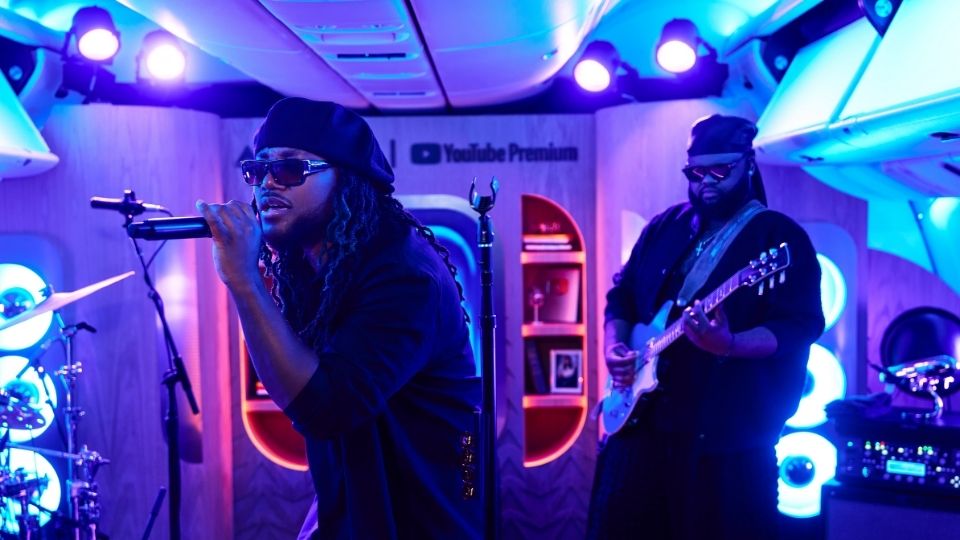
“Overhead Originals” launched earlier this year as a creative expression of the partnership between Delta Air Lines and YouTube. With the support of agency partner Kin, the carrier welcomed SkyMiles members and Delta employees for a unique experience featuring three-time Grammy award-winning R&B star Leon Thomas aboard a Delta Boeing 767.
Ahead of their session at Clios on Culture, Muse sat down with Delta head of commercial marketing Shannon Womack and Kin co-founder Kwame Taylor-Hayford for a special behind the scenes look at the intimate ground-based concert.
The following has been edited for length and clarity.
What did the initial brief look like? Did it come to life as you imagined?
Womack: On the Delta side, we had just launched this exciting partnership with YouTube. The question we wanted to answer was: how do we make this more than a partnership announcement? How do we make this more than a set of benefits you’re able to unlock as a member? We wanted to figure out how to create something that people genuinely wanted to engage with, bringing together what was distinctive about Delta and what’s distinctive about YouTube.
That was the inception of the work. We brought that challenge to Kwame and the team at Kin, and they found this really powerful intersection between music, travel and discovery, which led to “Overhead Originals.”
Kwame, what were your thoughts and what were the conversations like within your walls when you received word from Delta?
Taylor-Hayford: The brief was so exciting to us because we’re always trying to figure out a way to create something genuinely entertaining and arresting—something that allows people to be attracted to what you’re making rather than having to push things out.
Delta is an incredible brand, and we’ve been lucky to partner on quite a few projects, but this one with YouTube felt really special. YouTube has built an amazing platform that’s deeply connected to music, breaking artists and ensuring there is a powerful connection with audiences.
“Overhead Originals” was inspired by a photo of Ella Fitzgerald performing on a plane in the ’80s. Our creative team saw that—we’re huge music fans—and one of the platforms we’ve always admired is NPR’s Tiny Desk. We felt there was a natural connection between an artist, how they find inspiration, and the places they travel to. Going on tour is so essential to an artist’s journey. We tossed around quite a few different names, but “Overhead Originals” felt iconic, brand-forward for Delta, and a way to seed the thought that artists develop through these incredible experiences they have all around the world with different audiences—with Delta being the conduit through which that happens.
This couldn’t have been easy to put together. Shannon, how did it develop visually, and what was the production like?
Womack: It was super complex to maintain the intimacy of the cabin, get all the equipment in place and still have a sense of scale and expansiveness so you feel the performance come through the way you do with Leon Thomas.
The other element is that it wasn’t just content designed to travel—which it was—it was also an experience first. We invited a small group of our SkyMiles members and some Delta employees to be part of the audience and have that concert experience firsthand. Having them experience it live, while simultaneously configuring the plane in so many ways to create content that went beyond that live experience, was definitely not easy. But that was core to the magic of the idea: our members and employees got to unlock something really cool. And we were able to share that so people could discover it on YouTube and on board Delta.
I didn’t realize employees were also in the audience. Was this targeted as a Gen Z play?
Womack: Definitely. Gen Z is a really important audience for us, as they are for many brands. We want to deepen relevance with younger travelers, and we know YouTube has a massive following among that demographic. Music and YouTube are a fundamental part of how Gen Z discovers culture and expresses themselves. When you look at what Delta does, travel is fundamentally about discovery, too. That overlap between music, travel and discovery gave us an authentic space for both brands.
Taylor-Hayford: When we were coming up with the platform, it felt really important that we think holistically about execution—from experiential and social-first content to longer-format storytelling. We’re big on understanding the audience. Yes, of course, Gen Z is on social media, so we need to ensure we build things that live in shorter formats, but built from a real, authentic experience rather than something manufactured.
It also served employee engagement—giving the incredible humans within Delta a window into this world of artists and music and giving them proximity to it. The platform can execute as a large-format experience, or it can be a five-second clip on TikTok or Instagram. We love the range of that.
How did you land on Leon Thomas? What is your criteria for picking talent for this type of content?
Womack: It’s all about authenticity—thinking about our customers, culture, and who we are as a brand. We stand for human connection, bringing people together and creating a platform for discovery and new ideas. Leon Thomas seemed like a great fit in terms of who he is and all the excitement surrounding him. Ultimately, we reached out and it turned out he is a huge Delta fan and a SkyMiles member. That’s where it all happened.
Taylor-Hayford: There’s something really beautiful about using “Overhead Originals” to platform and accelerate the visibility of artists. We discussed with Shannon’s team that while we could get A-list artists and put them in this context, there is a massive opportunity for Delta to be the airline that helps break artists and establish a passionate audience for musicians who are on their way up. Our hope is that this continues to be a core part of the platform.
Were there any surprise learnings or challenges in bringing this major feat to life?
Womack: I don’t know if there were surprise challenges, because with any production, you’re prepared for anything to happen. What I will say was a pleasant validation was that from the moment the Kin team shared this concept, it felt like a no-brainer. It was so simple and clear that it was going to resonate.
It was great to see that pan out—to see the reach the idea had, and to get outreach from other artists who saw it and asked to be featured next. It validated what we set out to do and highlighted the truth underneath the idea: travel and music both have the ability to change your perspective and introduce you to something new.
It’s also a wonderfully circular idea. We created the performance on our planes, had a small group of customers and employees experience it live, let it travel into the world through YouTube, and then brought it back on board as part of our in-flight entertainment.
It seems like the brand and agency have a great working relationship. How do you collaborate on this kind of content?
Womack: We have been working together for over five years. The first thing I remember working on together was an initiative called Faces of Travel. The Kin team stumbled upon the fact that when you searched for travelers online, the images represented a narrow demographic. We asked ourselves what we could do as a major airline to change that. It led to a stock image library and partnership with Adobe that showcased the broad range of diverse travelers.
That idea is core to our relationship with Kin. We might provide a brief, but their response is always about how to unlock a bigger opportunity or solve a larger problem.
Taylor-Hayford: It’s been wonderful to get an intimate understanding of Delta and its priorities. It allows us to be insightful, challenge opportunities, and figure out how to create something that endures and adds value to a community.
With “Overhead Originals,” the fact that artists organically reached out wanting to be a part of it is what we go for. How do you do something additive to culture so people seek out the work versus paying to interrupt their view?
What do marketers misperceive about the Gen Z travel audience that you were trying to reach?
Kwame Taylor-Hayford: Travelers of this generation want to experience the world in a way that doesn’t feel performative or surface-level. They want to be embedded in local communities and have unique interactions.
In “Overhead Originals,” Leon shares anecdotes about cities he’s visited. You might not be flying to L.A. to perform with Stevie Wonder, but you want to go to interesting local spots, see a show, and connect with the culture rather than hitting tourist traps. Gen Z and millennial travelers want to get off the beaten path.
What many brands miss is that you can’t think in terms of a single campaign. You have to commit for the long term and do the hard work in the dark before you have your moment in the light. Once you earn that moment, it endures because you’ve endeared yourself to that community.
Womack: Brands sometimes mistake being relevant to Gen Z with trying to look like Gen Z. You see brands chasing trends, slang or aesthetics when Gen Z is remarkably good at recognizing when something is manufactured for them.
The opportunity isn’t about saying, “How do we make a Gen Z idea?” It’s about understanding what they actually care about and where your brand has a credible role to play. Gen Z doesn’t need brands that imitate their culture; they want brands that contribute something interesting to it.
Join Delta Air Lines and Kin for their Clios on Culture session, When Brands Create Value, Culture Follows, in NYC on Sept 22-23.