Newsletter
 Events

Filmmaker Zachary Heinzerling Profiles Rafael Nadal in Revealing Netflix Documentary Series
But first, the director had to win over the tennis legend


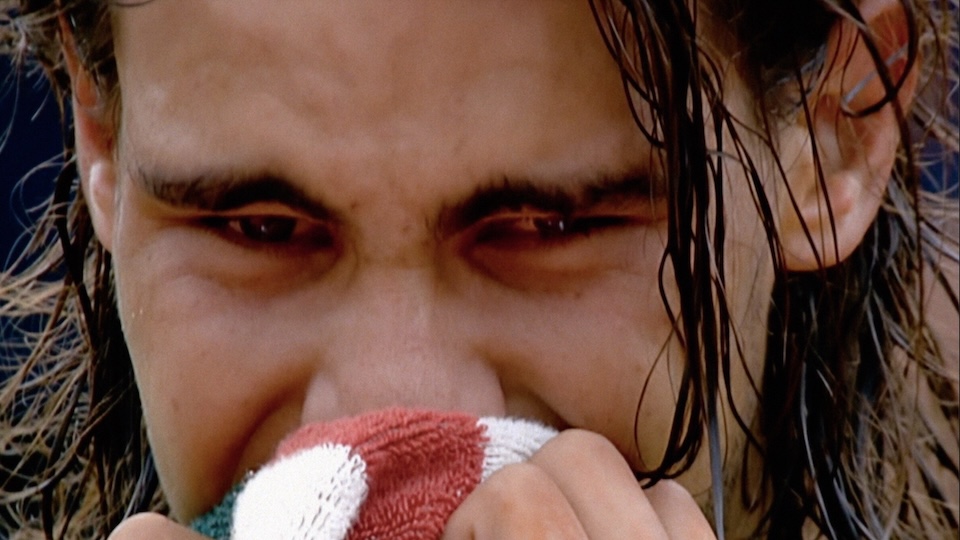
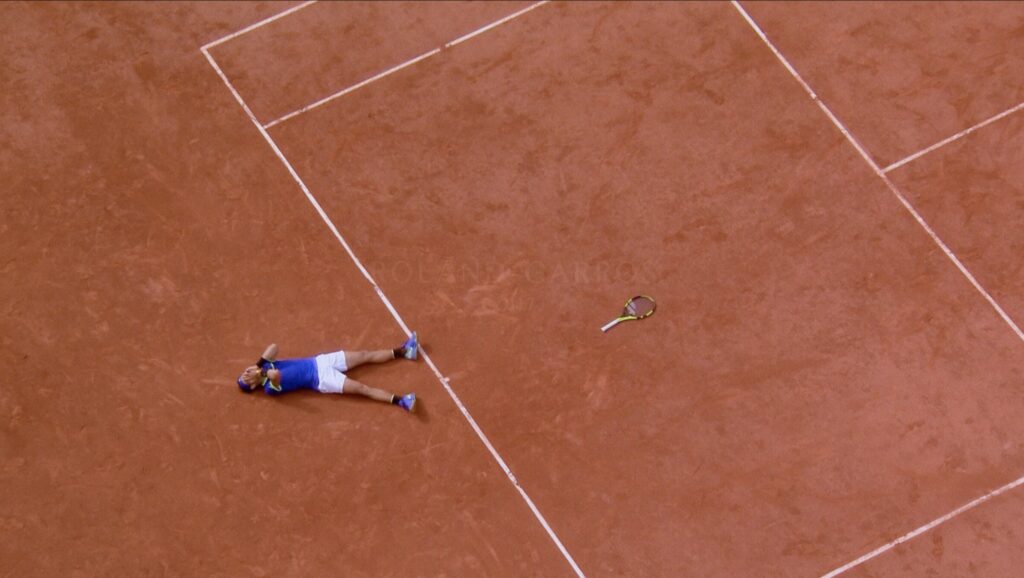
The final year of tennis great Rafael Nadal’s career is chronicled in Rafa. Dropping on Netflix May 29, the 4-part documentary series stands out for its emotional depth. Episodes explore the challenges faced by the 22-time Grand Slams singles champion, most notably a rare and debilitating foot condition. We also learn about the role his uncle and long-time coach, Toni Nadal, played in shaping Rafa’s never-give-up psyche.
Here, Rafa director Zachary Heinzerling—whose credits include the Oscar-nominated doc Cutie and the Boxer and the Hulu docuseries McCartney: 3, 2, 1 and Stolen Youth: Inside the Cult at Sarah Lawrence—shares how he chose to spin Nadal’s story:
MUSE: How did you come to direct Rafa? Am I correct in assuming you had to meet Nadal first and get his stamp of approval?
Zachary Heinzerling: Yes. In December of 2023, a producer called me and asked if I was available to go to Brisbane, Australia, to film what was potentially going to be Rafa’s last season. The deal was, if Rafa and I got along, if he liked me, or my approach, then we would continue.
Why do you think he said yes after that trial run?
He liked the fact that I could shoot footage myself. [Cinematographer Adam Uhl also filmed the doc series.] I would be there with a camera, as unobtrusively as possible. My style—which is more observational and living with the subject—gets to the truth through their actions more than words. That was appealing to him. And he sensed that I would fit in with the team in a way that wouldn’t be distracting. I also speak some Spanish, which helped.
I had no idea that Nadal suffered so much physical pain during his career.
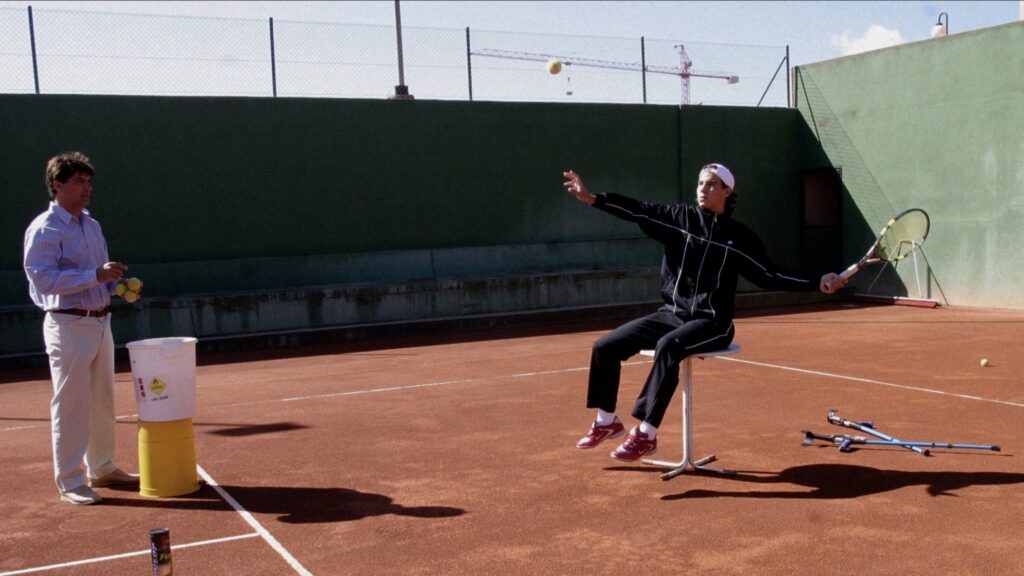
A lot of people didn’t know he had this incurable foot disorder that was essentially a birth defect, amplified by playing tennis at such a young age. It came back when he was at the apex of his young career, just after winning his first Grand Slam. Throughout his career, he often downplayed it. I didn’t know the extent of it. It became something that we found out as we were filming and doing interviews. And it became the central tension of the story, both in the present and in the past.
How did you create a story arc that would span four episodes?
In the beginning, we thought it would be a comeback story, where he came back from injury and had one last hurrah. We filmed with the idea that at some point he might have this sort of walk-off home-run moment of glory. And what happened is that he just kept losing and losing and losing. The question became, well, what is the story now? If it’s not the walk-off hero moment, what is it? And what it became was a question of, why does he keep going? When it’s so clear that his body is telling him to stop, why would this guy continue to almost self-immolate or abuse himself by continuing?
What was the editing process like?
It was all remote. We had a few Spanish-speaking assistant editors. Rafa is from Mallorca; they speak Mallorquín, which is this dialect of Catalan, which required a lot of extra eyeballs and native speakers to translate all the material.
Drew Blatman was the lead editor. I’ve worked with him on a few other projects, too, and he was responsible for shaping how the archival and present-day material interacted. We tried to use the archival material almost as if it was verité—footage where you’re sort of following Rafa. Oftentimes, the interviews are used as voiceover underneath. The first episode is the best example of that, because the trajectory of his rise and fall within that period of time is paralleled with the past and the present.
There are so many sports bios out these days that, frankly, aren’t that interesting because the subject limits what we see. We really get to go through it with Nadal in this series. It seems like he is pretty open.
With Rafa, there was trust. He doesn’t have a lot to hide. It felt like an opportunity to do something in the space that could be different. I was able to create a more cinematic experience out of living with the ups and downs of this athlete. You’re not necessarily just watching and consuming information about him. You’re feeling things with him. It’s very, very rare that with a living, quote-unquote celebrity you’re able to do something like that.
I have to ask about commercials since you are repped for spots via Epoch Films and have done work for brands like MLB, Smirnoff and New Era. Have you directed any lately?
The last thing I did was probably five or six months ago. Right now, I’m motivated to get back into commercials. I’m excited to reengage and use some of what I learned making Rafa. There’s a lot of things I did in the series—working with celebrities, switching between present and past and the use of archival footage—that could also be exciting on the commercial front.