Newsletter
 Events

Preventing the Rise of 'Zombie Brands'
Digitas ECD John Long turned a viral Twitter thread into an industry book


When the heart and soul of a brand diminishes and its messaging echoes those of its rivals, well then, you’ve found a zombie brand. John Long , ECD of Digitas, recently released a paperback version of his book Zombie Brands: How Brands Lost Their Humanity—and How They Can Regain Their Appeal in the Age of AI.
Muse caught up with Long to learn more about Zombie Brands and how brands can avoid becoming one.
Muse: What’s a Zombie Brand?
John Long: The thing about zombies is, they’re not human. They look human, but they don’t have a soul. They all have the same dreary appearance. They sound alike–all grunting the same clipped phrases. And they’re relentless. They stagger around endlessly looking for brains to eat. Sadly, this describes how too many brands act today. They’re hollowed out—shells of their former selves. They use the same web-friendly fonts and the same stock photography. They speak in the same bland tone of voice and use the same phrases. And once they spot you, they maniacally follow you until you BUY NOW.
I love that a Twitter thread started the idea for this book. When did you decide to turn the viral thread into something more?
Ah, the Twitter thread. It’s still pinned at the top of my profile. It started a few years back. Whenever I saw an atrocious banner ad, I’d screenshot it and juxtapose it next to a classic ad from the same brand. When the “how it started/how it’s going” meme took off, I used that format, and the thing just exploded.
One day, a friend suggested I put the entire collection in a single thread. It hit 1 million views, was shared around the world and got covered by a U.K. trade publication. It clearly struck a nerve. So I knew I’d hit on something.
I kept staring at the post at the top, featuring two Absolut ads side by side—one from TBWA’s legendary run in the ’80s and ’90s, the other a forgettable banner—and thought, “there’s a story here.”
The usual explanations—lazy agencies, timid clients, short timelines—felt too small. There were bigger, tectonic forces that had reshaped the industry and I wanted to unpack those.
But I didn’t want to write a book that was just a bunch of complaints. I wanted to outline a positive way forward.
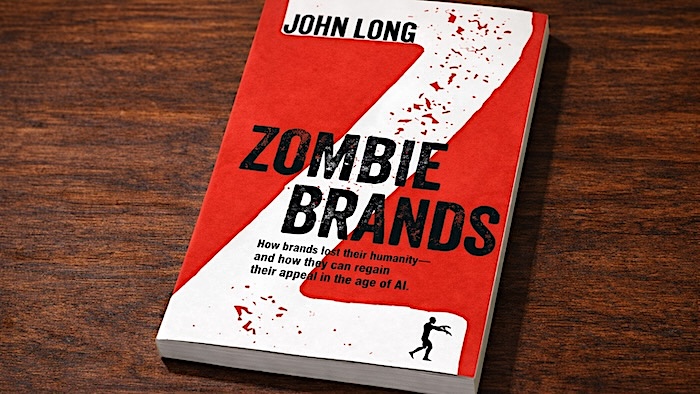
Did most of the thread make it into the book?
Not directly. The thread sparked the idea, but the book goes deeper. Two brands in particular are case studies: Nike and Adidas. They both, at different times, turned themselves into Zombie Brands. In Adidas’ case, they over-invested in performance media and stopped investing in the brand–and their sales tanked. Nike made the same mistake a couple years later by going all-in on direct-to-consumer, which also hurt their business.
Are you still gathering instances of zombie brands in the wild?
No. The thread did its job in helping me diagnose the problem and now I’m more interested in helping brands reverse the disease. I’m also trying to wean myself off Twitter (I refuse to call that site anything else.)
How do brands slide into this pitfall?
It’s all too easy. In the book, I identify four big technologies–the Internet, digital media, social media and the smartphone–that contributed in various ways to zombification. The collapse of mass media and the unprecedented availability of data made the shift from fame to targeting inevitable. And short-termism–the over-reliance on campaigns with short-term objectives–is a widespread problem, as System1 and Effie just pointed out in “The Creative Dividend.”
The good news is, there’s a way out. And it starts with remembering the fact that people like brands for the same reasons they like people.
How much of a challenge is it for brands to un-zombify themselves?
I don’t think it’s complicated. Be human. More specifically: have a distinct look and feel, a unique voice, a strong point of view–and be relentlessly consistent. Don’t rely too heavily on stock photography and stock music. Make sure you’re showing up in media channels that are conducive to building an emotional connection with your audience and not just in formats that scroll.
Calibrate your influencer partnerships so they amplify your brand. And if you’re doing activations, make sure they’re thematically aligned with your core offering.
It’s more difficult to get and hold attention in this environment. But it’s by no means impossible. Just ask Oatly and Liquid Death, whose praises I sing in the book.
Who should read Zombie Brands?
Anyone who works in advertising and marketing and senses something needs to change. So creatives, strategists, media planners, CMOs, even students.