Newsletter
 Events

Calcium+Company's Stacey Gandler Breaks Down the Role of PR in Health Communications
Health PR is the credibility engine, shaping stories and amplifying voices


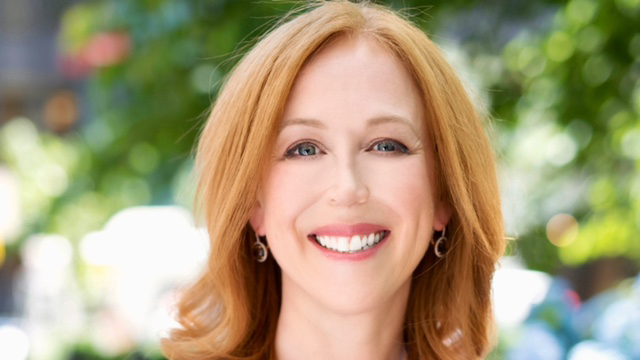
With healthcare continuing to move to greater personalization, there’s more of a need to “meet people where they are,” says Stacey Gandler, managing director, and head of PR and brand ideation at Calcium + Company. “We’re seeing even more focus on being interactive, empathetic, and inclusive.”
Stacey chatted with Muse about how healthcare is evolving, AI and some recent projects that are near and dear to her.
Muse: How did you first get interested in health (and marketing, for that matter)?
I’ve always been fascinated by the power of communication to create clarity and connections. Early on, I gravitated toward roles that placed me at the intersection of storytelling and impact, in public health and patient advocacy. Health felt like the perfect fit for me because it’s deeply human and incredibly complex, and it requires careful translation to make information both relatable and actionable. Health PR was the natural extension of that, using narrative not just to inform, but to inspire and mobilize.
Tell us one thing about how healthcare is evolving that you’re excited about.
I’m excited by the way healthcare keeps progressing toward greater personalization and accessibility. From digital health tools to community-based approaches, there’s a growing emphasis on meeting people where they are. We’re seeing even more focus on being interactive, empathetic and inclusive.
I also see tremendous potential in the responsible use of AI. When treated as a tool and partner, not as the ultimate solution or authority, it can help people better analyze their own health data, learn how to ask appropriate questions and collaborate more effectively with providers. There’s not a day where I don’t find myself challenged about how to use AI to help people cut through noise, combat misinformation and surface insights to make our campaigns sharper and more relevant. At the same time, it’s important for us to stay vigilant about data privacy and trust, ensuring that AI enhances—rather than erodes—the human connections at the heart of healthcare.
In terms of PR, how does this specific discipline play into campaigns for clients in 2025? Talk about how you integrate publicity with the rest of the agency’s offerings.
PR in 2025 isn’t just about getting coverage, it’s about earning trust. We’re blending publicity, creative, digital and experiential work so campaigns feel seamless and connected. In healthcare especially, PR is the credibility engine. It shapes stories, amplifies voices and ensures messages land in the right places. It’s about balancing visibility with reputation and doing it all with agility in a world that moves quickly.
Please share some details about a recent project or two that you’re especially proud of. Talk about the goal, what you did to achieve that goal, and the results.
One project involved launching a disease awareness campaign to help patients better identify their risk factors and navigate the fear of a diagnosis. The goal was clarity; we wanted to cut through complexity. We partnered with advocacy groups, developed plain-language resources and secured placements in outlets trusted by patients and care partners. The result was not only strong engagement metrics, but also meaningful feedback from people who said they felt more empowered to make decisions.
Another project involved taking dense, technical clinical data and transforming it into resources that mattered to people living with a specific condition. The goal was to bridge the gap between science and real-world experience. We partnered with medical experts and patient advocates to distill complex trial findings into plain-language materials, animations and Q&As. Then, we distributed those through the channels patients trust most—advocacy groups, online communities and healthcare providers.
The result wasn’t just strong engagement metrics; it was feedback from patients who said they finally felt like the science applied to their lives. For me, that reinforced the power of communication not only to inform, but to empower people to act and feel more in control of their healthcare journey.
Where does health PR go from here? Look two years ahead. What’s the future likely to bring?
I see health PR becoming even more integrated with real-world and real-time experiences. The future will demand campaigns that are not just persuasive, but also participatory. AI and analytics will give us sharper insights, but the human element (eg, empathy, trust, transparency) will remain non-negotiable. Importantly, I don’t see AI ever replacing the human element. It’s a tool to help us listen more deeply and respond more effectively, so our work is both data informed and compassion driven. So, in two years, I believe successful health PR will be defined by its ability to balance technological innovation with authentic connections.
My mission is to deliver integrated solutions across our communications disciplines including advertising, medical communications, commercial planning, market access and public relations. The goal is to create cohesive, insight-driven campaigns that truly nourish both hearts and minds.
Talk about someone else’s work, in health or beyond, that you admired lately?
One campaign I really loved recently is the Batman vs. Bateman insurance commercial. It’s a clever blend of humor and nostalgia, taking something iconic and serious and making it modern, relatable and human. Jason Bateman’sn dry tone against Batman‘s intensity gives the whole thing a self-aware charm that (for me!) connects instantly. From a health PR perspective, I think there’s a big lesson here. Even in highly regulated or complex industries, tone and authenticity can completely change how audiences engage.
It shows that you can deliver serious information in a way that still feels approachable and real. What also stood out to me is how seamlessly the campaign integrated PR and social strategy. It wasn’t just a TV spot, it lived across earned media, influencer partnerships and social clips built for TikTok and Instagram. Even the timing was handled with intention. When the campaign pivoted from a Super Bowl release to March Madness, that flexibility became part of the story and strengthened its overall narrative.
That kind of integrated approach, where storytelling, social engagement and adaptability work together, is exactly what we’re striving for today—campaigns that spark connection, build trust and invite people into the conversation.
What are your main strengths/weaknesses as a marketer?
One thing I’m strongly focused on is helping people embrace change with enthusiasm and not trepidation. My career has been built on converting disruption into opportunity—and change into success. The challenge is to see change as representing new opportunities to connect, whether that means pivoting strategy mid campaign or adapting to shifting audience expectations. That flexibility helps me keep a forward-looking perspective.
As for weaknesses, I tend to want to chase too many opportunities at once. I’m working on prioritization, making sure I channel that energy into the initiatives that will create the most significant impact.
What would you be doing if you weren’t in this business?
At the end of the day, communication is my throughline; I’d always find a way to use it to empower others. But if I weren’t doing what I do now, I’d probably be working with animals, running a rescue on a big stretch of land somewhere. My dream is to create a safe space for creatures that need a little extra care, a place to land, heal and be loved. In many ways, it’s the same instinct that drives my work today: giving a voice to those who might not have one and helping stories find their way into the world.
Anything else to add?
I’m a voracious reader and usually have two or three books going at once. Growing up with parents who were teachers instilled in me the belief that knowledge is power and that learning is the ultimate win. That mindset continues to shape both my personal curiosity as well as my professional drive.