Newsletter
 Events
Beto Fernandez of Translation Is All About Fusing Creativity and Culture
How music, sports and entertainment spark conversations and drive commerce


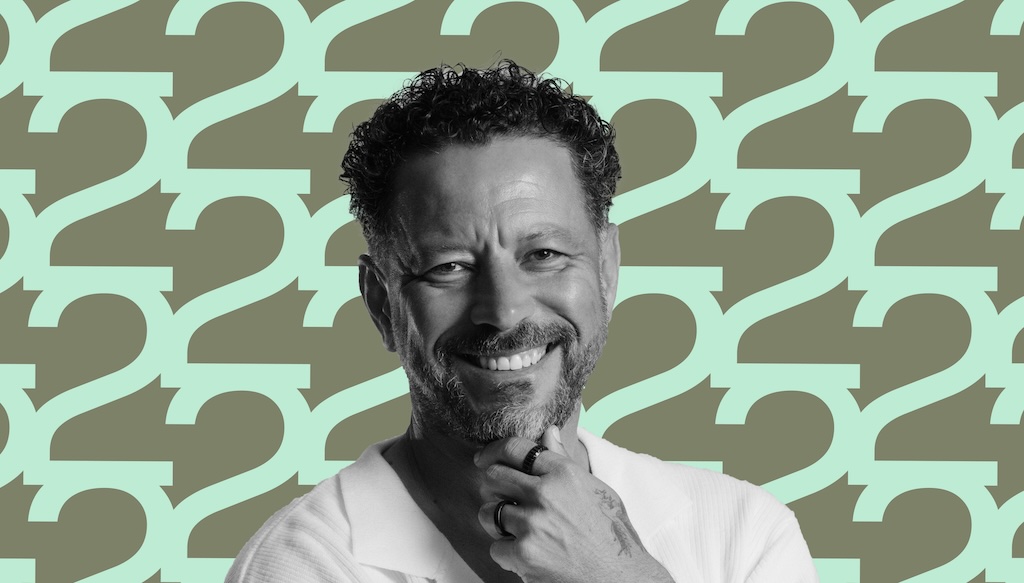
Beto is the chief creative officer of Translation. Previously, he led teams at Ogilvy, BBH London, DAVID and Anomaly. As co-founder of Activista, Beto has created campaigns for the United Nations, Adidas, Netflix and more. His portfolio includes iconic ideas like Dove’s “Real Beauty Sketches”, Burger King’s “Proud Whopper” and the U.N.’s “Frankie the Dinosaur.” All of these sparked global conversations and broad impact.
We spent two minutes with Beto to learn more about his background, his creative inspirations and recent work he’s admired.
Beto, tell us …
Where you grew up, and where you live now.
I grew up in Curitiba, in the south of Brazil. Later I lived in São Paulo, London and Los Angeles, and now I call New York City home.
How you first realized you were creative.
At 7 years old, my twin brother and I decided we wanted to become cartoonists—and we actually took it seriously. Our work ended up in local newspapers every day, and at art exhibitions. That evolved into design and eventually into advertising. By the time we were 19, we had started our own small agency at home.
A moment from high school or college that changed your life.
In my freshman year of high school, I had my first exhibition with illustrations and cartoons. That moment opened the doors to more exhibitions around the city and invitations from brands to collaborate. I realized my ideas could live outside of sketchbooks and actually move people.
Your most important creative inspirations, and some recent stuff you love.
Comics shaped me early on—the quietly funny but meaningful insights of Calvin and Hobbes; the sharp social critique of Quino’s Mafalda; the way Frank Miller and Alan Moore pushed Marvel and DC into darker storytelling. I’ve always admired how Monty Python could turn human observations into absurd, timeless comedy, and how artists like Banksy and Ai Weiwei use provocation and controversy to challenge the establishment.
More recently, I’ve been inspired by Yuval Noah Harari’s discussions about AI; by Chimamanda Ngozi Adichie’s call to respect the potential of women in a world still marked by inequality; and by Ailton Krenak—a remarkable indigenous thinker from Brazil—who challenges us to imagine a healthy society. I also value being around Translation’s CEO, founder and advertising legend Steve Stoute. He helped me see how music and culture aren’t just entertainment. They’re the operating system of consumer behavior. And I was blown away by Kendrick Lamar’s 2025 Super Bowl halftime show.
One of your favorite creative projects you’ve ever worked on.
Definitely Dove “Real Beauty Sketches.” It defined a whole new advertising format—the social experiment—and proved to me that advertising could be more than selling a product. It could spark real conversations about identity and self-worth.
A recent project you’re proud of.
Our collaboration with Meta wearables. This partnership pushed the boundaries of AI eyewear. What excites me most is how this project reimagines the intersection of sport, technology and culture.
Someone else’s work that inspired you years ago.
Honda’s “Hate Something, Change Something.” Instead of pretending diesel engines were fine, Honda admitted they were noisy and polluting—even saying their own engineers hated them. That hate became the driver of change, leading to a cleaner, better engine. It showed me how a brand’s sincerity can transform a weakness into cultural progress.
Another effort that blew my mind early on was the “Truth” anti-smoking campaign in the U.S. It proved activism could live inside advertising and change behavior. It gave me a sense of the scale of impact we could have with creativity.
Someone else’s work you admired lately.
Two recent campaigns show how marketing can move from the edges to the absolute center of culture. First, there was CeraVe’s genius Michael Cera conspiracy for the Super Bowl. The campaign was a brilliant blend of humor and mystery—a skincare brand trolling the public with a fake founder—that cleverly used dermatologists for fact-checking to build credibility. It was impossible to ignore.
On an even grander scale was the Barbie movie. It was essentially a two-hour advertisement, yet it sparked global conversations about gender, identity and representation. The film proved that a brand can be a powerful cultural catalyst as well as a commercial success.
Your main strength as a creative person.
I don’t see advertising as a format. I see it as ideas that can provoke conversation, shape culture and inspire change—whether that’s through film, music, art or unexpected platforms.
Your biggest weakness.
I tend to talk too much. It comes from enthusiasm and wanting to explore every angle of an idea. Sometimes I need to remind myself to act the same way I ask ideas to be: simple and easy to understand. I have a tattoo with big copy on it, and people joke that even my tattoos talk too much.
A mentor who helped you navigate the industry.
I’ve had the luxury of working with some of the greatest visionaries in our business like Nizan Guanaes, Marcelo Serpa, John Hegarty and Carl Johnson, who shaped how I think about building agencies and brands. But the person who truly shifted my perspective was Anselmo Ramos. I met him when he came back to Brazil. His innovative way of seeing advertising—thinking beyond media buying and into a more content-driven, resonant approach—inspired me to see the industry differently.
What you’d be doing if you weren’t in advertising.
Creating graphic novels or art exhibitions with my twin brother. Storytelling and visual culture were always my first loves. I’d have ended up somewhere in that space regardless.
2 Minutes With is our regular interview series where we chat with creatives about their backgrounds, creative inspirations, work they admire and more. For more about 2 Minutes With, or to be considered for the series, please get in touch.