Newsletter
 Events

The Story Behind 'Weird Looking Stools' That Fight Colon Cancer
Inside one of the year's most audacious and artful health campaigns


Colon cancer cases are rising in adults aged 25 to 45. One of the best ways to check for signs of colon cancer is by looking at your stool for odd shapes, colors or blood. But there’s a big problem: stools are an uncomfortable topic to talk about. And if you’re between 25 and 45, you might not think you need to talk about it. And if we’re not talking about it, we’re probably not checking for it, either.
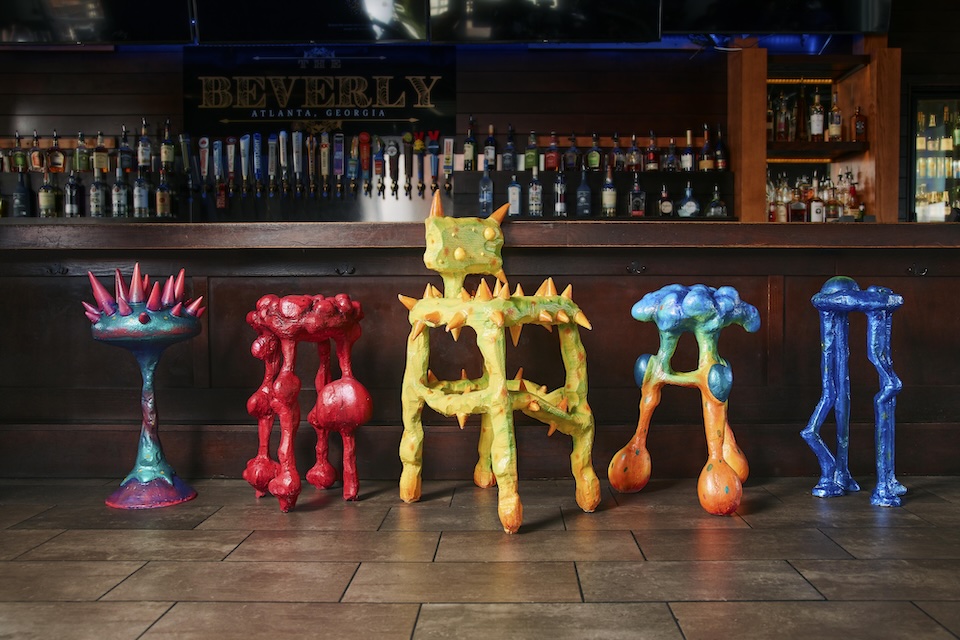
So, when Georgia CORE (the Center for Oncology Research & Education) came to Chemistry for help spreading this message, the idea was clear. So clear, we blurted it out in our first in-person meeting: If weird-looking stools are a huge warning sign of colon cancer symptoms, we’ll make actual weird-looking stools and put them around bars, restaurants and coffee shops in Georgia.
Because even if you don’t want to look at weird stools or talk about colon cancer symptoms, you won’t have a choice after seeing one of these physical, metaphorical manifestations. And let’s be honest—it’s much easier to have tough conversations over a drink.
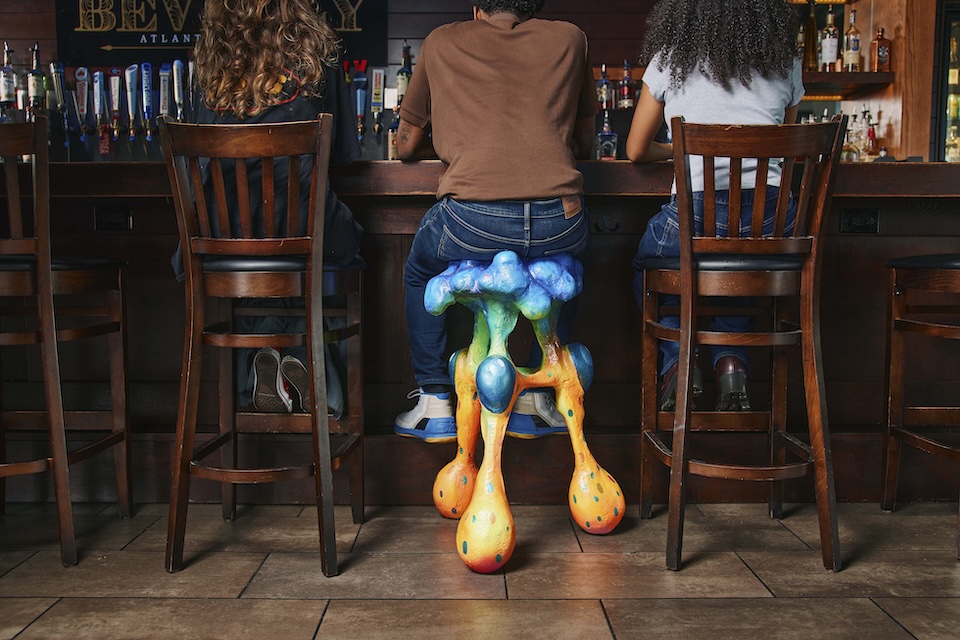
With the help of former Marvel prop designer Julian Scalia, we made 35 “Weird Looking Stools” Designed to be attention-grabbing, strange and loosely represent symptoms like blood, odd shapes or discomfort, these stools aren’t just interesting to look at—they’re educational. As you sit on these fully functional stools, you naturally look down, creating the desired response and reminding you to do the same when you’re on the toilet.
After the stools were made, the logistics set in. We had 35 stools in Julian’s New Mexico studio and needed them in Georgia—in bars and restaurants across the entire state—on a tight budget. So, we rolled up our sleeves and went grassroots with it. We reached out to bars and restaurants one by one, transporting the stools to each location. In fact, Julian drove more than 3,000 miles round-trip to deliver them.
Along with the stools, these bars and eateries received tabletop placards, coasters and coffee sleeves with more messaging about colon cancer awareness and symptoms, as well as QR codes leading to our microsite. On the website, people could learn more about colon cancer, how it’s affecting younger adults, and how to find a nearby doctor for a screening.
But the stools themselves were just the start of a broader awareness campaign made up of social, digital, OLV and more than 60 Georgia billboards. The push also featured appearances at Grady Memorial Hospital and Greg Mike’s ABV Gallery for a cancer awareness exhibit.
All of this helped the campaign start conversations about this taboo topic and give Georgians information, awareness and access to doctors who can help. And while it began in Georgia, other states and organizations have shown interest in doing something similar.